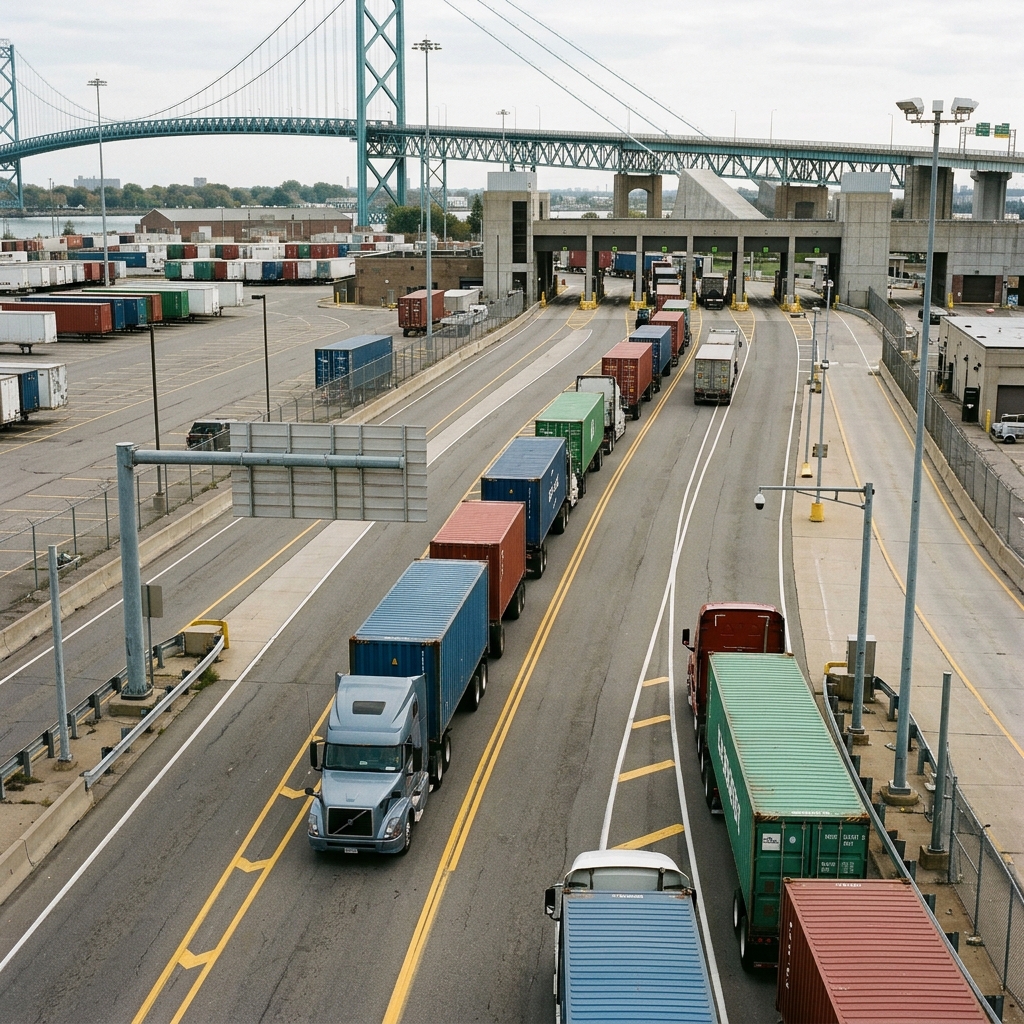
1. WPTZ Reports Winter Shutdown at Vermont Border Port as CBP Plans Renovation Work
WPTZ reports that a Vermont U.S.-Canada border crossing will close for renovations this winter. The closure is a local operations issue, but it has trade consequences. The port will shut during a season when snow, ice, and shortened daylight already slow approach roads. U.S. Customs and Border Protection operates the American side, and the Canada Border Services Agency staffs the Canadian side. Neither agency has described the closure as a policy change. In practice, travelers, local shippers, and commercial carriers that use the port as a routine entry point into Quebec or the U.S. Northeast will have to detour.
CBP typically redirects traffic to the nearest open port and posts signs on highways and at the closed facility. That reroute carries paperwork consequences. A broker who files an entry with the wrong port code can trigger a rejection, a hold, or a costly correction. Carriers must check hours at alternate crossings before dispatch. CBSA will handle Canadian-bound traffic at its own ports of entry. The closure does not suspend inspection rules, immigration checks, or agriculture screening. It moves those functions to other buildings with different queues and different staffing levels.
Vermont's border economy is small compared with national totals, but local businesses depend on it. Canada is Vermont's leading export market, and the state ships dairy products, maple syrup, machinery, medical devices, and pharmaceutical inputs north. Many of those loads move on trucks that use the state's border ports as a first or last mile link to Montreal, Quebec City, and the U.S. Northeast. A winter closure adds miles and driver hours to those routes. The WPTZ report matters because one maintenance decision can affect dozens of small supply chains.
2. CBP, CBSA and USMCA Rules Keep Moving Even When a Port Goes Dark
Border rules do not take a winter holiday. A commercial shipment still needs a U.S. entry filed through CBP's Automated Commercial Environment, and Canadian-bound freight still needs a CBSA eManifest. USMCA certification remains the basis for preferential tariff treatment, and importers must keep records that support origin claims. The IRS and the Canada Revenue Agency still expect cross-border payroll and withholding filings from companies with workers on both sides. A renovation closure changes the port of entry, not the legal obligation. Shippers that ignore the paperwork risk delays at the alternate booth.
Every added border hour costs more in the current market. The Federal Reserve's policy stance and the Bank of Canada's rate path influence the CAD/USD exchange rate, and a wider rate gap changes the landed cost of Canadian goods in U.S. dollars. A 100-basis-point differential in policy rates can move hedging decisions for mid-sized importers. Diesel prices, driver wages, and insurance premiums sit on top of that. For a $2,000 less-than-truckload shipment, an extra hour of transit and a missed appointment can erase the margin on the load.
Customs brokers and freight forwarders should update routing guides before the first diverted truck arrives. That means checking which alternate ports accept the commodity, confirming bond coverage, and telling drivers where to find the new inspection lanes. Agriculture shipments need extra attention because CBP and CBSA inspect plants, seeds, and animal products at designated ports. A port without the right inspector or facility can turn a routine load into a hold. The closure is temporary, but the compliance record is permanent. CBP can assess penalties for false port declarations and late entries.
3. Vermont's Small Ports Sit on Larger U.S.-Canada Freight Networks
Vermont's crossings are not the Ambassador Bridge or the Blue Water Bridge, and they do not carry the container volume of the Pacific Gateway or the CPKC rail networks. They are feeder ports for a regional economy that depends on quick access to Quebec and the U.S. Northeast. A closure at one Vermont crossing pushes traffic toward larger gateways on I-89 and I-91. Those ports have more lanes and longer hours, but they also have their own commuter and commercial peaks. Winter weather can turn a 30-minute detour into a two-hour delay on a bad day.
The freight that uses these ports is diverse. Dairy farmers send milk and cheese. Maple producers ship packaged syrup and bulk drums. Machine shops move parts for aerospace and defense suppliers. Pharmaceutical companies move temperature-controlled inputs that cannot sit in a snowy yard. Auto parts and building materials cross in both directions. USMCA rules of origin apply to many of these goods, and a port change does not change the tariff line. What changes is the time and cost of getting the paperwork stamped at the border.
CBP and CBSA have limited room to shift staff. A winter renovation may require overtime, temporary booths, or extended hours at nearby ports. Those decisions are operational, but they carry budget consequences. CBP's facility modernization funds and CBSA's port infrastructure spending are set through annual appropriations and bilateral agreements. A small closure can expose gaps in redundancy. If the nearest alternate port lacks a commercial lane or an agriculture inspector, the detour becomes a bottleneck. That risk is highest in January and February, when weather already cuts throughput.
4. Winter Closure Tests Border Redundancy and the Cost of Maintenance
The immediate impact will fall on local travelers and small shippers. Commuters who use the port for work, school, or medical appointments will need to change routes. Small exporters will absorb extra fuel and driver time. Larger carriers will adjust dispatch boards and appointment windows. The WPTZ report gives those users little time to plan if the closure begins early in the winter. CBP and CBSA should publish hours, lane restrictions, and contact points for the alternate ports. Clear communication is cheap. A confused driver at a closed booth is not.
The medium-term question is whether the renovation fixes a real capacity problem or simply patches a building. Vermont's border infrastructure is aging, and many ports were designed for a different traffic mix. CBP has pushed biometric entry and modern inspection technology, while CBSA has invested in new processing systems. A winter shutdown can be the moment to align those systems at the reopened port. USMCA dispute panels handle formal trade conflicts, but they do not resolve snowplow schedules or booth staffing. Those issues belong to the agencies and the local congressional delegation.
Executives should use the closure to review their border procedures. Audit every shipment that uses the port. Confirm alternate routing with brokers. Update ACE and eManifest data. Model an extra day of transit for time-sensitive loads. Check insurance coverage for delays and spoilage. The broader U.S.-Canada corridor has redundancy through the Ambassador Bridge, the Blue Water Bridge, the Pacific Gateway, and CPKC rail, but Vermont's local shippers cannot easily shift to those routes. Their main advantage is proximity. A winter detour adds cost and time to each load.