1. Washington Confronts the Economic Toll of Broad Tariff Mandates
A new report from the Carnegie Endowment for International Peace highlights the policy bind confronting Donald Trump following difficult midterm elections. At issue is whether a trade platform built on universal import penalties can survive domestic anger over consumer prices. Duties collected by U.S. Customs and Border Protection act as direct taxes on domestic manufacturers. With congressional margins down to single digits, broad tariffs on Canadian energy, steel, and automotive parts face stiff resistance from lawmakers representing industrial districts in Michigan, Ohio, and Pennsylvania.
The political calculus has changed. Universal tariffs of 10 to 20 percent made for an effective campaign slogan, but enforcing them drags down gross domestic product. Carnegie analysts note that foreign retaliatory duties target swing-state farm goods almost immediately. Soybeans, pork, and specialty components take the first hit. As a result, the administration must separate broad campaign threats from the realities of North American industrial supply lines, where car parts cross the border up to six times before reaching an assembly plant.
The White House now faces the task of preserving leverage without punishing domestic voters. Broad border taxes create swift price hikes that disrupt the Federal Reserve's balance sheet plans and interest rate decisions. Targeted trade actions, by comparison, keep consumer prices relatively stable. High inflation carries a steep political penalty. The administration needs a practical off-ramp that maintains its trade stance without breaking continental supply chains.
2. The USMCA Review Framework Replaces Universal Import Duties
The scheduled 2026 joint review of the United States-Mexico-Canada Agreement offers a built-in mechanism for this shift. Under Article 34.7, all three countries must confirm in writing their intent to renew the deal for another 16 years. This mandate hands Washington major negotiating leverage without requiring emergency powers under the International Emergency Economic Powers Act. Rather than levying across-the-board tariffs on Canadian shipments, trade officials can use the review process to push for concessions on digital taxes, dairy quotas, and rules of origin for cars.
The Canada Border Services Agency and the U.S. Department of Commerce are already handling mounting friction over non-tariff barriers. Canada's Digital Services Tax remains a core issue for U.S. technology firms, drawing bipartisan pushback from the House Ways and Means Committee. By addressing these disputes through USMCA Chapter 31 panels, Washington can project resolve while providing legal certainty for corporate treasurers. This legal track keeps specific disagreements contained instead of exposing the broader 900 billion dollar trade relationship to sudden import fees.
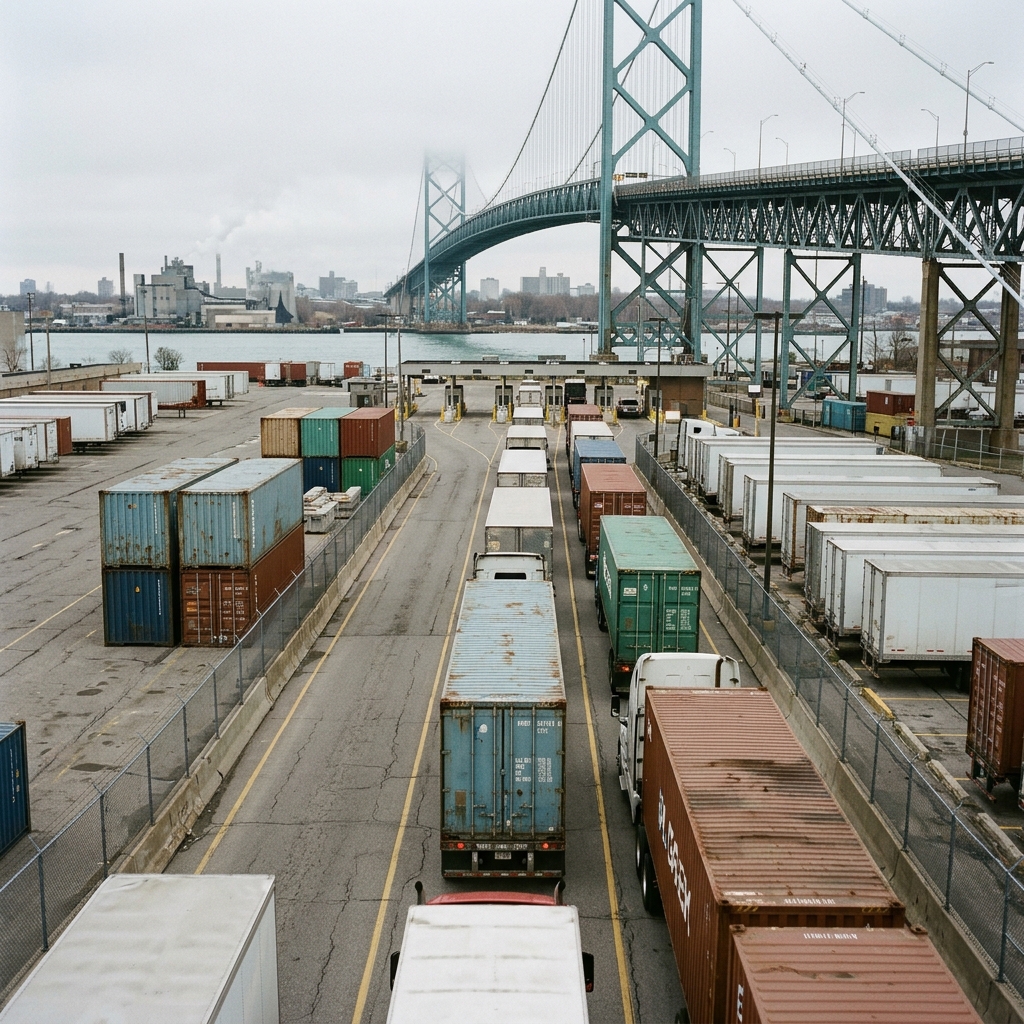
Rules of origin compliance has become the focal point for auto manufacturing along the Detroit-Windsor corridor. Under the USMCA, vehicles need 75 percent Regional Value Content to cross the border duty-free. U.S. negotiators want tighter tracing protocols to prevent subsidized Chinese battery components and processed minerals from slipping through Canadian facilities. Pushing for stricter enforcement at crossings like the Blue Water Bridge and the Pacific Gateway helps Washington hit its industrial policy targets without choking off general border trade.
3. Currency Volatility and Margin Compression in the Industrial Corridor
Financial markets have started pricing in the risks of this trade repositioning. The Canadian dollar has hovered near 71 cents U.S., weighed down by domestic productivity lags and the threat of trade penalties. Bank of Canada officials must now factor currency depreciation into their interest rate decisions, knowing that a weak loonie drives up the cost of imported U.S. factory equipment. Meanwhile, Canadian energy transition projects face delays as executives wait for clear legal terms on export rules into the northern United States.
Quarterly filings from major freight carriers, including Canadian National and CPKC, point to changing distribution patterns. Importers have spent months front-loading inventory to get ahead of possible tariff announcements, pushing warehouse storage to capacity across Ontario and the U.S. Midwest. This trend locks up corporate cash and creates artificial volume swings in freight markets. Once tariff threats shift to slower regulatory reviews, companies have to discount that excess inventory, cutting into gross margins across the wholesale sector.
Tax authorities on both sides of the border face a growing administrative load. The Internal Revenue Service and the Canada Revenue Agency must review transfer pricing and tariff adjustments as multinational firms balance their intercompany books. Fluctuating border duties make arm's-length accounting far more difficult. Mid-sized industrial businesses without large legal teams end up absorbing these compliance costs, which eats away at the profit margins that make cross-border production work.
4. Strategic Realignment Toward Critical Minerals and Energy Security
The most practical middle ground for Washington and Ottawa centers on natural resources rather than broad tariffs. Canada holds extensive deposits of lithium, nickel, cobalt, and graphite. Both the U.S. Department of Defense and the Department of Energy view these materials as essential to national supply chains. Blanket tariffs on Canadian mining output would directly raise production costs for new battery plants across the Midwest. Washington can bypass these trade penalties by setting up bilateral procurement pacts backed by Title III authorities under the Defense Production Act.
Cross-border energy shipments present another hard limit for tariff advocates. Canada exports more than 4 million barrels of crude oil per day to the United States, largely through networks like Enbridge's Mainline system. Refineries in the Midwest rely on heavy Western Canadian Select to churn out diesel, gasoline, and jet fuel. Applying border levies to Canadian oil imports would trigger immediate fuel price increases in politically competitive states. Energy infrastructure does not adapt quickly to arbitrary barriers, and high fuel costs carry direct consequences at the ballot box.
Washington's post-midterm trade agenda will ultimately focus on managed trade rather than pure protectionism. The White House can point to practical wins by renegotiating import quotas, tightening rules on steel transshipment, and funding joint defense projects. This strategy lets officials maintain a tough public stance on trade without triggering consumer-facing import taxes that alienate voters. The commercial relationship between the two nations will remain contentious and heavily negotiated, but the USMCA legal structure provides the guardrails to keep cross-border commerce moving.