1. Macklem Leaves Rate Hammer Cocked as Core Inflation Stalls
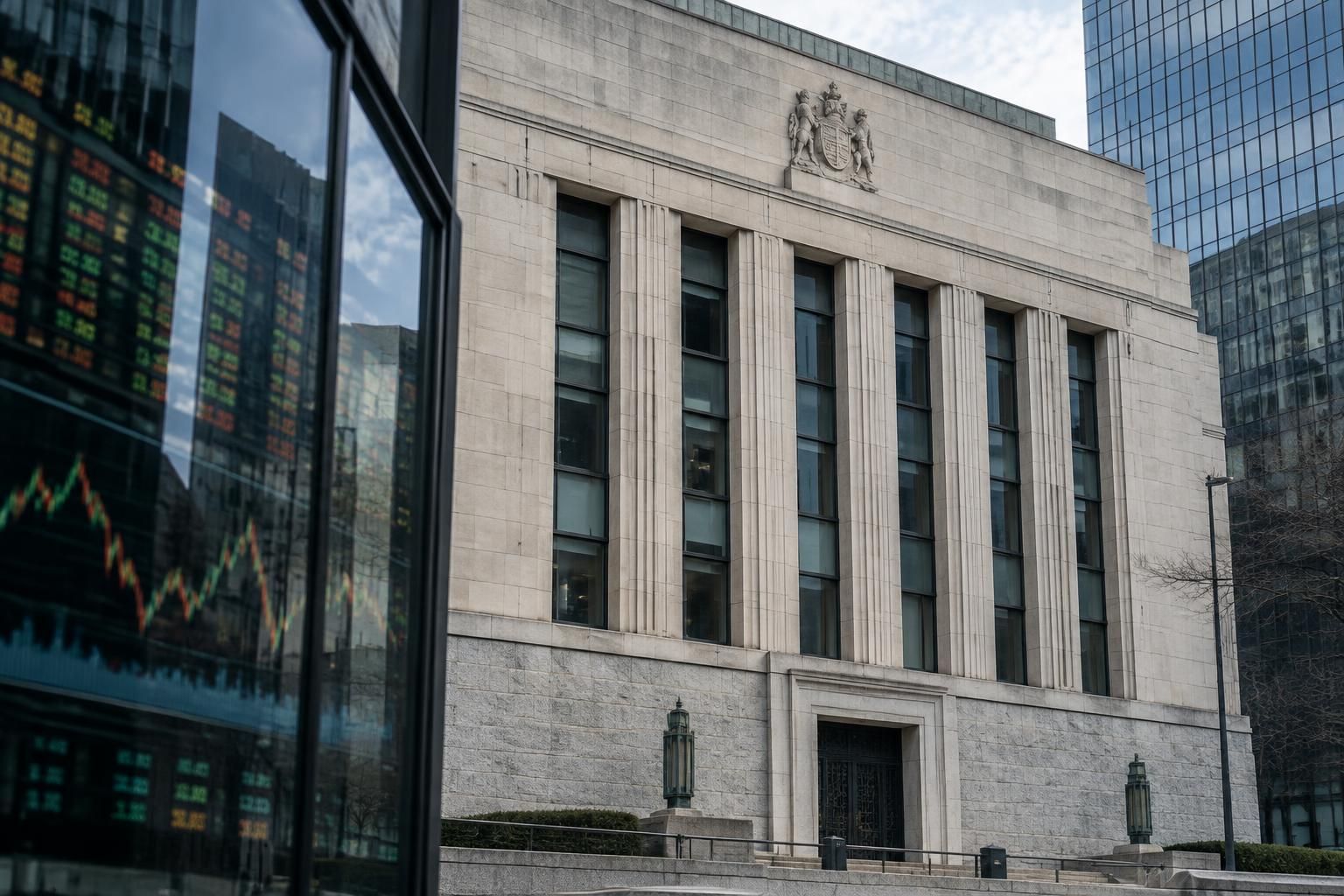
The Bank of Canada held its policy rate at 5.00 percent in its latest decision, but the accompanying statement delivered a clear warning to bond desks and corporate boardrooms. Governing Council members noted that excess demand is not clearing fast enough to secure price stability. Trimmed median and weighted median core inflation figures sit stuck above the 3.5 percent mark. The bank stated plainly that it will lift the overnight rate again if sticky service inflation fails to recede over the next quarter.
Foreign exchange markets barely reacted. The Canadian dollar held close to 1.3650 against the greenback, locked inside an intraday band of under thirty pips. Spot traders treated the central bank's language as verbal posturing meant to keep financial conditions from loosening too early. A premature drop in long-term sovereign bond yields would quickly fire up the sensitive Canadian housing market. Institutional desks on Bay Street determined that the bar for an actual follow-up hike remains high, especially with domestic labor data softening.
Recent gross domestic product figures show an economy losing steam. Household spending per person has dropped for several quarters as mortgage resets mount. Data from the Office of the Superintendent of Financial Institutions confirms that thousands of variable-rate borrowers have crossed their contractual trigger rates. These mortgage structures leave the Canadian financial system far more exposed to rate shifts than the United States, where thirty-year fixed mortgages protect consumers from central bank tightening.
2. Federal Reserve Policy Imbalance Limits Loonie Tailwinds
The quiet reaction in USD/CAD stems from the firm policy stance of the US Federal Reserve. Chair Jerome Powell and the Federal Open Market Committee hold the federal funds target range at 5.25 to 5.50 percent. This yields a 25 to 50 basis point advantage over matching Canadian government debt. The yield premium consistently pulls institutional capital into short-dated US Treasury bills over Government of Canada paper.
Currency desks at major North American commercial banks reported light cross-border flows after the Ottawa announcement. Money managers see little reason to build long-Loonie positions on central bank warnings while US economic prints stay strong. Consumer spending in the US continues to outpace forecasts, powered by steady payroll gains and corporate earnings. This gap leaves Canadian policymakers with little room to drive their currency higher.
Energy markets are offering little support. While West Texas Intermediate and Western Canadian Select spreads trade within customary ranges, crude receipts have not triggered foreign direct investment into Canadian natural resources. Oil producers in the Western Canadian Sedimentary Basin are sticking to capital discipline. They are funneling export cash into share buybacks, balance sheet cleanup, and debt reduction instead of foreign exchange markets.
3. Freight Corridors and Cross-Border Working Capital Absorb Friction
The plateau in bilateral interest rates is hitting supply chains connecting Ontario industrial hubs with assembly plants in Michigan, Ohio, and Indiana. More than twenty-six percent of bilateral merchandise trade crosses the Ambassador Bridge and Blue Water Bridge. Parts suppliers along these routes are carrying extended cash conversion cycles while their commercial credit lines sit at prime rates well over seven percent on both sides of the border.
Carriers running through the Pacific Gateway and across the CPKC rail network must refinance heavy machinery under tight bank lending standards. Equipment loans that carried rates below four percent during the pandemic now run between eight and ten percent. These costs are stalling fleet updates. Trucking firms operating between Montreal and distribution centers in Upstate New York are putting off capital expenditures, keeping older diesel rigs on highways to protect cash reserves.
USMCA rules-of-origin audits are adding more balance sheet friction for auto suppliers. To secure zero-tariff access under the trade pact, tier-one and tier-two parts makers must verify regional value content thresholds and strict labor value content rules. Running these audits requires tracking software and tax compliance across several jurisdictions. Paying for these systems with high-interest bank credit increases overhead for mid-market suppliers across the Great Lakes industrial corridor.
4. Policy Divergence Risks Threaten Corporate Treasury Hedging Strategies
Corporate treasurers at major cross-border firms are revising forward currency hedges for potential policy divergence over the coming year. If the Bank of Canada hikes rates while the Federal Reserve stays on hold, shrinking yield spreads could trigger swings in Canadian dollar options. Financial managers are turning to zero-cost collars and currency swaps to protect balance sheets against sudden volatility spikes.
Tax rules add friction to cross-border cash management. The Canada Revenue Agency and the Internal Revenue Service enforce tight transfer pricing standards on intercompany loans. With rates elevated, multinationals running internal lending desks must update cross-border interest rates to meet arm's-length standards. Inattention to these internal charges risks audits, tax adjustments, and financial penalties from authorities.
The path forward for the Canadian dollar depends on whether consumer debt strain drags down core domestic inflation. If household finances crack through the winter, the Bank of Canada will have to drop its hawkish tone and cut rates before the Federal Reserve does. That divergence would widen the US-Canada rate gap, pushing the Loonie toward 1.4000 against the US dollar and raising costs on imported tools, factory equipment, and seasonal goods.