1. Ford Breaks Diplomatic Protocol to Challenge Trump's Tariff Threat
Queen's Park erupted this week after Ontario Premier Doug Ford called President-elect Donald Trump a bully over proposed 25 percent universal tariffs on Canadian goods. Ford stated that Canada must respond with equal force rather than appease Washington. The verbal broadside marks a sharp escalation in bilateral friction. Ontario accounts for roughly 40 percent of Canada's total economic output, with manufacturing heavily tied to the American Midwest. Ford's confrontation signals a shift away from quiet backchannel diplomacy toward combative public resistance, a posture designed to rally Canadian provincial leaders before the formal review of the United States-Mexico-Canada Agreement.
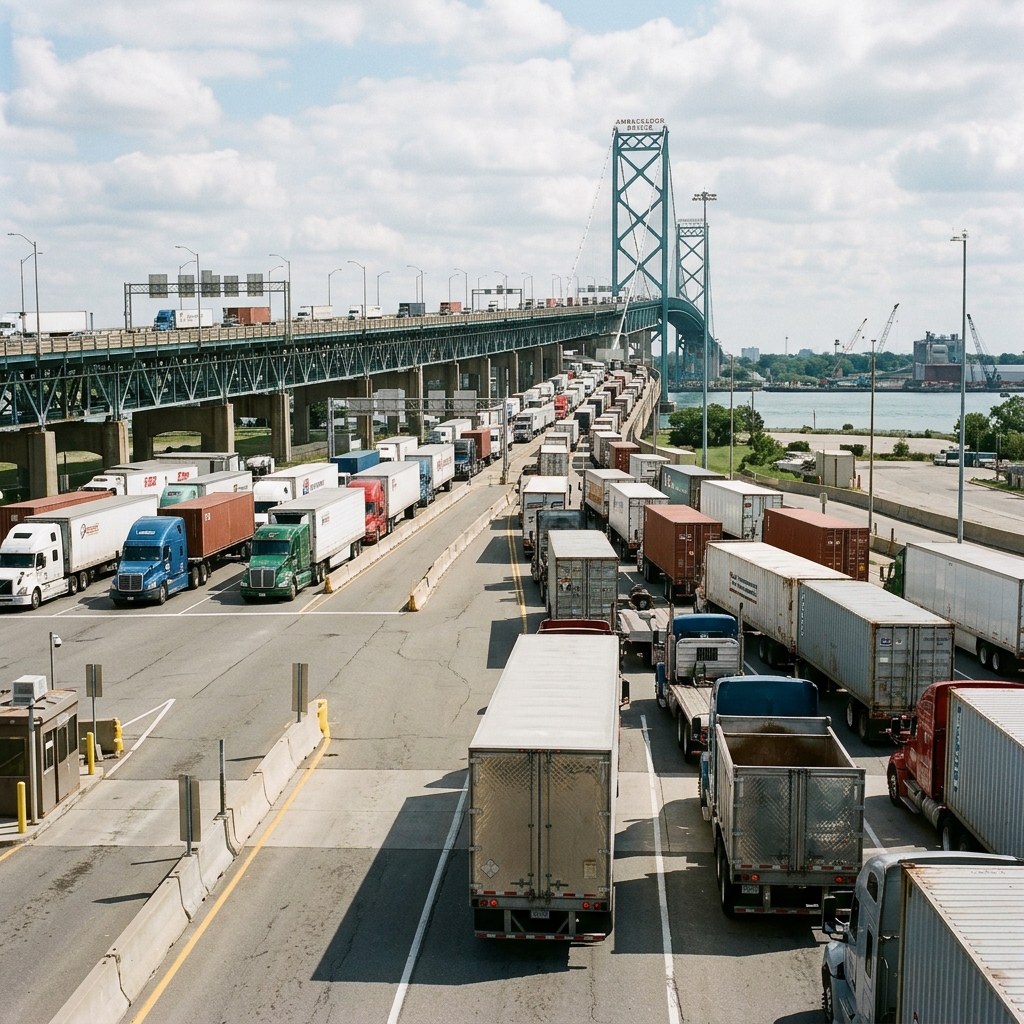
The friction centers on Trump's declaration that Canada allows illicit fentanyl and undocumented migrants across its northern frontier, prompting his threat of sweeping executive trade penalties via the International Emergency Economic Powers Act. Canadian officials reject the premise, pointing to border data from U.S. Customs and Border Protection. CBP recorded fewer than 45 pounds of fentanyl seized at the northern border in fiscal year 2024, compared to tens of thousands of pounds at the southwest border. Despite those statistics, Washington trade hardliners continue to treat the Canadian border as an undifferentiated point of entry, creating severe operational uncertainty for freight operators at the Ambassador Bridge and the Blue Water Bridge.
Ford's statements also target the federal strategy managed by Prime Minister Justin Trudeau in Ottawa. While federal cabinet members pursued high-level dinners at Mar-a-Lago to defuse the confrontation, Ford insisted that polite negotiation invites further aggression. Ford convened emergency discussions with fellow provincial premiers to prepare provincial countermeasures. These measures include cutting off electricity transfers to New York and Michigan, stripping American companies of provincial procurement contracts, and blocking cross-border energy supply agreements. The strategy seeks to demonstrate that unilateral trade measures inflict immediate economic pain on American voters and domestic utilities.
2. Great Lakes Automotive Corridor Faces Compounding Trade Duties
The immediate casualty of an unmitigated tariff dispute is the Great Lakes automotive corridor. Vehicles and sub-assemblies cross the Detroit River multiple times before final assembly under the strict 75 percent regional value content rules established by the USMCA. Plants operated by General Motors in Oshawa, Stellantis in Windsor, and Ford Motor Company in Oakville rely entirely on tier-one suppliers in Ohio, Michigan, and Indiana. Conversely, American assembly lines depend on engine castings and specialized stampings manufactured by Ontario firms such as Linamar and Magna International. Imposing a 25 percent levy would halt production lines within forty-eight hours due to lean inventory protocols.
Transportation data underscores the fragility of these commercial links. Over 10,000 commercial trucks traverse the Ambassador Bridge and the Blue Water Bridge daily, carrying billions of dollars in finished goods and subcomponents. A blanket tariff enforced by U.S. Customs and Border Protection would require rigorous classification audits and immediate cash bond postings at crossing ports. Freight haulers face crippling administrative backlogs along the Highway 401 corridor, stretching from London to Windsor. Rail operations managed by Canadian National Railway and Canadian Pacific Kansas City would similarly experience clearance bottlenecks at international rail crossings in Port Huron and Detroit.
Corporate executives across the manufacturing belt warn that tariffs will push production costs beyond viable margins. Parts that clear customs half a dozen times would accumulate compounding tariff duties under current U.S. executive proposals. The Motor & Equipment Manufacturers Association and the Canadian Vehicle Manufacturers' Association calculate that a 25 percent tariff would add roughly 3,000 dollars to the average retail cost of a passenger vehicle manufactured in North America. This cost surge would depress consumer demand in both countries and accelerate inflationary pressures on durable consumer goods.
3. Electricity Exports, Crude Pipelines, and Retaliatory Procurement Rules
Beyond automotive assembly, energy infrastructure gives Ontario and its neighboring provinces direct economic leverage. Ontario's Independent Electricity System Operator manages high-voltage transmission interconnections that supply baseload power to the New York Independent System Operator and the Midcontinent Independent System Operator in the American Midwest. In previous winter peaks, Canadian power exports prevented regional brownouts in border states. Ford's threat to suspend these power agreements strikes directly at grid reliability in states that voted for the incoming administration, transforming energy policy into a weapon of commercial statecraft.
The dispute threatens broader hydrocarbons pipelines that sustain regional refining operations. Enbridge Line 5 carries 540,000 barrels per day of light crude oil and natural gas liquids across the Straits of Mackinac to refineries in Sarnia, Ontario, and Detroit, Michigan. A protracted trade dispute complicates pending legal settlements regarding Line 5 and threatens pipeline operations across the continent. American Midwest refineries rely on heavy Canadian crude shipped via CPKC rail routes and pipeline corridors to produce gasoline and diesel fuel. Imposing import taxes on these supplies would directly inflate retail gasoline prices across the American industrial heartland.
Retaliatory mechanisms also threaten municipal and provincial procurement contracts worth billions of dollars. The Ontario government spends more than 30 billion Canadian dollars annually on public infrastructure, medical equipment, and technology services. Ford announced plans to institute aggressive Buy Ontario procurement guidelines that disqualify American suppliers from public bidding processes if Washington imposes trade restrictions. This protectionist response mirrors American state-level Buy America provisions, cutting off major U.S. industrial and software vendors from lucrative public sector projects across Canada's most populous province.
4. Foreign Exchange Volatility, Interest Rate Divergence, and the 2026 USMCA Review
The feud between Trump and Ford introduces steep monetary and capital market risks across the cross-border corridor. The Canadian dollar dropped toward 70 cents against the U.S. dollar as foreign exchange markets priced in the probability of structural trade disruption. Bank of Canada Governor Tiff Macklem faces a difficult policy trade-off, balancing the need to lower interest rates to shield domestic growth against the risk of imported inflation caused by a weaker loonie. In Washington, the Federal Reserve must assess whether retaliatory tariffs will reverse recent disinflation trends in consumer goods.
The impending 2026 formal review of the USMCA now looks far more contentious than institutional investors anticipated. Article 34.7 of the agreement requires all three member nations to conduct a joint review of the pact six years after entry into force. What was originally designed as a technical recalibration has deteriorated into an ideological confrontation over bilateral trade balances, border security enforcement, and industrial policy alignment. If negotiations fracture, the treaty could shift into an annual review cycle, generating persistent policy uncertainty that chills long-term cross-border capital investment.
Institutional investors are already re-evaluating capital allocations in bilateral manufacturing and natural resource sectors. Private equity firms and industrial conglomerates are pausing capital expenditures in Canadian processing facilities until trade rules stabilize. While some multinational firms may consider moving facilities south of the border to avoid tariffs, the high capital costs and cross-border dependencies make wholesale industrial relocation deeply uneconomic. The trade spat confirms that the North American commercial alliance has entered an era of sharp state-level friction and unpredictable executive actions.