1. Ottawa Extends Targeted Duty Relief to Protect Domestic Processors
The federal government in Ottawa quietly extended key duty remission orders on selected industrial imports from the United States, granting relief to domestic manufacturers. Reported by Anadolu Ajansi, the decision followed consultations between the Department of Finance Canada and core manufacturing lobbies. Importers who rely on specific steel alloys, specialty chemicals, and components unavailable domestically retain relief from defensive surcharges. This administrative step defuses immediate cost inflation for Canadian factories without requiring full renegotiation of bilateral retaliatory lists.
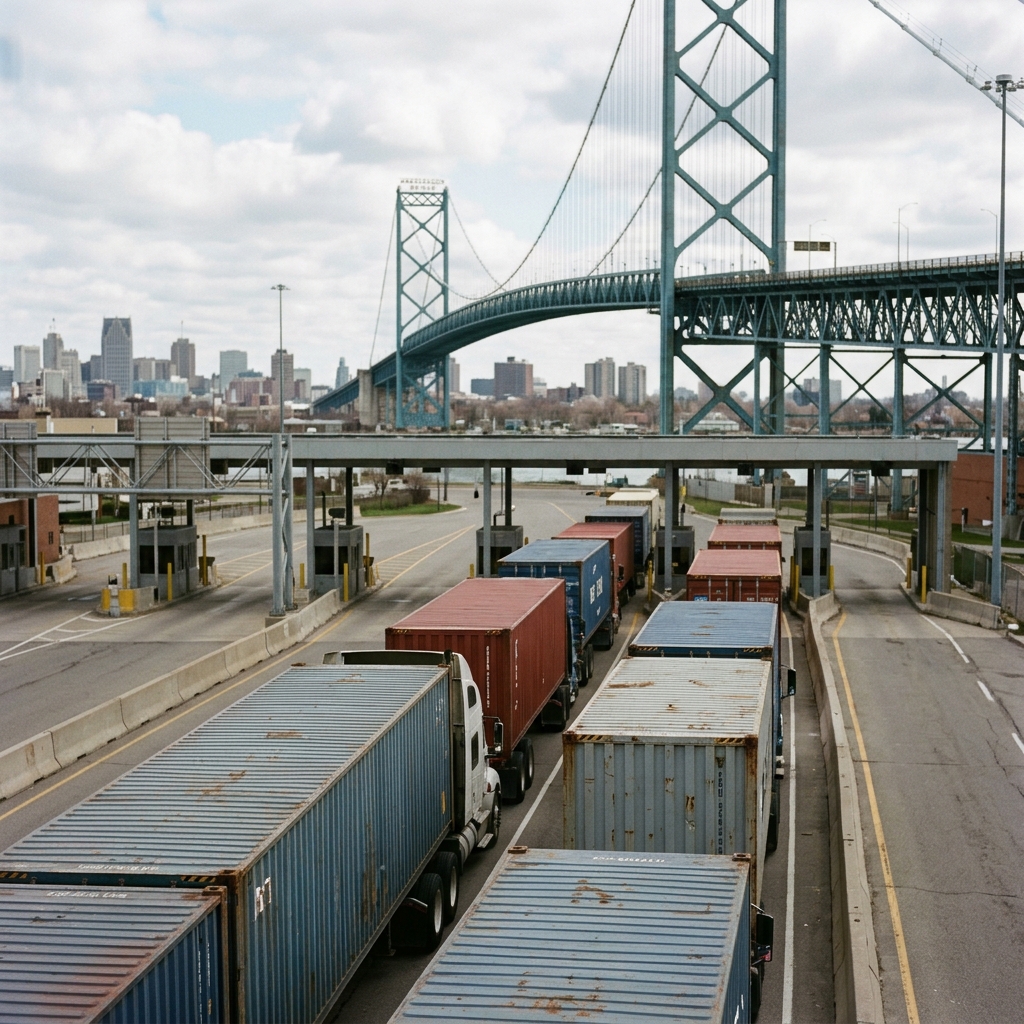
The reprieve targets intermediate goods that cross high-volume transit routes like the Ambassador Bridge and the Blue Water Bridge. Under the updated customs notice, importers can claim duty drawbacks or remissions under specific tariff schedule provisions administered by the Canada Border Services Agency (CBSA). Without this extension, Canadian fabricators risked paying punitive import rates on items with no viable domestic substitutes. Federal officials recognized that penalizing Canadian operations failed to extract commercial concessions from Washington.
The Canadian Manufacturers and Exporters trade association pressed Finance Minister Chrystia Freeland for months on this issue. Domestic enterprises pointed out that reciprocal tariffs imposed during earlier bilateral disputes had backfired on regional supply chains. In southern Ontario and Quebec, specialized auto-parts builders and heavy equipment fabricators operate on thin margins. The renewed exemption shields these businesses from sudden import levies, maintaining predictable cash flows across southern border entry points.
2. Manufacturing Supply Chains Avoid Immediate Cross-Border Price Shocks
Industrial supply chains between the United States and Canada run as integrated production systems rather than isolated import-export channels. Intermediate products frequently cross the Detroit River multiple times before rolling off assembly lines as finished vehicles. CPKC and CN Rail lines move raw inputs southward while bringing back specialized fabrications and tooling. Imposing unmitigated tariffs on these movements forces capital-intensive plants to shoulder sudden operational expenses. The extension of relief orders prevents these cross-border friction costs from cascading downstream into broader wholesale indices.
Bank of Canada officials monitor import prices closely as they assess core inflation dynamics. When companies pay duties on base materials, they pass those expenses along to industrial buyers, complicating efforts to steady headline consumer prices. By maintaining targeted duty relief, federal regulators remove a key cost driver for heavy industry. This policy allows Canadian fabricators to price competitively against offshore competitors in European and Asian markets.
South of the border, American producers of high-spec metals and precision parts welcomed the decision. Trade groups representing midwestern suppliers noted that abrupt duties on Canadian purchasers routinely result in canceled contracts. When Ottawa pauses surcharges, US suppliers maintain stable production runs for customers in Hamilton, Windsor, and Montreal. The trade flow remains intact, sparing cross-border corporate balance sheets from abrupt inventory impairments.
3. Customs Enforcement and Regulatory Mechanisms Under CBSA Oversight
The Canada Border Services Agency issued an updated customs memorandum to outline exact eligibility standards for these extended remissions. Importers must demonstrate that equivalent goods are not available from Canadian producers in sufficient commercial quantities. Documentation requirements demand granular tracking of origin certificates, product specifications, and direct purchase orders. The CBSA conducts periodic compliance audits, warning that improper drawback claims trigger penalties under the Customs Act alongside retroactive duty assessments.
Across the border, US Customs and Border Protection monitors the flow of goods to verify proper classification under the harmonized system. Both agencies cooperate through shared data initiatives, cross-checking bills of lading against electronic entry filings. Companies seeking tariff relief must preserve five years of accounting books and freight bills. The process requires tight alignment between corporate logistics teams, customs brokers, and legal counsel specializing in cross-border trade law.
Regulatory friction often arises over classification disputes at major commercial ports of entry. A minor variance in an alloy composition can shift an import from an exempt tariff line to a taxable category. Trade compliance officers in Montreal and Calgary advise multinational clients to obtain binding advance rulings from the CBSA before dispatching railcars. A formal ruling prevents unexpected impoundments, demurrage charges, and liquidity locks caused by disputed customs entries.
4. USMCA Framework and Strategic Trade Alignments Ahead
The targeted remission program points to broader structural realities inside the United States-Mexico-Canada Agreement (USMCA). With the mandatory six-year joint review approaching in 2026, both capitals are managing trade friction points pragmatically. Formal dispute settlement panels continue to address persistent disagreements over Canadian dairy quotas and American solar panel tariffs. Yet industrial components remain too critical to regional security to leave exposed to broad tariff disputes.
Senior trade advisors in Washington and Ottawa know that unilateral tariff retaliation often inflicts asymmetric pain on allied supply networks. The regional push for nearshoring requires cohesive North American industrial capacity. If Canadian fabricators cannot source American components affordably, they face incentives to source cheaper materials from Asia, undermining North American content rules. The decision to maintain relief aligns domestic commercial survival with the regional goals of the USMCA.
Corporate executives operating on both sides of the forty-ninth parallel should treat this extension as temporary insurance rather than permanent policy. Trade remedies remain active tools within the executive branches of both governments. Corporate treasurers must monitor bilateral political shifts, build alternative supplier redundancies, and structure contracts with clear duty-allocation clauses. For the moment, however, cross-border freight moves forward with less immediate tax pressure at the border.