Ottawa Shields Domestic Industrial Supply Lines Through Targeted Remissions
The federal government in Ottawa has renewed targeted tariff relief on a range of United States industrial imports, according to a report from Reuters. The Department of Finance Canada put the extension into effect through updated customs tariff remission orders. This measure directly protects domestic processors from paying retaliatory duties on critical production components that Canadian manufacturers cannot source locally. The exemptions cover high-grade specialty steels, precise aluminum extrusions, and specialized chemical compounds. These products cross into Southern Ontario daily from production facilities based in Ohio, Pennsylvania, and Michigan.
The extension points to Ottawa's practical handling of cross-border commerce during a period of sustained political tension. Imposing import surcharges on intermediate inputs punishes domestic assemblers far more than it penalizes foreign suppliers. Importers of record registered with the Canada Border Services Agency will retain duty-free access for qualified Harmonized System tariff codes. Meanwhile, the Bank of Canada continues to track core input price pressures across the domestic industrial sector. This remission framework prevents immediate upward cost revisions from rippling through automotive, aerospace, and commercial machinery plants across Windsor, Hamilton, and Montreal.
The timing of the remission extension carries real commercial weight. Trade associations, including Canadian Manufacturers and Exporters, spent months lobbying the federal cabinet for regulatory clarity. Domestic plants operate on thin margins. Sudden double-digit border levies threaten plant utilization rates. By approving this regulatory extension, Finance Minister Chrystia Freeland preserves cost parity for domestic operations tied directly to integrated North American supply chains. The measure gives plant operators certainty over the next fiscal cycle as corporate planners finalize procurement budgets.
Customs Administration and Freight Arteries Absorb Immediate Order Continuity
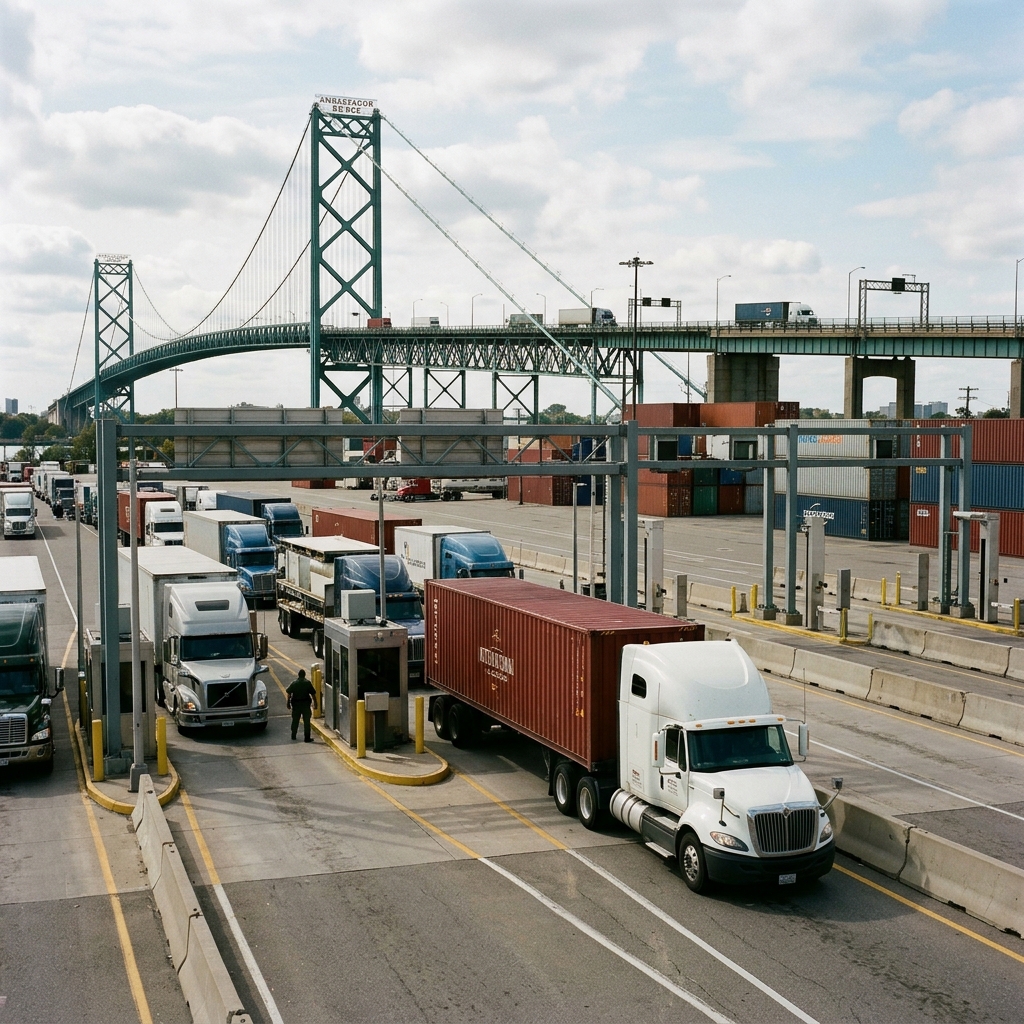
Operationally, the relief flows through specific remission codes filed under Section 115 of the Customs Tariff Act. Importers clearing shipments through CBSA ports of entry must verify that the origin and processing profile of each container meet strict technical documentation standards. The commercial freight corridors moving across the Ambassador Bridge between Detroit and Windsor, alongside the Blue Water Bridge in Sarnia, process thousands of these cross-border shipments every week. Without these explicit remission renewals, long-haul carriers and logistics operators would face administrative bottlenecks, bonded warehouse holds, and unexpected duty payment assessments.
Class I rail operators CPKC and Canadian National Railway also gain operational clarity from the regulatory extension. Both carriers transport bulk intermediate inputs, chemicals, and industrial alloys from US manufacturing hubs directly to Canadian heavy industrial fabricators. US Customs and Border Protection officials share automated manifest information with their CBSA counterparts to maintain steady transit times. If duties were reinstated, domestic customs brokers would be forced to process hundreds of individual refund claims. The automated relief protocol prevents backlogs at major border processing centers along the international boundary.
Financial controllers inside Canadian firms have welcomed the administrative continuity. When tariff remissions lapse, companies must either absorb immediate margin losses or pass price increases along to end buyers. For fabricators working under fixed-price contracts with industrial clients, unexpected border tariffs represent unrecoverable balance sheet hits. The formal renewal keeps working capital lines open for productive investment rather than locking up cash in duty dispute escrows or customs deferral accounts managed through the Canadian Trade and Investment International Directorate.
The USMCA Framework and Ottawa's Strategic Trade Calculations
The tariff relief extension is tied directly to the institutional health of the Canada-United States-Mexico Agreement. While bilateral disputes continue over Canadian dairy supply management and American timber duties, Ottawa uses targeted tariff relief to show its commitment to integrated continental production. Trade policy advisors in Ottawa understand that unilateral tariff barriers on American raw materials run counter to the basic economic logic of North American manufacturing. The continental market functions as an interconnected workshop rather than a collection of isolated national factories.
The broader geopolitical environment also shapes this policy calculus. Both Washington and Ottawa face fierce competition from Chinese state-subsidized advanced materials and automotive technology. Imposing cross-border tariffs between Canada and the United States fragments regional capacity precisely when both nations need coordinated industrial investment. US trade officials in the Office of the United States Trade Representative monitor these tariff extensions closely. A cooperative posture on intermediate industrial inputs builds goodwill as the two partners address difficult structural issues before the formal USMCA joint review in 2026.
Regulatory alignment between the Canada Border Services Agency and US Customs and Border Protection provides stability for cross-border joint ventures. American suppliers who maintain steady delivery contracts with Canadian buyers can continue shipping goods without restructuring their invoice pricing. The absence of trade barriers ensures that cross-border component manufacturing remains competitive against offshore alternatives. Trade lawyers in Toronto and Washington note that targeted remission orders allow governments to de-escalate commercial tensions without giving up their underlying statutory trade authorities.
Corporate Balance Sheets, Inflationary Dynamics, and the 2026 Horizon
From a macroeconomic perspective, the remission extension removes an artificial cost floor that would otherwise feed into domestic inflation indices. With Canadian headline inflation hovering near the Bank of Canada's 2 percent target, central bank policymakers remain vigilant against secondary price shocks. Intermediate input costs, if raised by tariffs, quickly migrate into consumer-facing goods ranging from home appliances to commercial delivery vehicles. By preserving duty exemptions, Ottawa removes cost friction before it can distort the producer price index or complicate future interest rate decisions.
Business leaders must treat this relief extension as a temporary bridge rather than a permanent settlement. The upcoming 2026 USMCA review gives all three North American signatories the statutory right to request renegotiations or issue formal termination notices. Corporate boards in Calgary, Toronto, and Chicago are already stress-testing their cross-border logistics against potential tariff increases. Companies that rely heavily on single-source American suppliers must continue evaluating their compliance frameworks. They need to confirm that every product code matches the precise descriptions laid out in the CBSA remission schedules.
Ultimately, Canada's decision to extend tariff relief on American goods reflects commercial realities rather than political rhetoric. The integrated nature of the Great Lakes manufacturing cluster leaves little room for punitive tariffs on intermediate production goods. By extending these remission orders, Ottawa delivers immediate stability to industrial employers and signals to Washington that economic integration remains a mutual priority. As continental supply chains adjust to changing regulatory requirements, targeted tariff management remains Canada's most effective administrative tool for protecting domestic industrial margins.