1. Ottawa Capitalizes on Sudden Shift in White House Trade Posture
Trade negotiators from Global Affairs Canada closed three bilateral commercial arrangements with China's Ministry of Commerce this week in Beijing. The signing ceremony took place roughly forty-eight hours after former President Donald Trump publicly dropped an explicit demand that Canada adopt identical tariff schedules against Chinese electric vehicles and industrial inputs under threat of a blanket 25 percent border levy. Canadian export desks moved quickly. The sudden change in tone from Washington gave Ottawa room to maneuver without immediately triggering retaliatory border enforcement from US Customs and Border Protection.
The newly signed pacts target agricultural commodities and industrial processing. Canadian canola seed exporters, who saw shipments fall 18 percent during the recent standoff, secured renewed phytosanitary clearances at ports in Guangzhou and Shanghai. Canadian red meat processors gained access for five additional federally inspected slaughter facilities under the Canadian Food Inspection Agency. In return, China's state-backed buyers agreed to purchase defined quotas of specialty fertilizer, including potassium chloride mined in Saskatchewan, over the next eighteen months. The commercial value across all three agreements sits at an estimated 3.4 billion Canadian dollars.
Officials in Ottawa defended the speed of the transaction. Prime Minister Justin Trudeau faced intense pressure from prairie premiers and trade associations to protect market access while US border policy fluctuated. Saskatchewan Premier Scott Moe and Alberta Premier Danielle Smith had both warned that holding Canadian farm products hostage to US trade policy was unacceptable. By decoupling its immediate trade schedule from Washington's evolving industrial defense rules, Ottawa secured critical cash flow for domestic producers facing elevated borrowing costs from the Bank of Canada.
2. Western Ports and Rail Corridors Prepare for Volume Surge
The signed pacts will alter freight patterns along Canada's Pacific Gateway. Canadian National Railway and Canadian Pacific Kansas City are reallocating bulk hopper cars toward deep-water terminals at the Port of Vancouver and the Port of Prince Rupert. Over the past six months, rail traffic had shifted southward toward the US Midwest as commodity traders sought secondary buyers. With Chinese customs clearing backlogged grain vessels, bulk rail car loadings for West Coast shipment will increase by an estimated 12 percent through the third quarter.
Terminal operators in British Columbia had cut shifts earlier this year as Beijing launched anti-dumping probes against Canadian agricultural goods. Those inquiries followed Ottawa's temporary alignment with US Section 301 tariffs on Chinese goods. Now, operations at Neptune Terminals and Cascadia Grain Terminal are returning to round-the-clock schedules. The shift brings needed harbor dues and container throughput fees to western port authorities, which had reported an 8.4 percent drop in year-to-date dry bulk container exports compared to the previous calendar year.
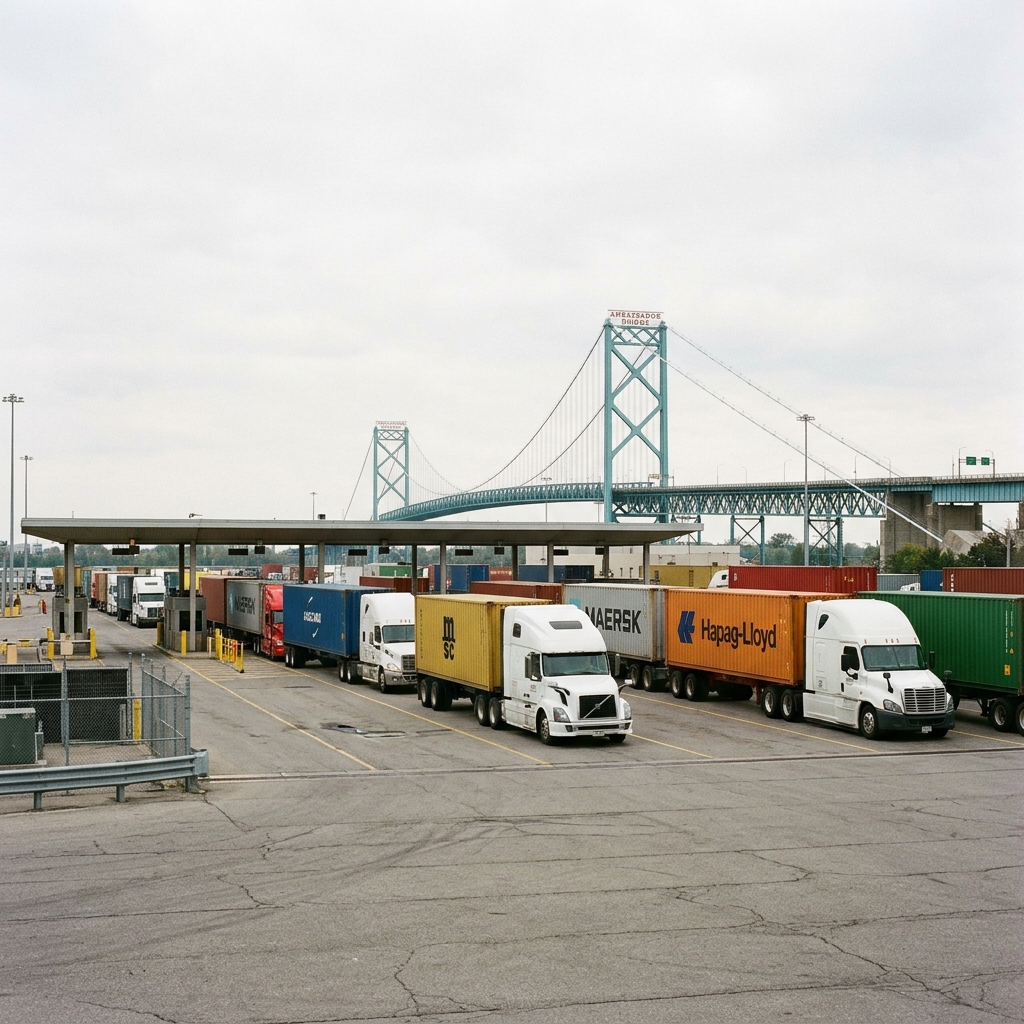
Cross-border truck traffic running through eastern trade arteries tells a different story. Along the Ambassador Bridge and the Blue Water Bridge between Ontario and Michigan, commercial logistics carriers remain on high alert. Automotive parts manufacturers rely on freight moving every fifteen minutes to support assembly plants in Windsor and Detroit. Trucking executives worry that any perceived Canadian tilt toward Beijing could bring secondary inspections from US border personnel, which would snarl supply chains across southern Ontario.
3. Critical Minerals and the Mechanics of Regulatory Divergence
The most sensitive component of the Beijing agreements involves intermediate critical minerals processing. Canada maintained its domestic ban on Chinese state ownership of domestic lithium, nickel, and cobalt mines. However, the new memorandum allows private Canadian miners to export raw spodumene concentrate to Chinese refining facilities for toll processing. Refined material can then return to global supply chains outside the direct purview of US Defense Production Act capital pools. This compromise provides an immediate processing outlet for junior miners that lack domestic smelting facilities.
The move exposes a rift in North American regulatory integration. The US Inflation Reduction Act provides consumer tax credits only for electric vehicles whose battery components contain critical minerals extracted or processed in countries with which the United States has a free trade agreement. By permitting toll refining in China, Ottawa helps its domestic resource sector maintain cash flow. The policy disqualifies those specific mineral batches from subsidized US electric vehicle supply chains, creating two distinct tiers of Canadian mined commodities.
Trade lawyers in Washington have already flagged this regulatory split. The Office of the US Trade Representative has tools under the USMCA rules of origin framework to challenge products that use offshore processing. US trade officials argue that intermediate Chinese refining introduces state-subsidized inputs into the North American manufacturing ecosystem. If Canadian miners ship those refined battery materials into Ontario auto plants that subsequently export finished vehicles across the Ambassador Bridge, US Customs and Border Protection could launch formal country-of-origin audits.
4. The Road to the 2026 USMCA Joint Review Grows More Perilous
Ottawa's immediate win in Beijing could carry heavy strategic costs when the USMCA reaches its mandatory six-year review in July 2026. Article 32.10 of the trade agreement requires any signatory country to inform its partners three months before entering into free trade negotiations with a non-market economy. While Canada's new pacts fall short of a formal free trade treaty, trade hawks in Washington view any commercial warming with Beijing as a challenge to North American economic coordination.
Lawmakers from both US political parties on Capitol Hill have voiced skepticism about Canada's reliability as an industrial security partner. The House Select Committee on the Strategic Competition Between the United States and the CCP has repeatedly warned that Chinese components could enter the American market through Canada's southern border. Trump dropped his initial tariff threat to secure domestic concessions, but his trade advisors maintain that Canada must choose between integrated North American border clearance and independent bilateral dealings with China.
Canadian corporate leadership now faces a difficult balancing act. Exporters of bulk commodities like wheat, canola, and wood pulp will collect direct revenue from resumed shipments to Chinese state trading firms. Meanwhile, advanced manufacturers, steel producers, and automotive suppliers tied to the CPKC rail corridor must protect their access to the United States. Ottawa has secured short-term economic relief for its western agricultural base, but it has increased the baseline friction in its most critical trading relationship.