1. Ottawa Puts Stellantis on Legal Notice Over Brampton Plant and Its Promised Jeep Production
Canada has put Stellantis on notice. As reported by Yahoo Finance, Industry Minister Mélanie Joly says Ottawa will pursue legal remedies if the automaker walks away from commitments tied to its Brampton, Ontario assembly plant. The threat follows Stellantis's October announcement of about US$13 billion in US investment over four years, including a decision to build the Jeep Compass at Belvidere, Illinois. Brampton was supposed to build that vehicle. The plant has been idle since 2023, when the line was emptied for retooling, and roughly 3,000 Unifor-represented workers have waited since then for a restart date that no longer exists.
The money is what turns a corporate decision into a political fight. In 2023 Stellantis presented a retooling program for Brampton valued at about C$3.6 billion, with federal and Ontario support behind it. Ottawa treated that package as a trade of public funding for Canadian production. Stellantis now treats the Compass move as a response to a changed tariff regime in Washington. Both statements can be true at once, and a court will have to decide which one the contracts actually reward. The documents are not public in full, which leaves both sides free to describe them favourably.
The reported sale of the plant sharpens the dispute. A sale or transfer of the Brampton facility or its equipment can change who owes what under the funding agreements. Lawyers for the federal and Ontario governments will look first at repayment triggers, asset-disposal restrictions and employment or production covenants. If those clauses are tight, Ottawa has a case it can file in an Ontario court. If they are loose, the threat is mostly political theatre. Joly is betting the first reading holds, and Stellantis has every reason to test it.
2. Tariff Quota Cut Shows Ottawa Already Has Leverage It Has Started to Use
Ottawa did not wait for a courtroom. In October it cut the tariff-free import quota for Stellantis by 50%, and trimmed General Motors's by 24% after GM scaled back production at Ingersoll and Oshawa. The quotas sit inside Canada's remission framework, which grants relief from Canada's 25% counter-tariff on non-CUSMA-compliant US vehicles. The relief is tied to how much a company builds in Canada. Less Canadian output means fewer duty-free vehicles that Stellantis can ship north from its US plants. That is a direct cost on Jeep, Ram and Dodge volumes sold to Canadian dealers.
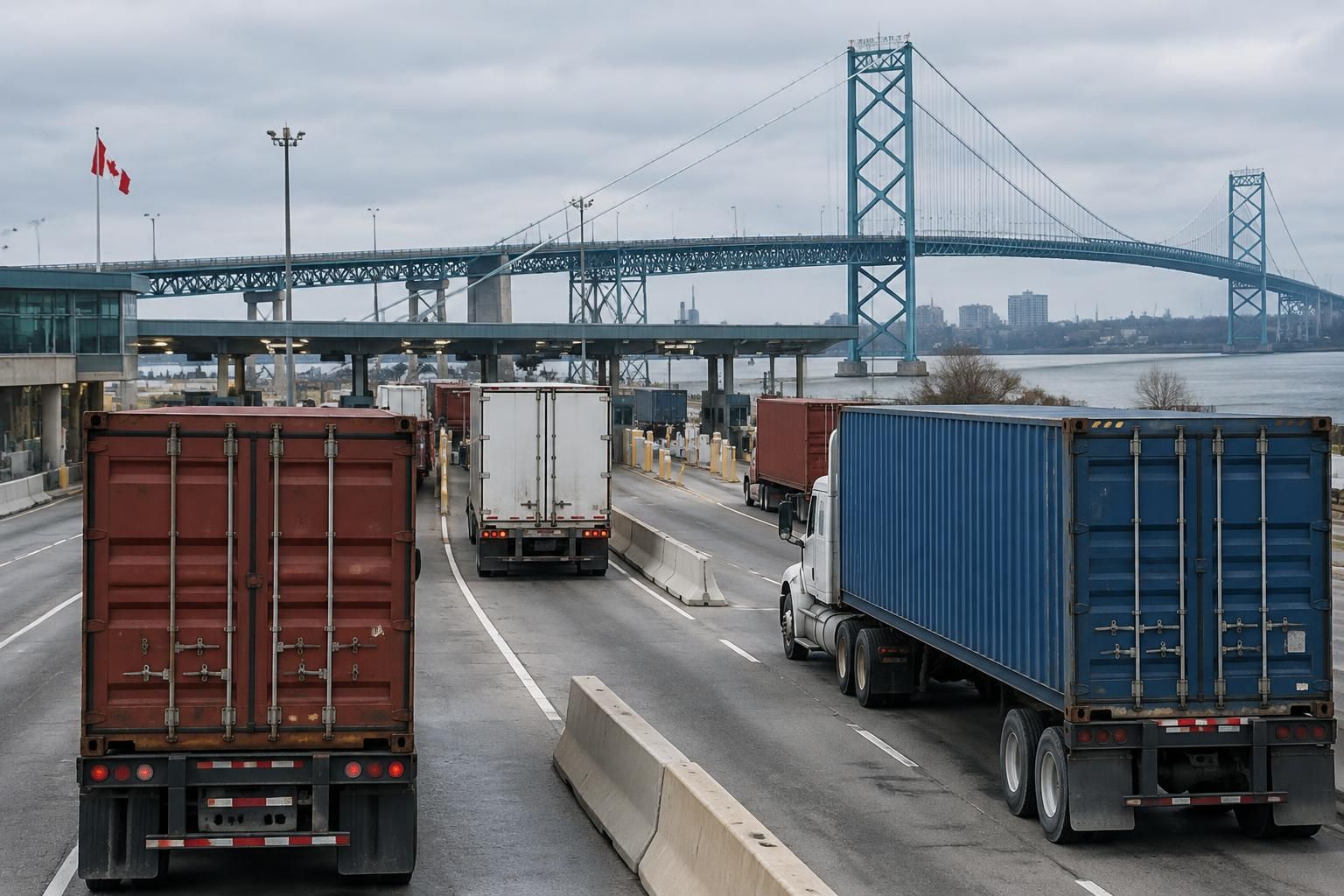
The US side of the ledger is harsher. Washington's Section 232 tariff of 25% on imported vehicles has applied since April 2025, with a deduction for US-made content on USMCA-compliant vehicles. Parts that meet USMCA rules have mostly stayed exempt, though that exemption is revocable. A Compass built in Illinois carries no border tax at all. A Compass built in Brampton and driven across the Ambassador Bridge or the Blue Water Bridge would pay duty on its non-US content. For a compact crossover with thin margins, that arithmetic is hard to argue with.
Unifor's position has hardened accordingly. President Lana Payne has argued that Stellantis took Canadian taxpayer support while planning to relocate the work, and the union wants the government to enforce every term it can find. Stellantis says it remains committed to Canada, pointing to its Windsor Assembly Plant, which builds the Chrysler Pacifica and Dodge Charger. Investors have little reason to reward either side. Dealers in Ontario and Quebec, meanwhile, worry that the quota cut will limit their inventory of the very trucks that sell best in Canada.
3. Why a USMCA Panel Cannot Settle This and Where the Real Legal Fight Will Happen
Many readers assume a trade agreement gives Canada a forum. It does not, at least not here. USMCA Chapter 31 dispute panels hear state-to-state complaints, such as Canada challenging a US tariff measure. They cannot order a private company to build a vehicle in Ontario. A claim against Stellantis is a contract and public-funding matter. It would run through Ontario's courts or through arbitration clauses written into the agreements, and the remedies on offer are repayment, damages or an injunction against asset transfers. Forcing a carmaker to produce cars is a remedy courts almost never grant.
The supply chain explains why the stakes reach beyond one plant. A typical North American vehicle has parts that cross the border several times before final assembly. Windsor to Detroit remains the busiest commercial corridor on the continent, with the Ambassador Bridge carrying a large share of auto parts trade. The Blue Water Bridge at Sarnia and CPKC rail lines through Ontario and Michigan carry the rest of that traffic. When final assembly leaves Brampton, orders to Ontario stamping, seating and wiring suppliers leave with it. Tier-two firms in Windsor, Brampton and Oakville feel the loss within quarters.
Border administration adds friction. The Canada Border Services Agency administers the remission quotas and verifies origin claims, while US Customs and Border Protection audits USMCA certifications and the content deductions under Section 232. A manufacturer that shifts assembly south also shifts its paperwork exposure. If Stellantis claims favourable US treatment for Illinois-built vehicles that contain Canadian parts, CBP can examine those declarations. The Canada Revenue Agency and the IRS will also look at how any plant sale, write-down or credit repayment is reported on each side of the border.
4. USMCA Review in July Gives Washington and Ottawa a Deadline and Stellantis a Bargaining Chip
The calendar matters more than the complaint. The USMCA joint review is due by July 1, 2026, and the Trump administration has signalled that auto rules of origin are a priority. Washington wants higher US content and fewer vehicles assembled elsewhere. A public fight with Stellantis hands Canadian negotiators a concrete example of what they say is happening, but it also reminds Washington how much leverage it holds. Each plant that moves south weakens Canada's claim that an integrated continental auto sector benefits both economies. Ottawa needs the dispute to stay about contracts, not about trade retaliation.
Macroeconomic conditions give Canada little room. The Bank of Canada has cut its policy rate to 2.25%, and the economy is soft in manufacturing-heavy Ontario. A weaker Canadian dollar helps exporters that still ship, but it does not bring back a plant. Rate cuts have not offset the loss of investment. Federal officials know that every new subsidy package invites the same question: what stops the next company from taking the money and leaving? That is why Ottawa is pressing the Stellantis case now rather than quietly renegotiating.
Several outcomes are plausible. Stellantis could settle by repaying part of the support and committing new work to Windsor or a Brampton successor. A buyer for the plant, if one emerges, could bring in a different manufacturer, though Asian and European carmakers face their own tariff exposure. Or Ottawa files suit and the matter drags through the courts into 2027. Executives at Honda, Toyota and GM in Ontario are watching. The precedent will shape how they negotiate their own subsidy terms, and how much Canadian production they promise in return.