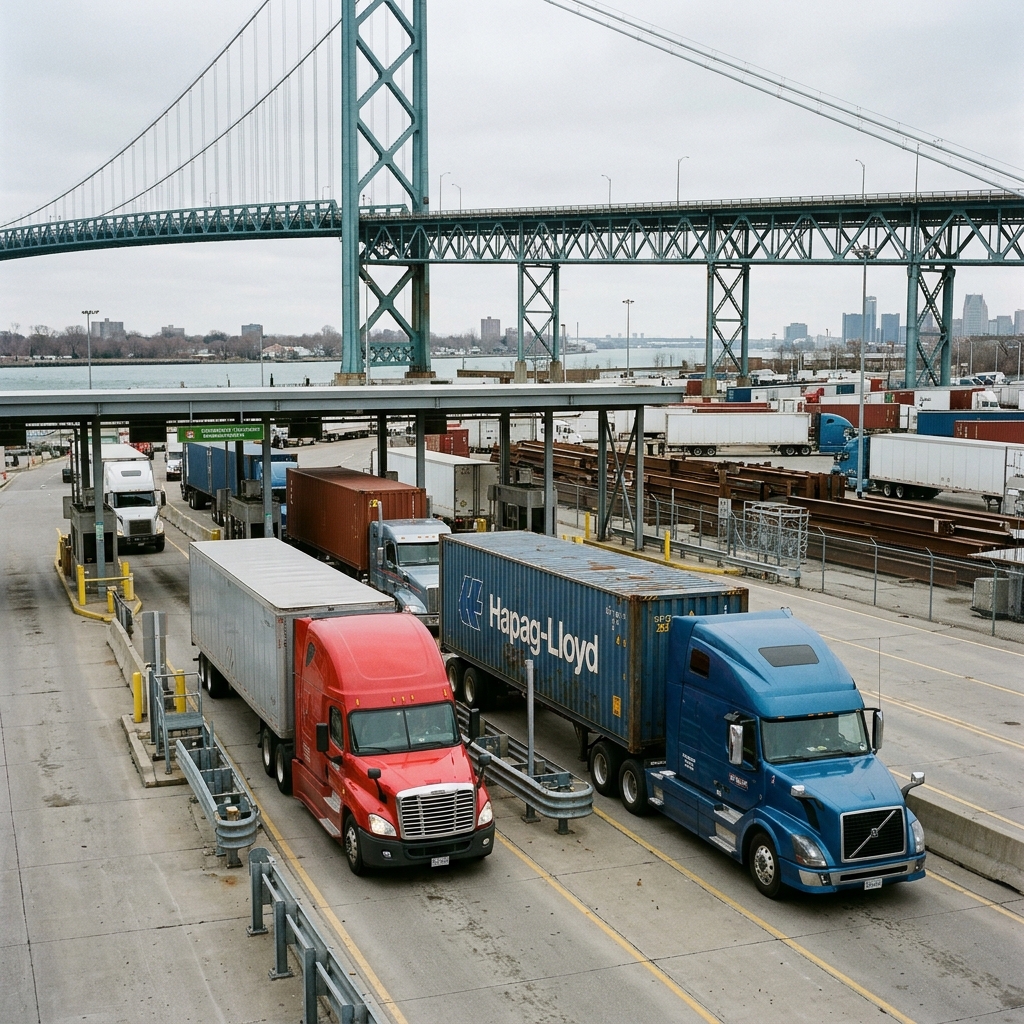
1. Ottawa Responds in Kind After Bilateral Negotiations Collapse
Trade talks between Washington and Ottawa collapsed late yesterday evening. Envoys failed to resolve disputes over industrial subsidies and unilateral cross-border import penalties. The Canadian response was immediate. The Department of Finance Canada announced retaliatory surtaxes targeting key American industrial exports, dairy products, and consumer goods. The measures match the economic scale of recent American restrictions dollar for dollar.
The breakdown capped a four-day emergency summit in Washington. Canadian negotiators sought exemptions from expanding US import quotas, arguing that integrated continental supply chains cannot absorb sudden trade walls. United States Trade Representative officials held firm on domestic content requirements. The resulting impasse leaves commercial traffic along the 5,525-mile shared border exposed to punitive assessments that had remained dormant since previous disputes.
Cabinet ministers stated plainly that Canada will not accept unilateral trade penalties without reciprocal defense. The Canada Border Services Agency will collect these surtaxes directly at entry points. Commercial carriers must now prepare for rigorous classification reviews on American shipments entering distribution hubs across Ontario, Quebec, and British Columbia.
2. Automotive Supply Chains Face Structural Bottlenecks at Detroit-Windsor
The cross-border automotive corridor sits directly in the path of the dispute. Vehicle components cross the Ambassador Bridge and the Blue Water Bridge multiple times before final assembly. Under the new Canadian schedule, specialty steel and fabricated aluminum components from Ohio, Michigan, and Indiana face 25 percent surtaxes. Assemblers in Oshawa, Windsor, and Cambridge must absorb these costs or halt production.
Supply chain planners are raising alarms over lean inventory buffers. North American auto manufacturing operates on just-in-time delivery schedules with minimal warehouse reserves. If commercial trucks face clearance delays at border checkpoints, assembly plants will idle within days. Canadian automotive parts manufacturers have begun auditing Tier 1 and Tier 2 suppliers to determine which components contain tariff-eligible American raw materials.
Freight corridors face immediate fallout. Both Canadian National Railway and Canadian Pacific Kansas City run high-density industrial trains between Midwest hubs and Canadian industrial sectors. Higher border levies on flat-rolled steel and intermediate polymers threaten to suppress rail volumes. Shippers are reviewing customs brokerage agreements to establish who carries the legal burden of duty payouts upon crossing.
3. Currency Markets and Central Bank Policy Absorb Rising Trade Risks
Financial markets reacted quickly. The Canadian dollar dropped 45 basis points against the US dollar within hours of the announcement. Currency traders are pricing in higher friction and lower industrial throughput. Bank of Canada policy makers face a difficult road ahead. Retaliatory tariffs introduce upward pressure on domestic consumer and producer prices while dampening corporate investment, complicating ongoing inflation management.
The Federal Reserve faces its own set of trade distortions. Export-dependent American manufacturers face sudden drops in Canadian order books, which will weigh on capital expenditure across the upper Midwest. American industrial associations have petitioned lawmakers to resume discussions, warning that Canadian countermeasures will damage regional factory payrolls. In the commercial bond market, credit spreads widened for automotive parts suppliers with concentrated cross-border exposure.
Foreign exchange desks in Toronto and New York report heavy hedging activity. Corporate treasurers are purchasing forward contracts to lock in exchange rates before tariffs take effect next month. At the same time, importers are rushing to clear existing orders through Customs and Border Protection and Canada Border Services Agency ports before regulatory deadlines close.
4. USMCA Enforcement Mechanisms and Legal Recourse Options
The sudden tariff escalation tests the dispute resolution rules established under the United States-Mexico-Canada Agreement. Ottawa has formally requested consultations under Chapter 31 of the trade pact. The process takes time. Establishing an arbitration panel and issuing formal legal findings requires several months, leaving businesses to absorb commercial friction in the interim.
Legal experts point to past cross-border disputes as a guide. During the 2018 metals dispute, both nations sustained tariffs for a year before reaching an enforcement compromise. Corporate legal departments are reviewing whether force majeure clauses apply to supply agreements where retaliatory duties upend cost models. Customs attorneys are working to identify alternative tariff classifications to minimize client liability.
A lasting resolution requires political intervention from senior leadership. Bilateral trade between the United States and Canada exceeds 900 billion dollars annually, making a long dispute economically damaging for both nations. Until formal talks resume, corporate executives on both sides of the border must manage inventory costs, adjust procurement pipelines, and manage an increasingly protectionist trade corridor.