1. Washington and Ottawa Reopen Direct Channels Amid Heightened Tariff Threats
Direct trade communications between Washington and Ottawa resumed this week, according to statements made by Jamieson Greer, the designated United States Trade Representative. Greer told CTV News that the two governments held direct conversations within the past few days. These contacts mark the initial skirmishes of a broader trade realignment. Canadian officials face an incoming administration that has repeatedly pledged twenty-five percent across-the-board tariffs on Canadian imports unless border enforcement and trade deficits improve. The conversations indicate that neither capital intends to wait for the scheduled 2026 joint review of the United States-Mexico-Canada Agreement to begin negotiations.
The timing of these talks coincides with sharp market adjustments. The Canadian dollar touched four-year lows near seventy cents against the greenback last week as institutional investors weighed the risk of sudden border levies. At the Department of Finance in Ottawa, officials are auditing bilateral supply vulnerabilities. Bank of Canada models suggest a blanket ten percent tariff would subtract more than two percentage points from Canadian gross domestic product over two years. Greer's acknowledgement confirms that technical teams have begun testing leverage points, moving beyond public political posturing into early bilateral terms.
Trade specialists in Washington point out that Greer is a veteran trade lawyer who served as chief of staff to Robert Lighthizer during the renegotiation of NAFTA. His involvement indicates a strictly transactional approach to cross-border commerce. Greer views the existing trade architecture as an instrument to protect domestic industrial manufacturing and reduce trade imbalances. For Ottawa, the objective is containment. Deputy Prime Minister Chrystia Freeland and Canadian embassy staff in Washington are working to decouple Canadian trade exposure from broader U.S. grievances over Mexican labor standards and transshipment.
2. Manufacturing Corridors and Rules of Origin Form the Primary Battleground
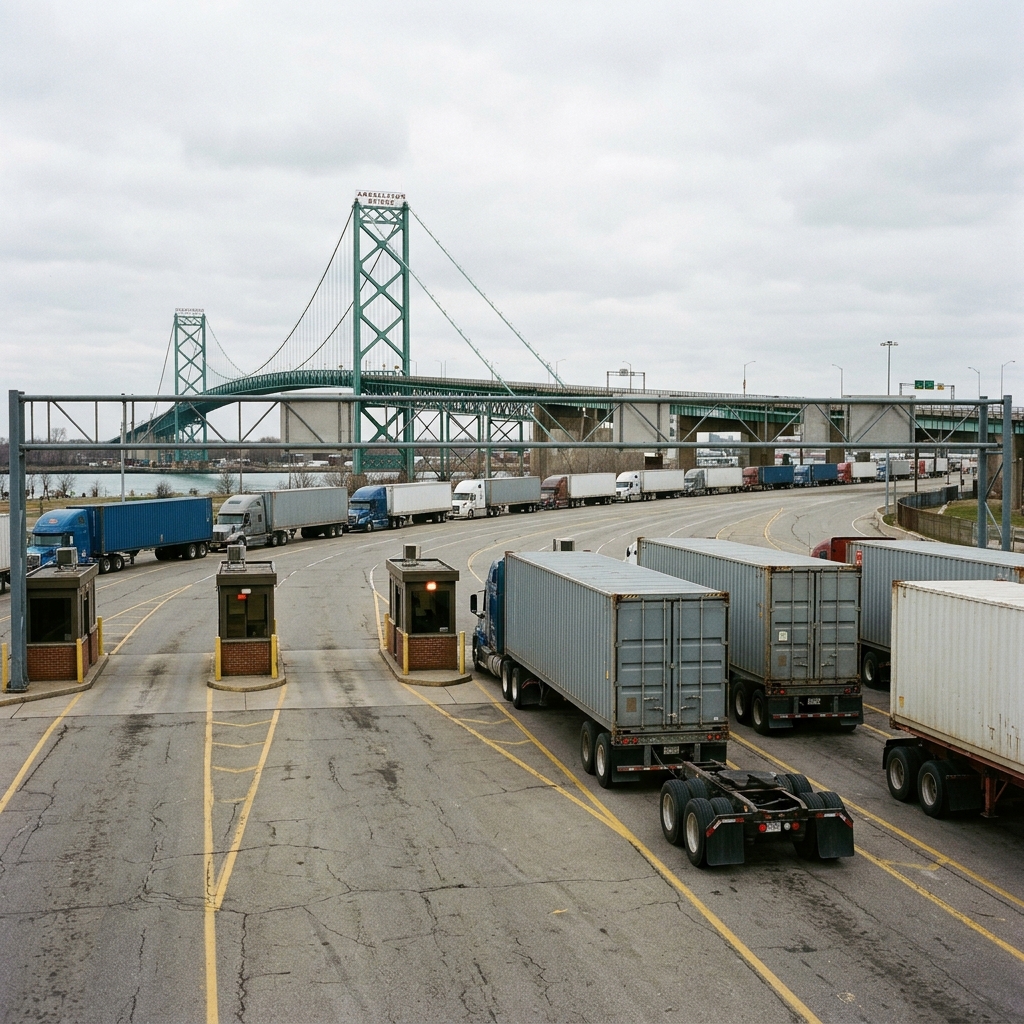
The immediate pressure point centers on automotive manufacturing networks concentrated across Ontario, Michigan, Ohio, and Indiana. Parts and intermediate assemblies cross the Ambassador Bridge and the Blue Water Bridge up to seven times before final vehicle assembly. The USMCA requires a seventy-five percent regional value content threshold for passenger vehicles to enter duty-free. U.S. negotiators remain dissatisfied with the 2022 dispute panel ruling that favored Canada and Mexico on core parts roll-up calculations. Washington wants stricter domestic content accounting to halt third-party components from entering the integrated production chain.
The economic footprint of this integrated corridor is massive. The Windsor-Detroit crossing alone carries more than one hundred billion dollars in goods annually. Commercial carriers move roughly eight thousand trucks across the Ambassador Bridge every day. A unilateral tariff imposition by U.S. Customs and Border Protection would instantly paralyze just-in-time logistics from Windsor to assembly plants in Detroit and Louisville. Canadian auto parts suppliers, represented by the Automotive Parts Manufacturers' Association, warned that cost shocks would reverberate identically through American production lines, where parts shortages would halt final assembly within forty-eight hours.
Greer's preliminary outreach targets these precise supply dependencies. U.S. trade strategists believe Canada has more to lose in a tariff showdown because merchandise exports to the U.S. account for roughly twenty percent of Canadian national output. In contrast, U.S. exports to Canada represent less than two percent of American gross domestic product. Washington intends to use this asymmetry to force Canadian concessions on agricultural market access, military procurement, and domestic energy regulation before any formal revision of the treaty occurs in July 2026.
3. Customs Architecture and Energy Flows Complicate Retaliatory Options
Customs enforcement mechanics present major hurdles for any expedited bilateral deal. The Canada Border Services Agency and U.S. Customs and Border Protection operate integrated pre-clearance programs under the Beyond the Border framework. Slicing these mechanisms to apply targeted tariffs or exemptions requires extensive regulatory revisions. in addition, rail freight handled by Canadian National and Canadian Pacific Kansas City networks moves heavy industrial freight, forest products, and bulk petrochemicals across northern border crossings every hour. Imposing selective border tariffs disrupts bonded rail corridors that connect Alberta refineries directly to processing hubs along the U.S. Gulf Coast.
Energy flows remain Ottawa's most potent card in bilateral talks. The United States imports more than four million barrels of Canadian crude oil every day, representing nearly sixty percent of total U.S. crude imports. Midwest refineries in Illinois, Minnesota, and Ohio rely on heavy sour crude delivered via the Enbridge pipeline network. Imposing a twenty-five percent tariff on these volumes would raise input costs for U.S. refiners and increase retail gasoline prices across the American Rust Belt. U.S. energy executives have lobbied the incoming administration to exempt crude petroleum, natural gas, and electricity from any broad tariff schedule.
Ottawa faces domestic constraints on retaliatory policy. When the Trump administration imposed Section 232 steel and aluminum tariffs in 2018, Canada responded dollar-for-dollar with sixteen billion dollars in countermeasures on American consumer items, whiskey, and manufactured goods. Today, Canadian inflation remains sticky in the services sector, and the domestic economy is growing at a sluggish one percent annual rate. Canadian trade minister Mary Ng has avoided naming specific retaliation targets, but Canadian trade associations are preparing lists that hit electorally sensitive U.S. congressional districts.
4. Bilateral Positioning Accelerates Ahead of the 2026 Joint Review Mechanism
Article 34.7 of the USMCA mandates a comprehensive joint review of the agreement six years after its entry into force. That deadline falls on July 1, 2026. The early outreach confirmed by Greer demonstrates that the review process has started in practice. The formal mechanism requires all three parties to submit written confirmations to extend the pact for another sixteen years. If one party refuses, the agreement enters an annual review cycle until its eventual expiration in 2036. Washington is using the threat of non-extension to extract immediate unilateral concessions from Canada.
The unresolved dispute over Canada's proposed Digital Services Tax adds friction to these informal discussions. The three percent tax on large technology firms targets American enterprises such as Alphabet, Amazon, and Meta. U.S. lawmakers from both parties have demanded formal retaliatory measures under Section 301 of the Trade Act of 1974. Greer helped construct the original 301 investigations during the first Trump term. His early communications with Ottawa likely delivered a clear ultimatum: withdraw the digital tax legislation or expect targeted duties on Canadian steel, lumber, and critical minerals.
Corporate treasurers on both sides of the forty-ninth parallel are adjusting their balance sheets for sustained trade volatility. Currency hedging among Canadian export firms has risen sharply over the past quarter, with forward contracts pricing in prolonged weakness for the Canadian dollar. Institutional capital is pausing cross-border industrial investment until the terms of Greer's discussions become formal policy. The bilateral trade corridor supports nearly two million American jobs and millions more in Canada, but political imperatives in Washington have shifted the relationship from cooperative integration toward aggressive economic nationalism.