1. Carney reports a long call with Trump and real movement toward a deal
Canadian Prime Minister Mark Carney said on Saturday, November 14, 2026, that he held a lengthy, substantive conversation with United States President Donald Trump, and that the two countries are making progress toward a trade deal. He spoke to reporters in Manila, where he is on a state visit to the Philippines and meeting Southeast Asian leaders. Reuters reported his remarks on Saturday. Carney said the two sides have yet to reach an agreement, and he stopped short of calling the talks a breakthrough. His words mark the clearest public signal in weeks that the trade file is moving again after a long freeze.
"I had quite a long, substantive conversation with President Trump just before leaving for this trip," Carney told reporters. "We are making progress. There is the possibility of a deal, a bilateral deal. But we're not yet there." The call took place before Carney left for Europe and Asia. United States Trade Representative Jamieson Greer and Stephen Miller, the new White House chief of staff, also took part. Miller took over the post on November 9, after Susie Wiles left the role. Their presence signals that the talks now run through the top of the Trump administration.
Carney drew a firm line on one sector. He said Canada would not accept a deal that undermines its auto industry, which has been hit hard by American tariffs. The auto sector sits at the center of the dispute, since plants in Ontario ship parts and finished vehicles across the border every day. Any deal that leaves those plants exposed would face sharp pushback at home. Carney's remark sets a public test for the talks: progress counts only if the auto industry comes out intact.
2. Talks collapsed in August, and tariffs followed on both sides
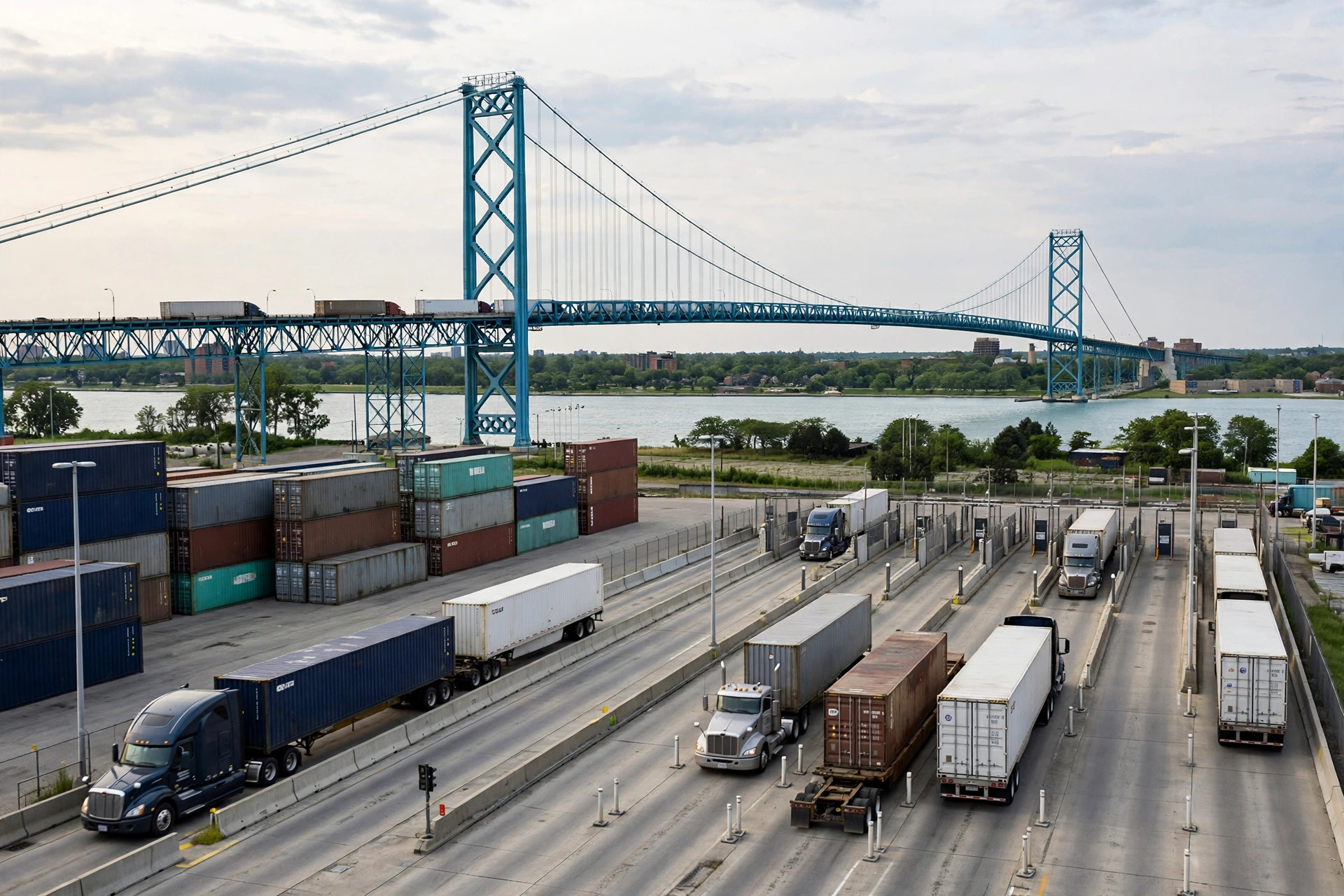
The two countries suspended trade talks in August after last-minute American demands that Ottawa called unacceptable. Washington then imposed 50 percent tariffs on about 20 billion dollars in Canadian goods. Canada answered with retaliatory tariffs in September. The exchange left firms on both sides paying more to move goods across the border, and it pushed the dispute into the center of the trade war that has defined the Trump administration's second term. The dispute has hit both economies, since the two countries share one of the largest trading relationships in the world and supply chains that cross the border many times before a finished product is sold.
Since then, the two sides have resumed discussions in fits and starts. Trump said before the midterm elections that the countries were very close to an agreement. Carney said on November 3 that Washington had backed away from demands tied to Canadian culture, French-language protections, and Canada's freedom to sign trade deals with other countries. Those demands had been among the reasons the August round fell apart. Their removal gives the current round a better chance than the last one.
Tariffs still in force include Section 232 duties of up to 25 percent on automobiles and 50 percent on certain steel products, along with the 50 percent levy on a broad set of Canadian goods. Canada is the only Group of Seven country without a deal offering relief from the tariffs Trump imposed in his second term. A deal could cut some of those duties, with steel and aluminum among the sectors most likely to gain. Until a text exists, exporters must plan around rates that can change with each round of talks.
3. Carney pairs the US talks with trade deals in Southeast Asia
Carney used the same trip to announce that Canada has substantially concluded free trade negotiations with the Association of Southeast Asian Nations, a bloc of nearly 700 million people. Canada also completed separate negotiations with the Philippines. Both agreements form part of Canada's push to cut its reliance on the United States while the trade war runs. Carney has made doubling Canadian exports to countries other than the United States by 2035 a central goal of his government. The deals also give Canadian exporters new routes into fast-growing markets, and they show Ottawa is willing to sign agreements far from the North American market.
The Canadian government estimates the ASEAN agreement could add nearly 2 billion Canadian dollars, about 1.4 billion American dollars, to Canada's economy and create almost 14,000 jobs, with gains in agriculture and manufacturing. Officials hope to sign the agreement next year. The Philippines agreement, also expected to be signed next year, covers more than 90 percent of tariff lines. Carney said the agreement could help triple Canadian exports to the Philippines by 2035. Agriculture stands to gain the most from the ASEAN terms, since Southeast Asian buyers import large volumes of Canadian wheat, canola, and pulses each year.
The trip itself shows how wide Carney's travel has become. He attended the European Political Community summit in Ireland before flying to Manila for the ASEAN summit, which starts Sunday. He will also attend the Francophonie summit in Cambodia and the Asia-Pacific Economic Cooperation summit in China, where he is scheduled to meet President Xi Jinping. The schedule puts trade talks with Washington inside a larger effort to open markets in Europe and Asia at the same time. Each stop on the trip carries its own agenda, from alliance talks in Europe to market access in Asia, and the trade file with Washington runs through all of them.
4. What to watch before any deal is signed
The first test is whether the leaders' call turns into a written text. Carney's words point to movement, and Trump has said a deal could come soon, yet neither side has published terms or set a signing date. Watch for word from the negotiators in Ottawa and Washington, and for any statement from Greer, who now leads the American side of the talks. A deal needs detail on autos, steel, and aluminum before it means much for firms that pay the tariffs today.
The auto industry remains the line Carney has drawn in public. Any draft that leaves the 25 percent auto duty in place, or that trades auto access for gains elsewhere, would test his pledge. Steel and aluminum producers will watch the same draft for relief from the 50 percent duties. Exporters should also watch the retaliatory Canadian tariffs, which will stay in place until a deal gives Ottawa a reason to lift them. Each of those points can still block a final agreement.
The wider setting adds pressure of its own. Carney also said in Manila that Canada would not walk away from NATO, and that the security architecture for a free Europe would be decided by a free Europe and NATO, not Russia. The remark ties the trade talks to a larger set of ties between Canada, the United States, and Europe. For now, the trade file has moved from a dead stop in August to a live negotiation in November. The next step is a text both sides can sign.