1. Carney Points to Fresh Bilateral Momentum Ahead of 2026 USMCA Review
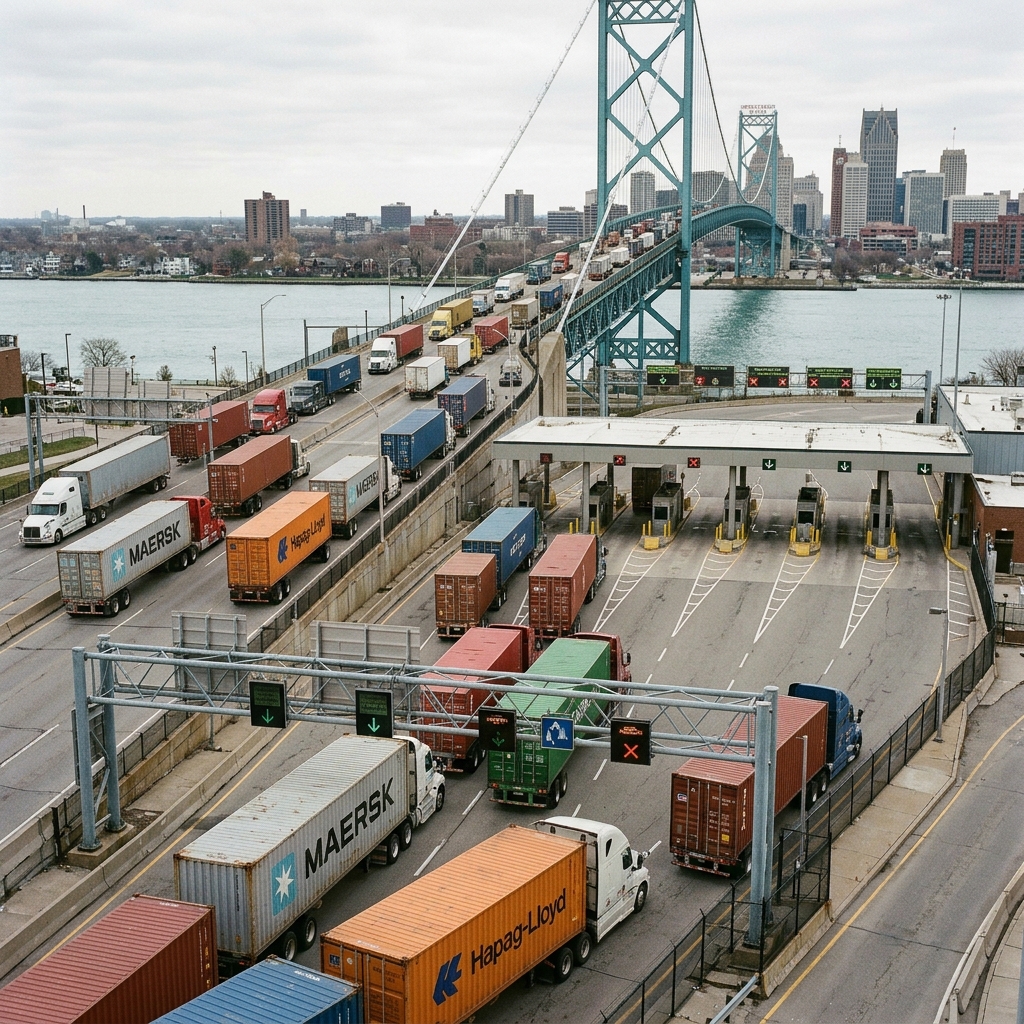
Mark Carney, former governor of the Bank of Canada and the Bank of England, confirmed this week that bilateral trade talks between Ottawa and Washington are yielding tangible progress. Carney currently advises the federal government on domestic economic growth strategies. His comments indicate that backchannel negotiations are narrowing policy gaps between the two capitals. Trade between the two nations exceeds 3.6 billion dollars daily across critical choke points such as the Ambassador Bridge and the Blue Water Bridge. Commercial freight corridors remain steady, but both sides want to resolve persistent sectoral disputes before formal review mechanisms take effect in 2026.
The primary focus of current discussions centers on industrial manufacturing alignment and continental supply chain security. Negotiators from Global Affairs Canada and the Office of the United States Trade Representative are working to insulate North American manufacturers from external non-market distortions. Ottawa aligned its tariff schedule on Chinese-made electric vehicles, steel, and aluminum with Washington. The government imposed a 100 percent surtax on electric vehicles and a 25 percent surtax on metals. This aggressive policy parity helped neutralize a significant point of friction on Capitol Hill, where lawmakers had expressed concern over transshipment routes into the domestic American market.
Despite these signs of progress, stubborn friction points still complicate the bilateral agenda. Washington continues to press Ottawa on agricultural trade, specifically the allocation of Canadian tariff-rate quotas for dairy products under USMCA Chapter 3. Simultaneously, United States trade officials have criticized Canada for implementing its Digital Services Tax, which imposes a three percent levy on foreign technology platforms earning revenue from Canadian users. USTR Katherine Tai has requested formal dispute consultations under Chapter 31. Canadian negotiators maintain that the tax addresses corporate profit-shifting, but business lobbies on both sides warn that retaliatory tariffs could follow.
2. Cross-Border Freight Corridors Anchor Industrial Supply Chains
Physical cross-border logistics are driving the economic rationale behind these high-level discussions. The integrated rail network of Canadian Pacific Kansas City provides a single-line rail corridor that links Vancouver, Montreal, Chicago, and the Gulf Coast. Over 30,000 trucks cross the northern border daily, monitored by the Canada Border Services Agency and United States Customs and Border Protection. Delays or regulatory friction at customs ports immediately inflate overhead costs for automotive assembly lines in Ontario and the American Midwest. Trade officials recognize that clear customs classifications and coordinated inspection standards are required to protect just-in-time logistics across the Great Lakes industrial basin.
The automotive assembly ecosystem remains the anchor of the USMCA framework. The treaty requires 75 percent regional value content for passenger vehicles to qualify for duty-free access, up from 62.5 percent under NAFTA. Motor vehicle parts move across the Detroit River multiple times before final assembly. More than 45 billion dollars in private capital has entered Ontario, Michigan, and Ohio to build electric vehicle battery plants and cathode active material facilities over the past three years. Unclear rules or tariff threats put this long-term investment pipeline at risk, which explains Carney's emphasis on locking down stable commercial terms.
Critical mineral extraction represents another core pillar of the talks. The United States Department of Defense has funded exploration and processing projects in Ontario and the Northwest Territories under Title III of the Defense Production Act. Washington relies on Canadian reserves of lithium, cobalt, nickel, and graphite to reduce dependency on East Asian refining facilities. Ottawa is coordinating with American agencies to accelerate federal permitting processes under the Impact Assessment Act. The goal is to build an integrated supply route that connects northern Canadian extraction sites to processing hubs along the Interstate 75 corridor through shared tax credits and capital grants.
3. Tariff Pressures and Regulatory Friction Before Dispute Panels
Dispute settlement mechanisms established under the USMCA are operating under heavy volume. Chapter 10 binational panels are reviewing recurring softwood lumber anti-dumping and countervailing duty determinations issued by the United States Department of Commerce. The Commerce Department recently increased combined duty rates on Canadian lumber shipments to 14.54 percent, up from 8.05 percent. The Canadian lumber industry filed legal challenges through both USMCA panels and the United States Court of International Trade. These chronic disputes show that even positive diplomatic signals from figures like Carney cannot erase entrenched protectionist pressures in specialized commodity sectors.
Corporate taxation has also become an active regulatory battleground between the Canada Revenue Agency and the Internal Revenue Service. Ottawa expects the Digital Services Tax to raise roughly 5.9 billion Canadian dollars over five fiscal years. American congressional leaders have urged the White House to initiate Section 301 trade actions, which would allow the United States to place retaliatory tariffs on Canadian exports. While Carney characterized recent negotiations as productive, corporate tax experts in Toronto and New York caution that failing to pause or revise the digital levy will trigger targeted American trade sanctions against Canadian consumer goods.
Capital subsidies also require urgent bilateral coordination. The United States Inflation Reduction Act introduced clean energy production and investment tax credits that initially threatened to drain capital out of the Canadian industrial basin. Ottawa responded with over 90 billion Canadian dollars in comparable investment tax credits for carbon capture, clean electricity, and clean hydrogen. Both administrations now work to ensure that these subsidies complement continental manufacturing capacity. Establishing common subsidy definitions will prevent destructive fiscal bidding wars between Canadian provinces and American states competing for major industrial mandates.
4. Macroeconomic Divergence and Monetary Policy Spillover Across the Border
Macroeconomic divergence between the two economies complicates trade negotiations. The Bank of Canada cut its target for the overnight rate by 50 basis points to 3.75 percent in October, while the Federal Reserve followed a more cautious path. This monetary policy divergence widened the interest rate spread between two-year Government of Canada bonds and United States Treasuries to roughly 110 basis points. The Canadian dollar has dropped toward 72 US cents as a result. A weaker currency raises the cost of importing American capital equipment into Canada, but it simultaneously enhances the export price competitiveness of Canadian manufactured goods.
Cross-border financial transactions continue at a rapid clip despite currency volatility. Bay Street pension funds and commercial banks allocate substantial capital into American real estate, infrastructure assets, and private debt funds. Canadian direct investment in the United States surpassed 800 billion dollars last year. American institutional investors maintain major equity positions in Canadian natural resource producers and telecommunications conglomerates. Financial executives want policy predictability above all else. Sudden regulatory shifts or border tariff threats raise the cost of capital for cross-border mergers and acquisitions, making Carney's reassurances particularly important for corporate treasury desks in New York and Toronto.
The definitive test for North American commercial integration arrives in July 2026, when all three USMCA signatories must conduct a formal joint review of the trade agreement. Under the sunset clause of the treaty, parties must decide whether to extend the agreement for an additional 16-year term. If any signatory declines to extend, annual joint reviews will begin until the pact expires. Carney and Canadian trade envoys are using current bilateral sessions to eliminate minor trade disputes. They intend to build consensus with Washington early. This strategy aims to prevent high-stakes renegotiations that could destabilize continental trade stability when the review begins.