1. Carney Points to Fresh Diplomatic Traction in Cross-Border Trade Talks
Mark Carney brought rare public optimism to the cross-border economic file this week, confirming that senior officials in Ottawa and Washington have made steady progress on unresolved trade friction points. The former governor of both the Bank of Canada and the Bank of England, who now advises the federal cabinet on industrial economic strategy, stated that both capital cities are building practical common ground. His comments arrive at an anxious moment for Canadian exporters. Looming tariff proposals from Washington threaten deep disruption to more than 3.6 billion Canadian dollars in goods crossing the international border every single day.
The current round of bilateral discussions focuses on insulating key industrial sectors ahead of the formal six-year review clause built into the United States-Mexico-Canada Agreement. That review takes place in 2026, yet trade officials are working now to settle persistent grievances. Ottawa wants clear assurances that primary Canadian steel, aluminum, and manufactured automotive parts will remain exempt from blanket import duties. In return, Washington is demanding tighter coordination on third-party import dumping, particularly Chinese manufacturing overcapacity routed through North American ports of entry from Vancouver to Halifax.
Trade negotiators from Global Affairs Canada and the Office of the United States Trade Representative have conducted quiet technical meetings in Washington over recent weeks. These sessions move past the political rhetoric of campaign cycles and deal with technical harmonization. Carney noted that both nations share core economic incentives to preserve continental supply chain dominance against overseas competitors. The tone represents a shift away from defensive posturing, establishing a pragmatic working track between Canadian federal ministers and their American counterparts across several industrial files.
2. Windsor-Detroit Auto Arteries and Rules of Origin Drive Bilateral Agenda
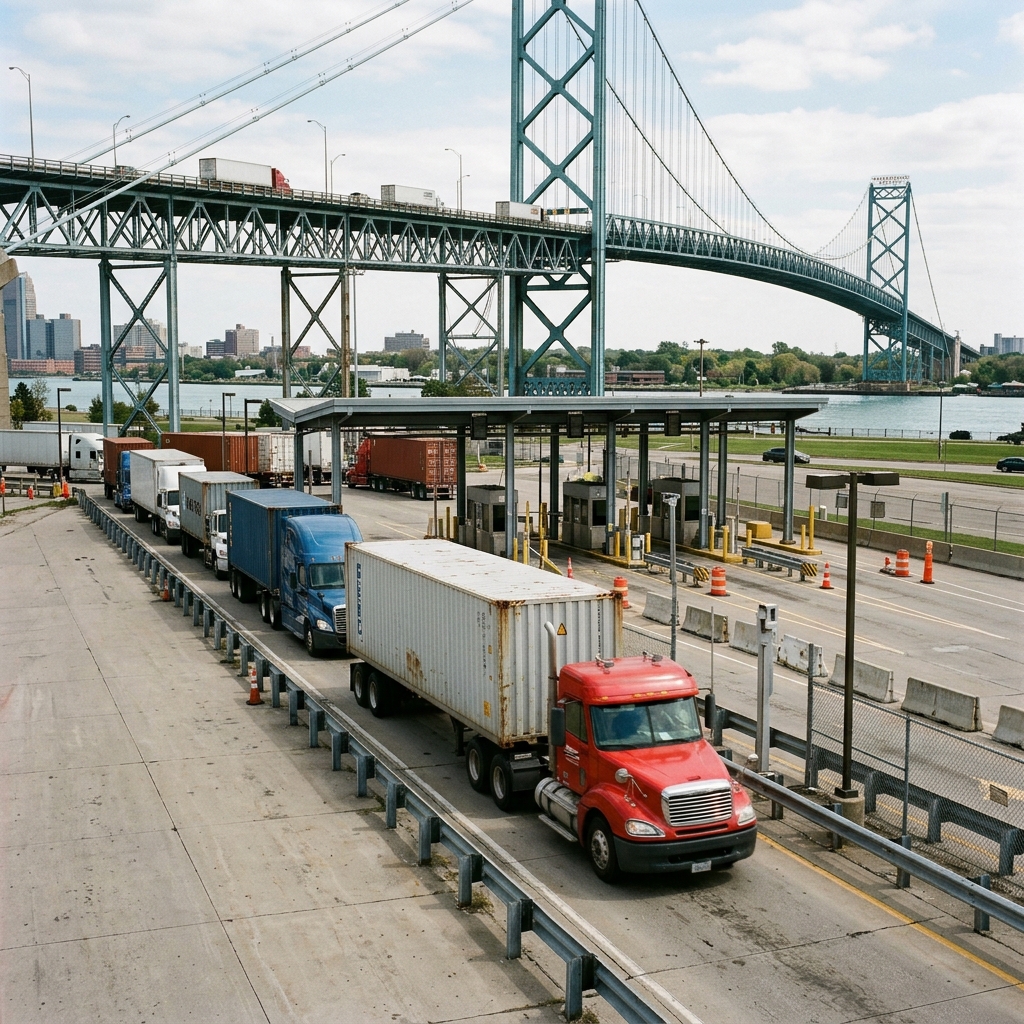
The primary test of these talks sits directly on commercial freight corridors like the Ambassador Bridge and the Blue Water Bridge in Sarnia. Automotive parts cross these spans up to seven times before final assembly in plants across Ontario, Michigan, Ohio, and Indiana. Negotiators are addressing core disputes regarding USMCA automotive rules of origin. A previous dispute panel ruled against the restrictive United States interpretation of regional value content calculation methods, yet practical operational implementation has remained messy. Both sides now seek a durable administrative framework to prevent costly customs audits by U.S. Customs and Border Protection.
Canadian assembly plants operated by Stellantis, Ford, and General Motors depend entirely on open borders for inventory flow. Rail operators Canadian Pacific Kansas City and Canadian National Railway have invested billions of dollars into unified continental networks that rely on predictable border administration. Carney pointed to these private capital commitments as structural proof that North American supply networks cannot be unstitched without punishing industrial costs for American buyers. A return to unilateral border tariffs would choke production lines across the Midwestern manufacturing belt within seventy-two hours of regulatory implementation.
Ottawa has demonstrated its policy alignment with Washington by matching the steep one hundred percent surtax imposed by the Biden administration on Chinese electric vehicles. Canada also mirrored the twenty-five percent tariff on Chinese steel and aluminum imports. This regulatory alignment required coordination between the Canada Border Services Agency and the Department of Finance. By adopting identical defensive measures, Canadian negotiators removed a major American complaint, proving that Canada will not act as a back door for subsidized Asian components entering the broader integrated automotive market.
3. Critical Minerals and Clean Energy Tax Alignment Anchor New Framework
Energy security forms the second pillar of the progress highlighted by Carney. American industrial policy, codified under the Inflation Reduction Act, requires vast supplies of critical minerals like nickel, lithium, cobalt, and graphite sourced from domestic or free-trade partners. Canada holds some of the largest undeveloped deposits of these battery metals across northern Ontario and Quebec. Bilateral teams are structuring joint procurement mechanisms and defense production pacts to secure these upstream supply chains, keeping processing activity within allied North American borders rather than relying on state-subsidized foreign refiners.
Tax parity between the Internal Revenue Service and the Canada Revenue Agency remains central to ongoing discussions. Canada introduced its own system of clean economy investment tax credits to match American subsidies, preventing a flight of capital toward the Gulf Coast. Negotiators are now working on cross-border tax treatment for joint ventures, clean hydrogen corridors, and carbon capture infrastructure. The goal is to establish regulatory reciprocity, ensuring that capital expenditures in Canadian processing facilities qualify for American production credits under strict bilateral defense and industrial procurement umbrellas.
Traditional energy flows through pipelines like Enbridge Line 5 and the newly expanded Trans Mountain pipeline continue to provide strong leverage for Canadian officials. Line 5 carries light crude oil and natural gas liquids through Wisconsin and Michigan to refineries in Sarnia, Ontario, supplying jet fuel to Detroit Metropolitan Airport. Carney noted that integrated energy security operates both ways. Any administrative move to penalize Canadian hydrocarbon exports directly raises retail fuel prices across northern American states, creating immediate consumer pressure that U.S. lawmakers cannot easily dismiss during legislative negotiations.
4. Foreign Exchange Pressures and the 2026 USMCA Review Timeline
Macroeconomic divergence between the Bank of Canada and the Federal Reserve adds complexity to the trade file. With the Bank of Canada lowering its benchmark policy rate faster than the Federal Reserve, the Canadian dollar has hovered near historic lows around seventy-one cents against the U.S. dollar. This currency discount makes Canadian exports attractive to American purchasers, yet it simultaneously inflates the cost of imported industrial machinery and equipment for Canadian producers. Bilateral trade stability provides predictability that corporate treasurers need when hedging long-term foreign exchange exposures.
Corporate executives on both sides of the border are watching the approach of the 2026 USMCA joint review with caution. Under Article 34.7 of the agreement, all three member nations must state in writing whether they wish to extend the pact for another sixteen-year period. Carney emphasized that building administrative consensus today prevents the 2026 review from degenerating into an outright breakdown of continental trade rules. Early alignment on agricultural quotas, cross-border digital services taxes, and copyright enforcement reduces the list of explosive grievances awaiting political leaders at the formal conference table.
The economic relationship between Canada and the United States represents an unmatched trade partnership built on shared legal traditions and physical integration. Carney's confirmation of forward movement shows that institutional diplomacy continues behind closed doors, independent of changing partisan leadership. For market participants, investors, and industrial operators, practical progress between Ottawa and Washington lowers policy risk. The challenge ahead lies in converting these informal diplomatic understandings into binding, enforceable trade protocols that withstand domestic political volatility across both federal capitals over the coming fiscal year.