1. Post-Midterm Travel Rebound Tests Border Infrastructure
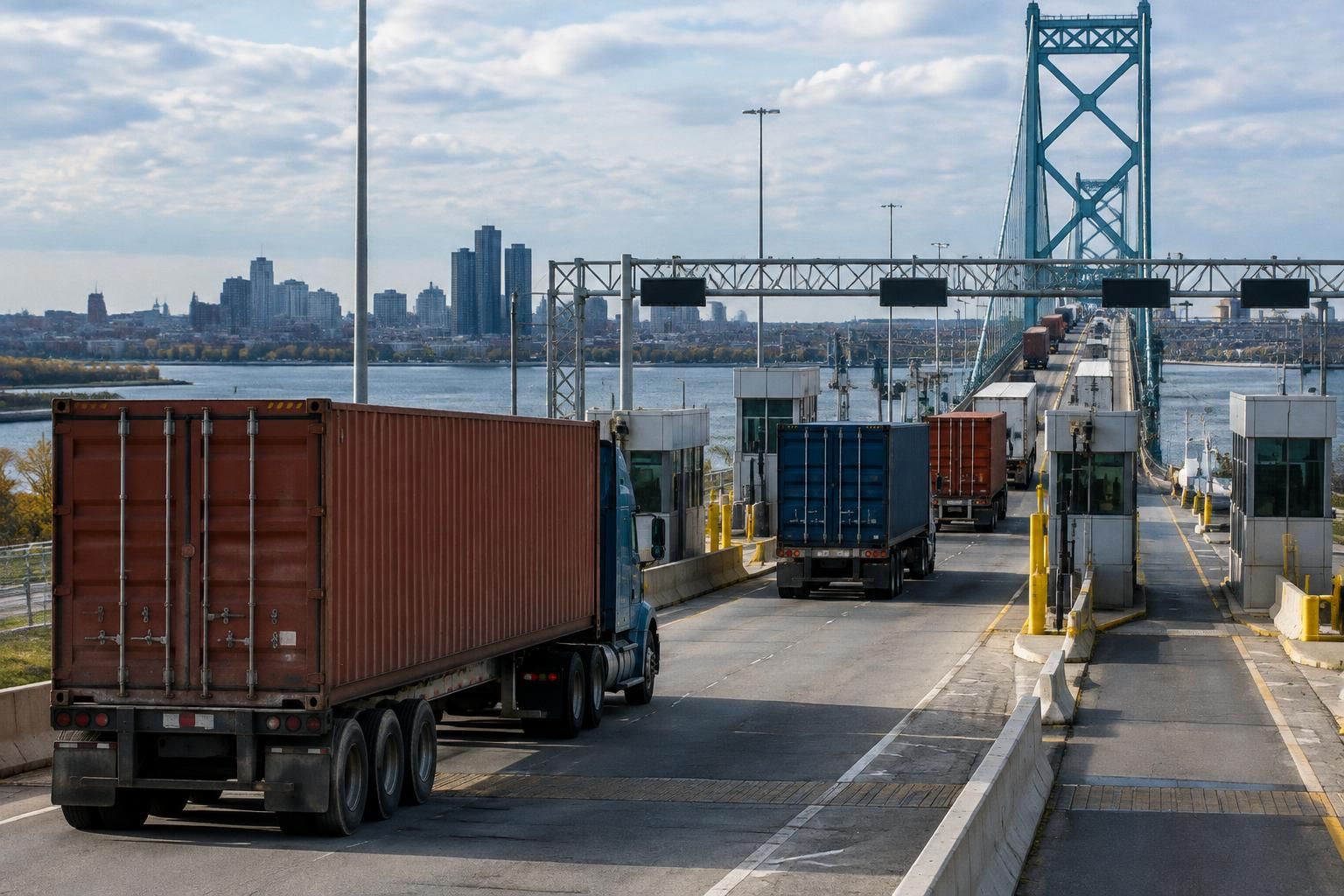
The U.S. midterm elections have cleared a psychological hurdle for cross-border travelers. Data from Howl.Link shows a 14 percent week-over-week increase in passenger vehicle crossings at the Ambassador Bridge in Windsor-Detroit following the vote, with similar gains at the Blue Water Bridge in Sarnia-Port Huron. The rebound follows months of depressed leisure travel, which had been weighed down by election-related rhetoric and uncertainty over immigration policy. CBSA officers at major Ontario crossings report shorter wait times on average, though peak-hour queues persist.
Commercial traffic tells a different story. Freight volumes across the Pacific Gateway and CPKC rail networks have been climbing since September, driven by agricultural exports and automotive parts. The U.S. midterms did not directly alter tariff schedules or USMCA dispute panel composition, but the resolution of election uncertainty has encouraged shippers to lock in forward contracts. CBP officials in Detroit say commercial truck processing times are down 8 percent compared to October, a modest but meaningful improvement for just-in-time supply chains.
The recovery is not uniform. Smaller land crossings in the Prairies and Atlantic Canada continue to report sluggish passenger numbers, partly because of reduced airline capacity and higher fuel costs. The Canadian dollar's weakness against the greenback, hovering near 0.73 USD, has made U.S. travel more expensive for Canadian households. Bank of Canada data shows consumer spending on cross-border travel remains 12 percent below pre-pandemic levels, even as headline bookings rise.
2. Currency and Rate Differentials Shape Cross-Border Spending
The Federal Reserve's aggressive rate hike cycle has widened the Canada-U.S. interest rate differential to roughly 75 basis points, pressuring the loonie. A weaker Canadian dollar discourages southbound leisure travel and encourages U.S. visitors to Canada, but the net effect on border crossings is mixed. CBP data from Buffalo-Niagara shows a 9 percent increase in Canadian passenger vehicles entering the U.S. since the midterms, but average spend per traveler is down. Canadian retailers near the border report a pickup in U.S. shoppers seeking discounted goods.
For corporate travel, the calculus is different. Cross-border business trips are recovering faster than leisure, according to booking data from major Canadian travel management companies. Executives from Toronto and Montreal are resuming face-to-face meetings with U.S. clients, particularly in the technology and financial services sectors. The IRS and CRA have not changed their transfer pricing or withholding tax rules, but the stable policy environment after the midterms has reduced compliance anxiety for cross-border employers.
The Bank of Canada's next rate decision will be critical. If the central bank pauses hikes while the Fed continues tightening, the loonie could slide further, making U.S. travel more expensive and potentially dampening the rebound. Conversely, a narrower differential would support the Canadian dollar and boost cross-border purchasing power. Currency strategists at major Canadian banks are watching the 0.72 USD level as a psychological threshold for travel demand.
3. Regulatory Friction at CBSA and CBP Checkpoints Persists
Despite the post-election rebound, structural bottlenecks at the border remain. CBSA staffing shortages at smaller crossings in Quebec and the Maritimes have led to reduced hours and longer wait times, discouraging spontaneous travel. CBP has redeployed officers to the southwest border, leaving fewer resources for northern ports of entry. The result is a two-speed recovery: major commercial corridors like the Ambassador Bridge and Pacific Gateway are recovering, while secondary crossings lag.
USMCA compliance checks have also increased in recent months, particularly for automotive and agricultural goods. CBP and CBSA are conducting more audits of rules-of-origin documentation, slowing clearance times for some shippers. The dispute panel system under USMCA remains functional, but the backlog of cases has grown. Trade lawyers in Toronto and Washington report a rise in inquiries about tariff classification and origin verification, suggesting that companies are preparing for tighter enforcement.
The travel rebound is also testing border infrastructure that has not been significantly upgraded in decades. The Gordie Howe International Bridge, scheduled to open in 2025, will add capacity between Windsor and Detroit, but until then the Ambassador Bridge remains the primary artery. CPKC and Canadian National rail networks are investing in intermodal terminals, but rail border crossings face their own clearance delays. The Pacific Gateway's container volumes are recovering, but port congestion in Vancouver and Prince Rupert remains a concern.
4. Bilateral Outlook Hinges on Policy Stability and Infrastructure
The post-midterm rebound is real but fragile. Travel demand is sensitive to policy signals from Washington and Ottawa, and the next flashpoint could be the 2024 U.S. presidential election cycle. Canadian officials are quietly preparing for a potential shift in U.S. trade policy, particularly on Buy American provisions and electric vehicle subsidies. The USMCA review in 2026 will be a major test for bilateral economic relations, and companies are already positioning themselves for potential disruptions.
For investors, the cross-border recovery offers opportunities in transportation, logistics, and retail. Canadian companies with exposure to U.S. consumer spending, such as airlines and hotel chains, stand to benefit from the travel rebound. U.S. retailers near the border are seeing increased Canadian foot traffic. However, the weaker loonie and higher interest rates are headwinds. Analysts at major Canadian banks are recommending a selective approach, favoring companies with pricing power and diversified supply chains.
The regulatory environment remains a wild card. CRA and IRS enforcement of cross-border tax rules is intensifying, particularly for digital services and transfer pricing. The Bank of Canada and Federal Reserve are coordinating on payment system modernization, but progress is slow. For now, the midterm elections have removed one layer of uncertainty, and the border is slowly coming back to life. Whether that recovery accelerates depends on policy decisions that are still months away.