1. Carney Diplomatic Offensive Counters Washington Tariff Threat
Mark Carney, serving as senior economic adviser to the Canadian federal government, reported steady progress following private discussions with incoming American officials in Washington. Ottawa deployed the former governor of both the Bank of Canada and the Bank of England to counter the threat of universal twenty-five percent import tariffs. Daily commerce across the northern frontier totals roughly 3.6 billion Canadian dollars. Sudden border levies represent an immediate sovereign risk. Carney told reporters that technical talks found common ground on bilateral supply chain security. Even so, Canadian officials remain cautious. They know early dialogue must survive transition politics in the United States capital.
Donald Trump addressed the meetings publicly, telling ABC News that both sides possess the concept of a deal. The phrase echoed his prior campaign language, but it still offered temporary relief to North American equity and foreign exchange desks. Trump reiterated that border enforcement and trade deficits remain prerequisites for any permanent agreement. Canadian negotiators emphasized that goods crossing the border already comply with strict domestic value-content rules under the United States-Mexico-Canada Agreement. Ottawa intends to turn these working discussions into binding bilateral commitments before incoming executive orders can disrupt customs clearance.
The foreign exchange market responded instantly. Currency traders lifted the Canadian dollar off its multi-year lows near seventy-one cents. Bank of Canada policymakers in Ottawa are tracking the talks closely. Import taxes would depress export volumes and distort inflation metrics. Governor Tiff Macklem has already delivered successive benchmark rate reductions to support domestic capital expenditure. A twenty-five percent American levy would force the central bank to recalculate its neutral interest rate path. For now, corporate treasurers across Ontario and Quebec have put major capital spending on hold until Washington issues formal tariff schedules or executive exemptions.
2. The Windsor-Detroit Corridor Braces for Supply-Chain Disruption
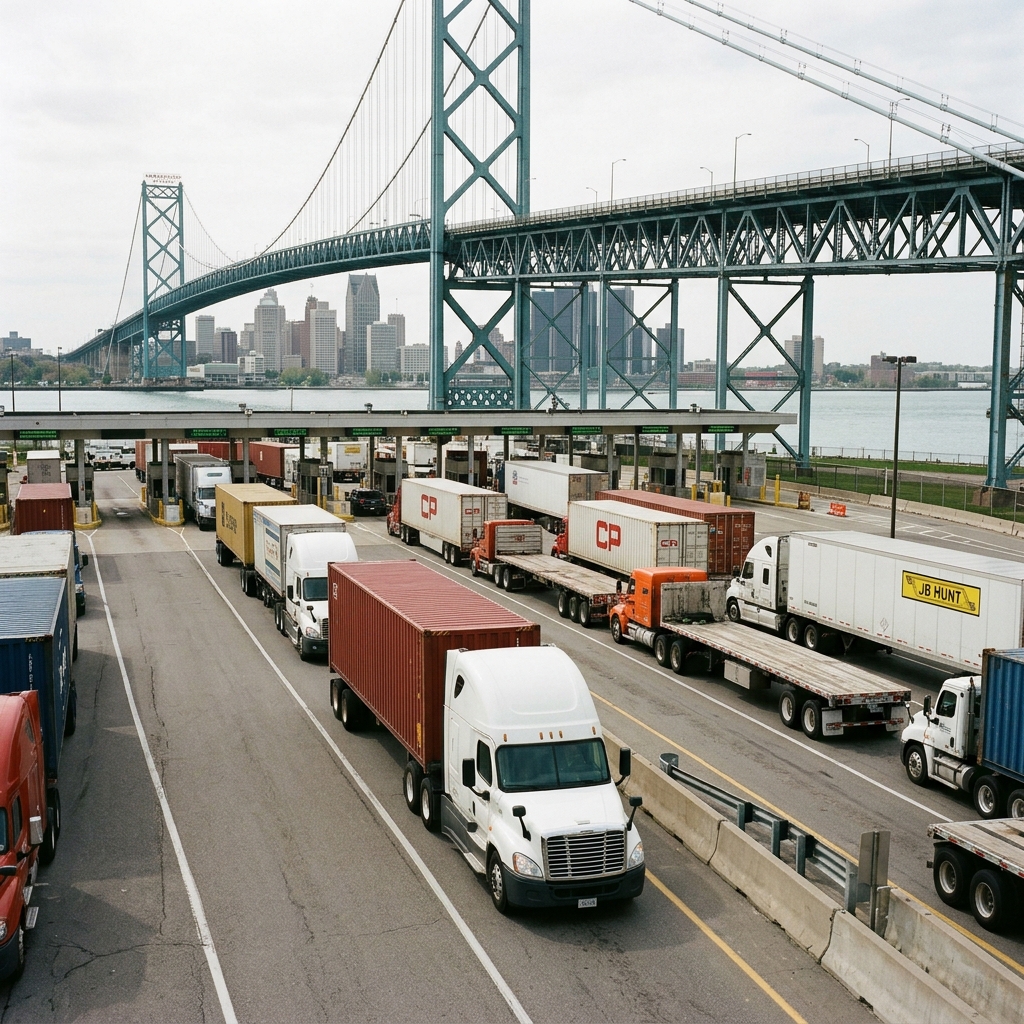
Manufacturing executives along the Detroit-Windsor commercial corridor are watching the talks with deep unease. The Ambassador Bridge handles over four hundred million dollars in commercial freight daily, carrying integrated vehicle components between Ontario assembly plants and Michigan factories. Automotive parts routinely cross this international span six times during production before a finished vehicle rolls off the line. Imposing sudden tariff surcharges at U.S. Customs and Border Protection checkpoints would halt just-in-time assembly lines within forty-eight hours. Canadian parts suppliers operate on margins that cannot absorb sudden duty expenses without cutting capital expenditures or payrolls.
Southern Ontario's automotive assembly footprint remains bound to USMCA rules of origin, which demand seventy-five percent North American content. Trump advisers argue that Chinese investments in broader manufacturing ecosystems threaten American industrial leadership. In response, Carney presented data showing that Canadian industrial policy aligns with American national security frameworks. The federal government in Ottawa matched American incentives under the Inflation Reduction Act to protect regional battery and critical mineral supply chains. Canadian negotiators maintain that penalizing Canadian aluminum, steel, and advanced manufactured goods will only hurt American competitiveness against Asian rivals.
Class I rail operators CPKC and Canadian National Rail have already mapped routing contingencies across their transcontinental networks. Rail freight carries base chemicals, grain, potash, and motor vehicles through ports of entry in Minnesota, Michigan, and New York. Regulatory friction from expanded border inspections could easily back up rail yards from Montreal to Chicago. Transportation companies have urged the Canada Border Services Agency and American border authorities to keep automated pre-clearance programs running. Logistics directors warn that administrative inspections generate container demurrage fees, raising total landed freight expenses by twelve percent across core industrial commodity sectors.
3. Energy Security, Border Enforcement, and Agriculture Clashes
Negotiations over border management have expanded well beyond standard customs protocols into national security commitments. Trump tied tariff avoidance directly to Canadian action on northern border security and illicit synthetic drug interdiction. Public Safety Canada deployed additional surveillance helicopters and mobile inspection units to assist the Royal Canadian Mounted Police along rural border sectors. Ottawa also pledged joint intelligence operations with the Federal Bureau of Investigation and the Department of Homeland Security. Canadian negotiators argue that bilateral law enforcement coordination prevents illegal migration without penalizing legitimate commercial enterprise.
Energy policy gives Ottawa critical leverage in these talks. Canada supplies four million barrels of crude oil per day to American refineries, alongside hydroelectricity sent directly to New York and New England. Infrastructure like Enbridge Line 5 supplies fuel to refineries in Ohio, Pennsylvania, and Michigan. Taxing imported Canadian heavy crude would inflate feedstock costs for Midwest refining complexes, driving up retail gasoline prices across key swing states. Carney reminded his American counterparts that continental energy reliability depends on uninterrupted pipeline transit across the Great Lakes basin and the upper Plains.
Agricultural trade disputes continue to stall a broader settlement. American dairy trade groups routinely lobby the Office of the U.S. Trade Representative to eliminate Canadian tariff-rate quotas on milk, butter, and cheese. Canada protects its dairy industry through supply management, setting domestic production limits and imposing steep import duties above specified quotas. Previous USMCA dispute panels found aspects of Canadian quota administration non-compliant with treaty rules. USTR negotiators want wider market access for Wisconsin and New York farmers before dropping broader manufacturing tariff threats.
4. The Road to 2026: Institutional Mechanics of USMCA Review
The bilateral talks managed by Carney serve as an opening test for the statutory review of the USMCA scheduled for July 2026. Article 34.7 of the agreement requires all three member nations to conduct a formal joint review six years after its entry into force. If any nation refuses to sign an extension, the treaty triggers annual consultations and faces potential expiration ten years later. Trump has signaled his intent to open the pact for comprehensive renegotiation. Carney wants to secure early bilateral understandings with Washington now, shielding Canadian commerce from wider trilateral disputes down the road.
American trade law grants the president substantial executive latitude through specific statutory authorities. Trump previously invoked Section 232 of the Trade Expansion Act of 1962 to impose tariffs on Canadian steel and aluminum on national security grounds. Legal counsel in Ottawa have prepared retaliatory tariff schedules targeted at politically sensitive American congressional districts. The Canadian Ministry of Finance used targeted surtaxes during the 2018 trade confrontation, matching duties dollar for dollar on selected American goods. Both sides understand that legal appeals through USMCA Chapter 10 dispute panels take months to resolve, offering zero relief against immediate border duties.
Corporate leaders and institutional fund managers across Canada are revamping their balance sheets and operations. While Carney pursues diplomatic stability, Canadian firms are preparing for sudden trade barriers. Capital spending has shifted toward supply chain redundancy, local warehouse storage, and expanded port infrastructure along the Pacific Gateway in British Columbia. Continental integration remains the bedrock of Canadian prosperity, but unilateral tariff threats show the limits of existing treaty protections. Corporate leaders want clear legal certainty from both capitals before committing capital to long-cycle industrial development.