1. Ohio Valley Importers Confront Tightening Margins Ahead of Peak Season
Store owners and freight forwarders across the Cincinnati metropolitan area are recalculating landed costs as bilateral tariff disputes filter into consumer inventories. A report from regional outlet WLWT confirms that supply chain managers throughout southern Ohio and northern Kentucky face sharp duty adjustments on goods arriving from Canadian distribution hubs. These businesses ordered their holiday inventories five months in advance. Now, shipments clearing customs checkpoints carry unexpected tariff liabilities that tie up critical working capital.
The timing leaves regional merchants little room to maneuver. Distributors typically operate on net-30 terms with suppliers in Ontario and Quebec. These arrangements cannot absorb fresh levies without immediate price increases at checkout counters. Many independent shopkeepers along the Interstate 75 trade corridor have already locked in purchase contracts. They must choose between absorbing the duty payments directly or raising sticker prices on consumer electronics, home goods, and winter sportswear.
The strain reaches far beyond regional storefronts. Middle-tier logistics brokers operating out of Cincinnati/Northern Kentucky International Airport report that small importers lack the hedging mechanisms used by Fortune 500 retailers. Larger department store operators use bonded warehouses to defer levies. Smaller chains must pay duties immediately upon customs release, draining cash reserves just as seasonal payroll demands peak.
2. Rules of Origin Scrutiny Strains Commercial Freight Corridors
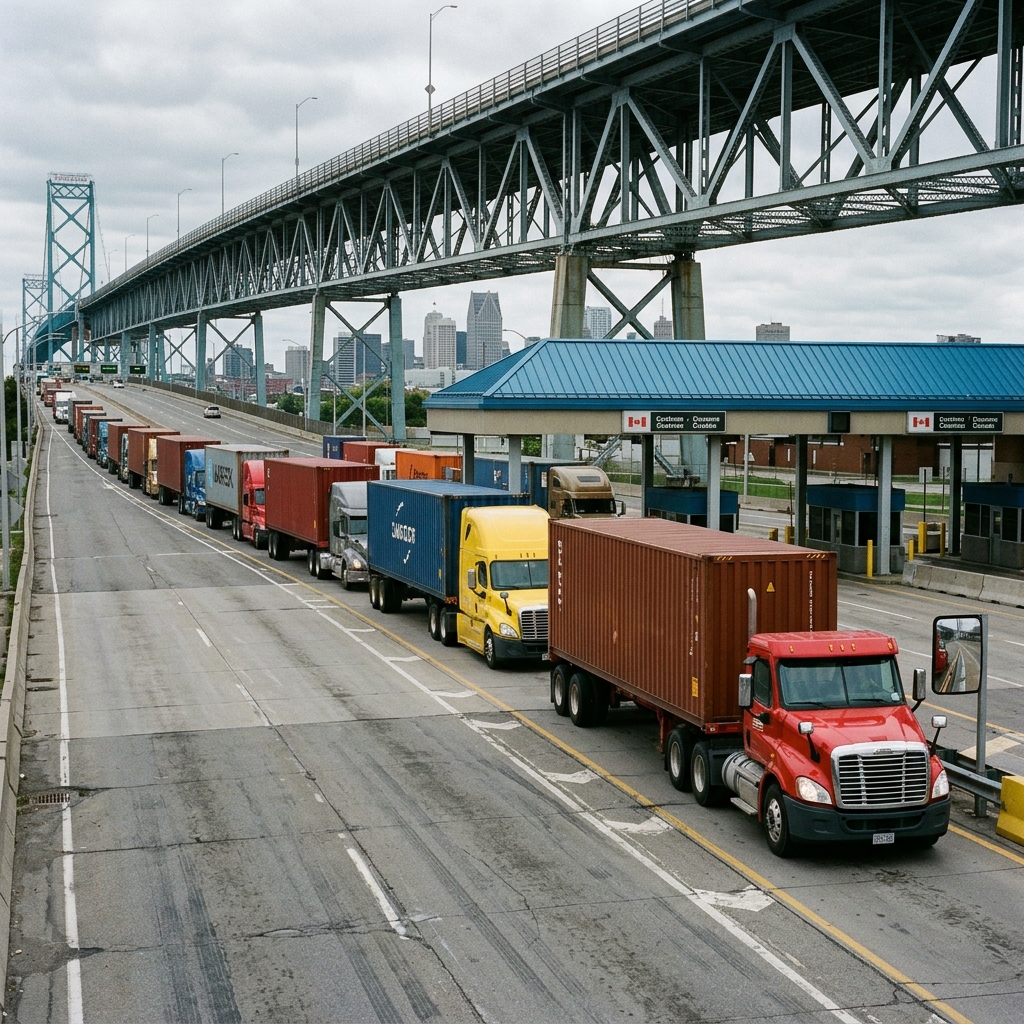
Customs processing points at the Ambassador Bridge and the Blue Water Bridge report heightened review cycles for commercial freight. U.S. Customs and Border Protection officers are enforcing strict Harmonized Tariff Schedule classifications on multi-component goods assembled in Canada. At the same time, the Canada Border Services Agency has applied reciprocal scrutiny on outbound manifests. This back-and-forth creates physical bottlenecks that delay drayage trucks by an average of twelve hours per crossing.
Inspection delays trigger direct financial penalties on freight contracts. The Canadian Pacific Kansas City rail network and commercial trucking lines have instituted tariff-related administrative fees averaging $175 per intermodal container to cover longer terminal dwell times. When containers sit idle at rail yards in Detroit or Buffalo, carrier demurrage fees pile up fast. Logistics operators pass these expenses directly down to retailers awaiting stock.
The primary friction stems from local value content thresholds under the United States-Mexico-Canada Agreement. Importers who previously claimed preferential tariff treatment under USMCA rules now face demands for exhaustive component tracing. If a Canadian consumer product contains sub-assemblies imported from non-treaty Asian economies, U.S. authorities assess standard most-favored-nation duties. That single classification converts zero-tariff items into taxable inventory within hours.
3. Central Bank Policy Divergence Limits Retailer Hedging Capacity
Currency swings further complicate the tariff dispute for mid-tier merchants on both sides of the border. The Bank of Canada lowered its policy rate to 3.75 percent in late October, while the U.S. Federal Reserve maintained its federal funds rate target between 4.50 percent and 4.75 percent. This monetary policy divergence has pushed the Canadian dollar down toward the 71-cent U.S. threshold. A weaker loonie makes Canadian goods cheaper before duties, but rapid currency fluctuations wipe out those savings.
Canadian retailers importing U.S. consumer wares face a compound pricing squeeze. They are hit twice: first by a weak domestic currency, and second by retaliatory tariff measures imposed by Ottawa. Importers along the Toronto-to-Montreal consumer corridor report wholesale cost increases above 8 percent on U.S. branded items. Canadian department stores cannot easily pass these increases to domestic households who are already stretched by high mortgage payments and flat real wages.
Corporate treasurers in cross-border retail supply chains find short-term currency forward contracts increasingly expensive. Commercial banks in Toronto and New York have widened their bid-ask spreads on U.S.-Canada cross-currency swaps. Procurement teams usually rely on stable foreign exchange rates to smooth out seasonal inventory purchases. Without accessible hedging options, buyers must accept spot exchange rates that magnify the sting of import duties.
4. Long-Term Supply Chain Realignments Shift Wholesale Procurement
Procurement directors are restructuring vendor networks to sidestep vulnerable tariff categories before the next fiscal year. Several Midwest purchasing directors are scaling back allocations to Canadian finishing plants, redirecting orders toward domestic fabricators in Indiana, Ohio, and Pennsylvania. This nearshoring trend carries its own trade-offs. Domestic factories command higher labor rates, and their order lead times often run two months longer than established cross-border lines.
The shift tests the durability of the USMCA framework ahead of its mandatory 2026 joint review. Sector analysts point out that ad hoc tariff applications on seasonal goods erode the predictable operating environment the treaty was built to deliver. If commercial buyers conclude that cross-border shipments will remain exposed to policy swings, capital allocations will shift permanently. Trade groups are actively lobbying both the Office of the U.S. Trade Representative and Global Affairs Canada to secure holiday product exemptions.
For consumers shopping in Cincinnati or Toronto this November, the outcome comes down to simple math. Retailers run on baseline gross margins of 28 to 35 percent. When tariffs and administrative surcharges erase 300 basis points of that buffer, shelf tags rise. The holiday shopping season will provide a direct test of how quickly border tariffs turn into consumer inflation.