1. An Unscheduled Meeting in Gyeongju Shifts the Trade Calendar
The New York Times reported that Mark Carney and Donald Trump held an unscheduled trade meeting at the Asia summit in Gyeongju, South Korea. The encounter was not on the published leaders' agenda. Aides from both delegations scrambled to arrange a pull-aside after the two leaders appeared in the same venue. The discussion covered tariffs, USMCA implementation and border processing. No joint statement followed. Markets had expected a quiet APEC outcome. Instead, they got a fresh signal that the two governments are talking directly about the most contentious issue in the US-Canada relationship.
The meeting comes as a tariff schedule has already reshaped North American sourcing. The United States maintains 25% Section 232 duties on many steel and aluminum imports, with narrower exemptions for some Canadian product categories. Canada has kept a C$30 billion retaliation list and has prepared a second C$60 billion list for consultation. Carney has argued that USMCA-qualifying goods should receive predictable treatment. Trump has pressed for concessions on dairy supply management, digital services and defense procurement. The NYT account described a brief, unscheduled encounter rather than a structured negotiating session.
The political calendar is tight. USMCA's first joint review is scheduled for July 2026, and the Office of the United States Trade Representative has begun gathering comments from industry. Global Affairs Canada has parallel consultations underway. A pull-aside at APEC does not bind either government. It does give Carney a direct channel to Trump before the review process speeds up. It also gives Trump a chance to press Canada without formal summit planning. For freight operators on the Ambassador Bridge and Blue Water Bridge, the meeting is the first sign in weeks that tariff relief remains possible.
The venue adds a complication. APEC is designed for Pacific Rim trade and investment, and Canada and the United States are both Pacific economies with deep Asian supply chains. Carney used the summit to meet Asian investors and port operators. Trump used it to press allies on manufacturing and shipping. Their one-on-one overlapped with those agendas. Canadian officials have said the Pacific Gateway ports in Vancouver and Prince Rupert need predictable access to US rail and Asian markets. US officials have focused on transshipment and origin fraud. The unscheduled meeting put both sets of concerns on one table.
2. Tariffs, Interest Rates and the C$30 Billion Retaliation List
Tariffs hit first. CBP collects duties at entry using CBP Form 7501 and reviews USMCA certifications for origin. CBSA collects Canada's retaliatory surtaxes at the border and audits claims through its B3-3 accounting process. A 25% Section 232 duty on steel or aluminum can erase an importer's margin in one shipment. Canada's C$30 billion list covers steel, aluminum, appliances, agriculture and consumer goods. The proposed C$60 billion list would widen the damage. Companies that rely on USMCA preferences must keep bills of materials, supplier declarations and production records ready for audit.
Interest rates are the second pressure point. The Bank of Canada policy rate has been near 2.75%, while the Federal Reserve target range sits at 4.25% to 4.50%. That 150 to 175 basis point spread supports the US dollar and tightens Canadian financial conditions. A tariff escalation would push the loonie lower and raise imported input costs for Canadian manufacturers. A tariff truce would narrow the risk premium and help the S&P/TSX Composite's large energy and financial companies. The Bank of Canada and the Fed both watch cross-border credit conditions. Neither central bank will set policy on a single summit headline, but both will read the meeting as a signal on trade risk.
Tax and transfer pricing are the third pressure point. The CRA and the IRS scrutinize related-party pricing for goods that cross the border. Tariffs change the landed cost and can distort the comparables used in transfer pricing files. A Canadian subsidiary that imports US parts and exports finished goods may face duty on the inbound leg and retaliation on the outbound leg. CRA auditors can challenge the margin, and IRS examiners can challenge the US parent's allocation. The meeting did not resolve those disputes. It did keep open the possibility of a negotiated tariff carve-out that would reduce the number of adjustments companies must document.
Investors should separate rhetoric from legal instruments. A presidential statement at APEC does not change the Harmonized Tariff Schedule. A Canadian order-in-council does not remove a surtax without published notice. The clear signals will come from Federal Register notices, Canada Gazette publications and USMCA panel requests. Until then, importers should model three scenarios: current duties, a partial Section 232 exemption for USMCA-qualifying steel and aluminum, and a broader retaliation escalation. The C$30 billion list is already law. The C$60 billion list is a consultation draft. That distinction matters for cash planning and contract clauses.
3. Ambassador Bridge, Blue Water Bridge and CPKC Rail Show Effects First
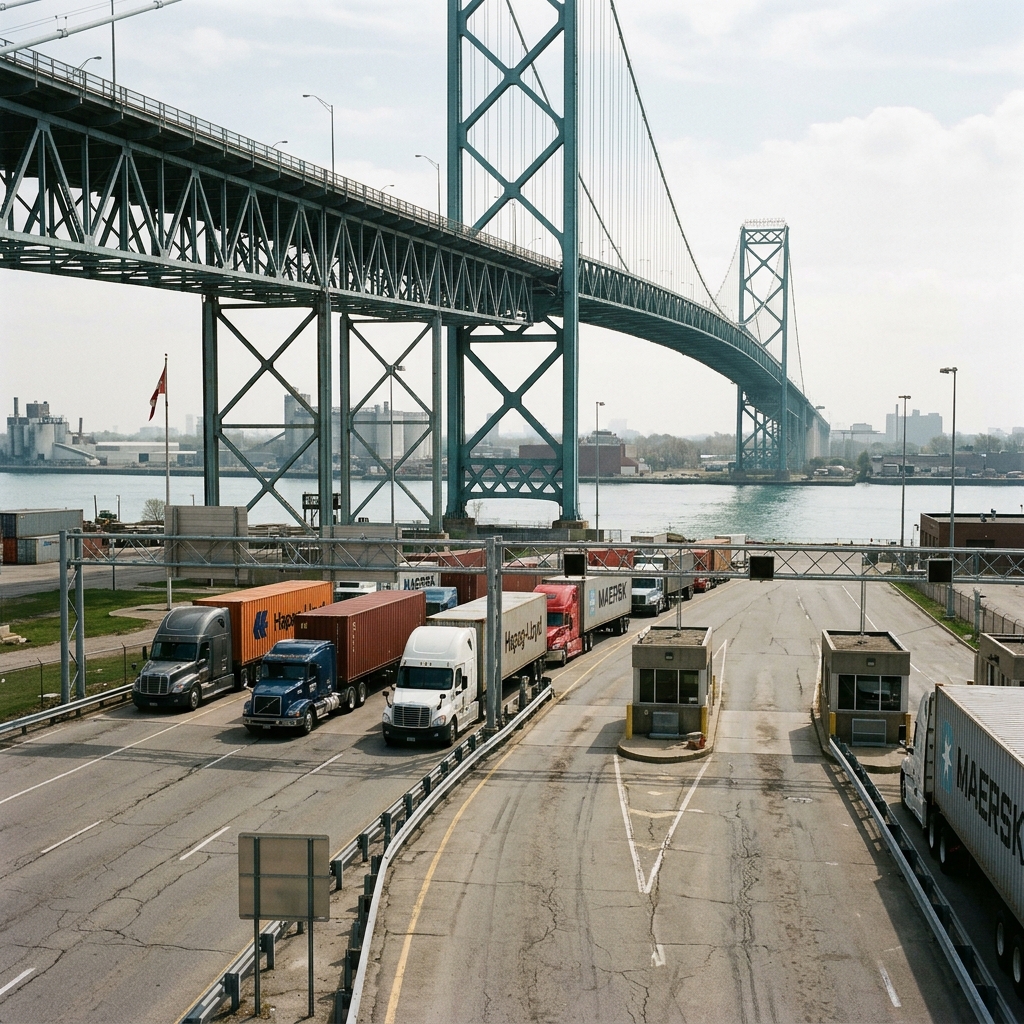
The border is the first place to watch. The Ambassador Bridge between Detroit and Windsor carries a large share of US-Canada truck trade, with daily flows measured in hundreds of millions of dollars. The Blue Water Bridge at Port Huron and Sarnia handles a parallel stream of auto parts, chemicals and agriculture. CBP and CBSA officers process those loads under USMCA and non-USMCA entries. A tariff change shows up first in broker queues, secondary inspections and post-entry audits. When duty treatment is uncertain, shippers hold loads, split shipments and reroute to alternative crossings. Those decisions cost money and time.
Rail is the second place to watch. CPKC's network links Canadian grain, potash and energy products to US Gulf and Midwest markets and links Asian containers through Pacific Gateway ports. Canadian National and CPKC both move auto parts and finished vehicles across the border multiple times. A 25% steel or aluminum duty can hit a railcar part, a chassis component or a finished appliance. USMCA rules of origin require regional value content calculations. CBP can deny a preference if the producer cannot trace inputs. CBSA can apply retaliation if the Canadian tariff schedule covers the good. Rail operators see the volume effect before quarterly earnings.
The Pacific Gateway adds another layer. Vancouver and Prince Rupert handle Asian imports that move by rail into Canada and the United States. Transshipment and origin fraud are active enforcement issues for CBP and CBSA. The US has pressed Canada to tighten de minimis treatment and e-commerce screening. Canada has pressed the US to keep border processing predictable for legitimate cargo. The APEC meeting took place in Asia, so those Pacific supply chains were part of the backdrop. A tariff truce would help port and rail volumes. A tariff fight would push more discretionary cargo to US West Coast ports and Mexican alternatives.
For operators, the practical test is documentation. A USMCA certification must be accurate. A Section 232 exemption claim must match the product scope. A retaliation exemption must match the Canadian order. Customs brokers are already asking clients for updated bills of materials and supplier affidavits. CBP's Centers of Excellence and Expertise and CBSA's trade compliance teams will audit after the fact. The meeting did not change those obligations. It may change the political risk around them. That is why border throughput and broker backlogs are better leading indicators than press conferences.
4. What a Pull-Aside Can and Cannot Fix Before the 2026 USMCA Review
The USMCA joint review sets the deadline. In July 2026, the three governments must review the agreement and decide whether to extend it. A US-Canada meeting at APEC can shape the political atmosphere before that review. It cannot rewrite the treaty. Dispute panels under USMCA Chapter 31 and Chapter 19 handle specific cases. The USTR and Global Affairs Canada manage the consultations. Carney wants tariff relief and a predictable review. Trump wants bargaining power on dairy, digital services and procurement. The meeting gives both leaders a direct read on the other's priorities.
The economic stakes are large. US-Canada goods and services trade runs at roughly $1.3 trillion a year. Canada is a top source of energy, auto parts, critical minerals and agricultural products for the United States. The United States is Canada's largest market by a wide margin. A sustained 25% tariff on steel and aluminum would raise costs for US manufacturers and Canadian producers. A Canadian retaliation escalation would hit US exporters of appliances, agriculture and consumer goods. The Bank of Canada has warned that trade policy uncertainty weighs on business investment. The Fed has noted that tariff risk complicates inflation forecasting.
The impact goes beyond tariffs. Canada has been trying to diversify exports to Asia and Europe while protecting its US corridor. The United States has been trying to reshore critical supply chains while keeping Canada inside its perimeter. The APEC meeting touched both agendas. Carney can tell Asian investors that Canada remains a reliable Pacific gateway. Trump can tell US manufacturers that he is pressing Canada on origin and procurement. The unscheduled encounter does not resolve the tension. It does keep the channel open before the 2026 review becomes formal.
The next signals are specific. Watch for a readout from the Prime Minister's Office and the White House. Watch for Federal Register notices on Section 232 exclusions. Watch for Canada Gazette notices on retaliation list changes. Watch for USMCA panel requests from USTR or Global Affairs Canada. Watch for CBP and CBSA statements on border processing. The meeting itself is not a deal. It is a signal with market consequences. For executives, the right response is to test contracts under several tariff scenarios, audit origin files and keep a tariff contingency plan ready.