1. Ottawa and Beijing Swap Tariff Relief on Farm Goods and Industrial Inputs
PBS reported this week that Ottawa and Beijing have widened a narrow tariff-relief package covering selected agricultural and industrial inputs. Canada is easing duties on Chinese battery-grade graphite, power electronics, and certain industrial machinery, according to the report. Beijing is trimming retaliatory levies on Canadian canola seed, pork, and seafood. The relief does not touch Canada's 100% tariff on Chinese electric vehicles or its 25% levy on Chinese steel and aluminum. Two-way merchandise trade between Canada and China topped C$120 billion in 2024. Canola exports alone were worth about C$3.7 billion in 2023.
The timing matters to enterprise tech buyers. Chinese-made power supplies, thermal modules, and printed circuit boards feed Canadian data-center integrators that assemble AI servers for North American customers. A lower duty rate can cut landed costs by 300 to 500 basis points on some component categories, according to customs brokers cited by PBS. The relief remains narrow. CBSA still applies anti-dumping duties where evidence supports them. CBP retains its own Section 301 tariffs on Chinese-origin goods entering the United States. A component that clears Canada cheaply can face a much higher US duty after transshipment.
The political signal is more ambiguous than the customs math. Canada's farm lobby has pressed Ottawa to restore canola access after China's anti-dumping probe disrupted shipments. China wants relief for industrial inputs used in its own export factories. Neither side has restored normal treatment. The package leaves core disputes over EVs, steel, aluminum, and national-security screening in place. PBS described the move as a limited thaw rather than a reset. For exporters, the practical result is a shorter list of dutiable goods and a longer list of origin, valuation, and end-use questions for compliance teams.
2. CBSA and CRA Rules Decide Whether Tariff Relief Reaches AI Hardware Budgets
Tariff relief only reaches a balance sheet when classification, valuation, and tax treatment line up. CBSA's Valuation and Origin Division reviews transaction value, assists, royalties, and transfer-pricing adjustments for imported goods. CRA auditors apply GST/HST rules and scrutinize cross-border service fees tied to AI software and cloud compute. A 500 basis point swing in landed cost can erase a 7% operating margin for a server integrator. For a C$10 million AI hardware order, a 5% duty difference is C$500,000 before freight, brokerage, and financing. Those numbers matter more than headline tariff cuts.
The Bank of Canada's policy rate and the Federal Reserve's target range shape the financing cost of inventory sitting at border warehouses. A 25 basis point move in short-term rates changes the carrying cost on C$50 million of components by about C$125,000 a year. That is small next to a 25% steel tariff, but it matters for distributors that hold buffer stock near the Ambassador Bridge and Blue Water Bridge. CRA's SR&ED credits and IRS Section 41 research credits can offset some automation spending, yet they do not neutralize customs duties. Finance teams are recalculating project returns line by line.
Enterprise tech buyers also face US export controls on advanced AI chips and related equipment. The Commerce Department's Bureau of Industry and Security maintains license requirements for certain high-performance processors and semiconductor manufacturing tools. Canada's border agencies cooperate with US counterparts on enforcement, but Canadian tariff relief does not create a US export license. CBP's Commercial Targeting and Analysis Center can flag shipments that appear to route Chinese-origin AI hardware through Canada. Compliance teams need end-use statements, bills of materials, and supplier declarations before they book freight.
3. USMCA Review and CBP Scrutiny Keep Tech Cargo Hedged at the Border
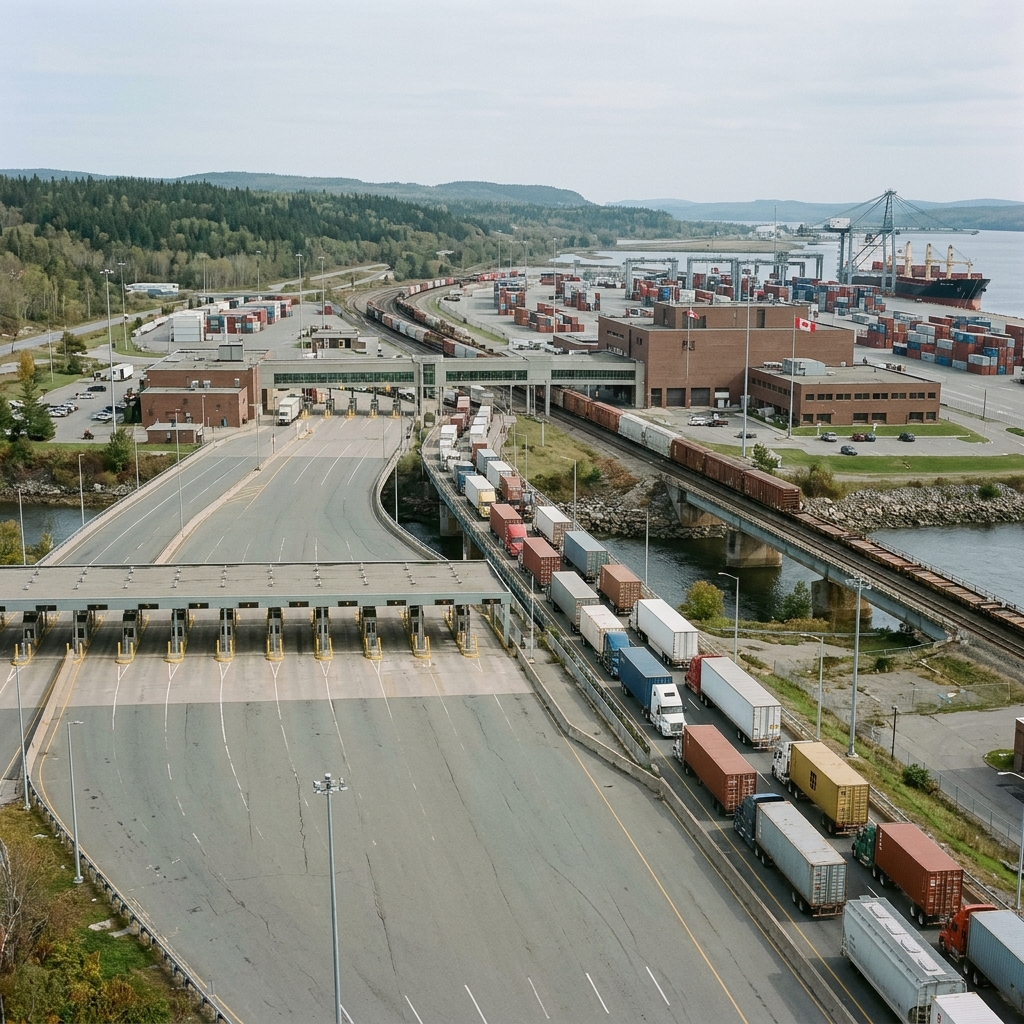
US-Canada trade runs at roughly US$2.5 billion a day. The Ambassador Bridge carries about a quarter of that merchandise by value. The Blue Water Bridge adds another truck corridor between Sarnia and Port Huron. CPKC's rail network moves intermodal containers and automotive parts through Kansas City and Mexico, which gives shippers an alternative when truck queues build. The Pacific Gateway ports of Vancouver and Prince Rupert handle Asian imports that can clear CBSA before moving inland. Each route has different inspection profiles, transit times, and demurrage costs. Tariff relief changes the duty bill, not the logistics map.
USMCA dispute panels remain active on automotive rules of origin, dairy access, and energy. A panel ruling can change the treatment of a component even when Canada's own tariff schedule has moved. CBP applies US Section 301 tariffs on many Chinese-origin goods. Section 232 duties on steel and aluminum remain in force. Canada's retaliatory surtaxes on US steel, aluminum, and other products add another layer. For AI hardware, the key question is whether a Chinese-made power module or cooling unit qualifies as a Canadian good after assembly. Origin rules, not shipping labels, decide.
Freight forwarders are already pricing the new relief into requests for proposals. A server rack that uses Chinese thermal components may see a lower Canadian duty rate, but US-bound units still face CBP scrutiny and possible penalties for misclassification. CBSA's CARM system records duty and tax payments at release. Post-entry audits can claw back relief when origin documents fail. One practical approach is to split inventory. Canadian-bound stock clears under the new relief. US-bound stock stays in bonded warehouses or moves through Pacific Gateway ports with full US duty prepayment.
4. A Narrow Tariff Truce with Beijing Leaves Ottawa Exposed in Washington
The tariff relief gives Ottawa leverage with Beijing and a headache in Washington. US lawmakers and trade officials have warned that Canada could become a backdoor for Chinese goods, especially in technology sectors covered by US export controls. PBS reported that the relief is limited, but perception matters in the USMCA review scheduled for 2026. Canada's government has tried to balance farm exports, EV protection, and alignment with US national-security policy. The result is a narrow truce with China that does not resolve the larger fight over subsidies, industrial policy, and AI supply chains.
Enterprise technology investment will proceed where compute, power, and permits are available. Canada's federal budget has committed C$2.4 billion to AI compute and related infrastructure. Data-center developers still import transformers, switchgear, cooling systems, and backup generators. Some of those components face US tariffs if routed south, and Canadian duties if imported directly from China. The new relief lowers costs on selected inputs. Project economics still depend on electricity contracts, municipal approvals, and CRA treatment of capital cost allowances. A 100 basis point change in the hurdle rate can kill a marginal project.
Investors should watch three signals. First, CBP enforcement actions against Chinese-origin AI hardware routed through Canada. Second, CBSA and CRA rulings on valuation and transfer pricing for cloud compute and software licenses. Third, the USMCA joint review and any new US tariff action against Canadian exports. A stable tariff truce with Beijing is useful, but it does not insulate Canadian firms from US policy risk. The corridor remains open, and the compliance burden remains high. That is the price of doing business between two large trading partners with competing security priorities.