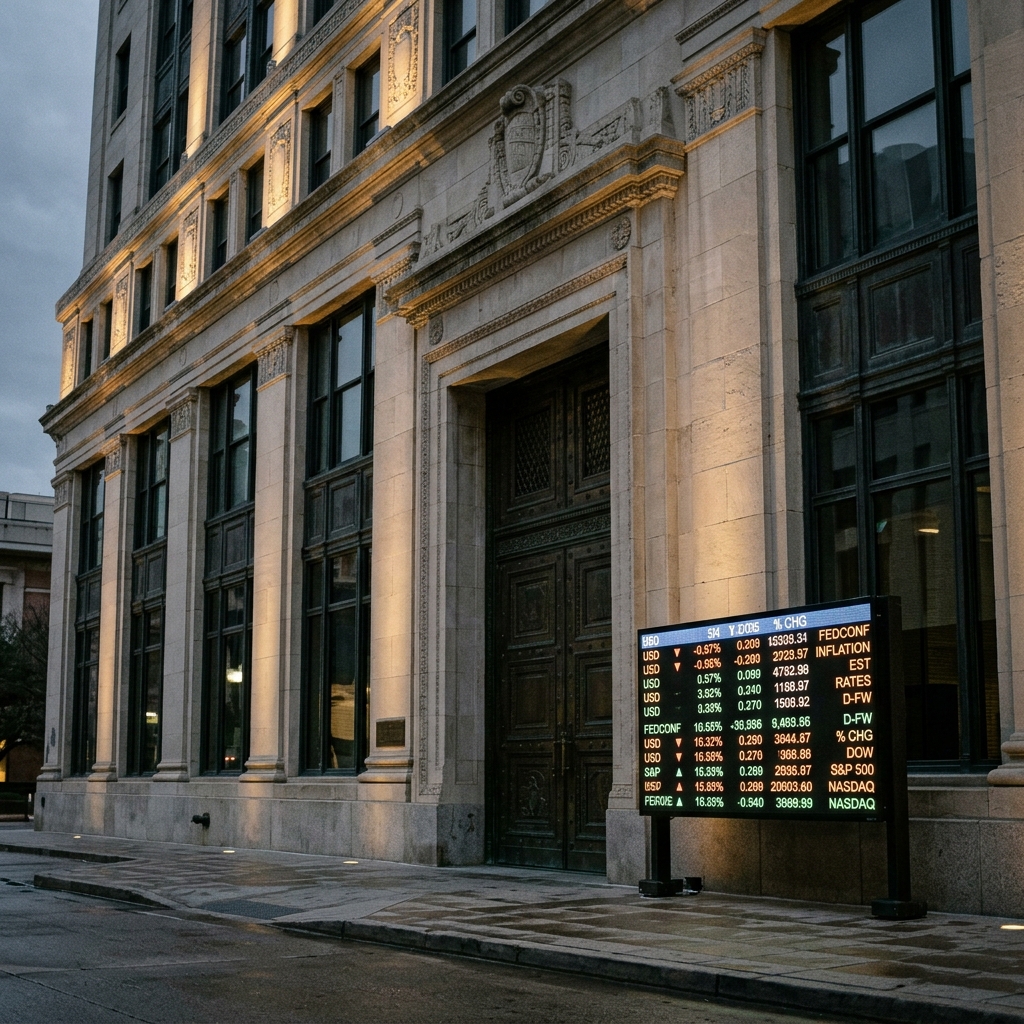
1. Dallas Fed Convenes as Cross-Border Pricing Pressures Mount
The Federal Reserve Bank of Dallas opened its policy forum this week against a backdrop of stubborn service sector inflation and volatile consumer price index prints. Central bankers, economists, and corporate executives met in North Texas to review how regional manufacturing trends intersect with national macroeconomic targets. The Federal Open Market Committee continues to hold its federal funds target range in restrictive territory. Participants in Dallas are weighing whether persistent housing and logistics expenses will delay anticipated rate cuts through the final quarters of the fiscal year.
North Texas anchors major continental freight channels. The region links Canadian industrial production with Mexican manufacturing hubs along the Interstate 35 trade corridor. Dallas Fed President Lorie Logan has repeatedly stated that policymakers need clear evidence that inflation is moving sustainably toward the two percent target before borrowing costs come down. Her remarks carry weight across regional supply chains. In logistics and consumer goods, corporate treasurers still face steep working capital expenses.
The concurrent appearance of chef and philanthropist José Andrés at local executive events brought focus to food security, agricultural commodity transport, and seasonal labor pressures. Agricultural producers operating between the Canadian prairies and the American Southwest deal directly with diesel surcharges, localized droughts, and fertilizer tariff disputes under USMCA review panels. As fresh inflation data circulates, the realities of physical food distribution and high borrowing costs prove that price stickiness extends far beyond balance sheet calculations.
2. Bank of Canada Policy Divergence Tests the Loonie
In Ottawa, the Bank of Canada faces a distinctly cooler domestic economy than its American counterpart. This divergence carries direct consequences for foreign exchange rates. Governor Tiff Macklem lowered the overnight rate target to 4.75 percent in June, marking the first monetary easing move among G7 central banks. Meanwhile, the Federal Reserve maintains a higher benchmark range of 5.25 to 5.50 percent. This interest rate spread keeps sustained downward pressure on the Canadian dollar, pushing the currency below 73 cents US and raising the cost of imported American equipment.
Canadian buyers rely heavily on Southern and Midwestern supply hubs for auto parts, industrial inputs, and fresh produce. When the Bank of Canada cuts rates faster than the Fed, Canadian businesses face immediate currency pass-through inflation. Statistics Canada tracked imported consumer food prices running well above domestic production benchmarks last quarter. Treasurers in Toronto, Montreal, and Calgary are hedging US dollar exposure more aggressively, using forward contracts to shield cash reserves from sudden currency drops.
The Dallas Fed manufacturing survey shows input price growth steadying in Texas factories, yet export demand remains held back by the stronger greenback. American machinery makers shipping equipment to resource extraction projects in Alberta or assembly plants in Ontario report pushback on price from Canadian buyers. When the US dollar gains against the loonie, Canadian capital budgets tighten. Procurement teams are now building currency collars into purchase orders to keep bilateral delivery contracts intact through completion.
3. Freight Corridors Absorb Sticky Logistics and Tariff Pressures
Physical transport networks show how persistent inflation reaches cross-border commerce. The CPKC rail network connects Saint John and Vancouver to Houston and Monterrey, moving millions of tons of chemicals, motor vehicles, and grain every year. Higher borrowing costs limit new capital investment in rail cars, terminal projects, and intermodal yard automation. Canadian Pacific Kansas City management reported higher fuel costs and equipment lease rates over recent quarters, expenses that shippers must either absorb or pass along to distributors.
Cross-border trucking corridors running through the Ambassador Bridge in Detroit and the Blue Water Bridge in Port Huron face identical pressures. Long-haul carriers running freight south to the Dallas-Fort Worth logistics hub face rising insurance premiums, equipment replacement costs, and compliance overhead. US Customs and Border Protection and the Canada Border Services Agency continue to update electronic inspection systems, but border delays still trigger freight detention fees. Shippers pay these costs out of pocket, keeping core goods inflation elevated.
USMCA automotive rules of origin add another layer of cost for North American car manufacturers. Labor value content rules mandate that a significant share of vehicle components come from plants paying at least 16 dollars per hour. With real wages trailing living costs in recent years, auto unions across Ontario and the US Midwest have pushed for larger wage adjustments. As new labor contracts take effect, component unit costs rise, making it harder for central bank inflation measures to drop back to targeted levels.
4. Institutional Capital Allocations in a Higher-for-Longer Environment
Institutional investors managing cross-border pension funds, including CPPIB, CDPQ, and major Texas public retirement systems, are realigning their fixed-income holdings. With US Treasury yields offering attractive premiums over Government of Canada bonds, institutional capital continues to flow south into dollar-denominated paper. This trend supports the US currency. At the same time, it creates headwinds for Canadian real estate investment trusts and commercial developers that need lower borrowing costs to refinance debt taken on during years of near-zero rates.
Private equity firms in North Texas and Bay Street financial sponsors face compressed acquisition multiples across the industrial sector. Cross-border buyouts now require higher equity commitments, as syndicated loan markets demand wider spreads. Deal activity across cross-border manufacturing has slowed. Instead of pursuing large leveraged buyouts backed by high-yield debt, corporate boards are favoring smaller bolt-on acquisitions funded through operational cash flows.
Financial markets heading into the next round of Federal Reserve and Bank of Canada meetings must price in structurally higher capital costs. The discussions in Dallas confirm that the period of cheap money is behind us. Companies operating across the border face lasting exchange rate swings, tighter trade financing terms, and persistent logistics bills. Operational durability along the US-Canada corridor will depend on how quickly firms can absorb these underlying expenses.