1. Spring Operating Renewals Collide with Compressed Farm Gate Margins
Lenders across the grain belt are entering the winter renewal cycle with elevated scrutiny on working capital. Farm credit officers in Minnesota, North Dakota, and Wisconsin report that agricultural borrowers carry significantly larger operating balances than they did three years ago. Commercial agricultural loans extended at 4.25 percent during the pandemic now carry effective rates between 8.00 and 8.75 percent. This increase in debt servicing costs coincides directly with a slide in grain values. Chicago Board of Trade corn futures dropped from more than $6.50 a bushel in 2022 to roughly $4.10 this quarter.
Operating debt renewal meetings, scheduled between December and March, set the credit lines farmers need for seed, chemicals, fuel, and land rent. Regional banks and Farm Credit System associations rely on debt service coverage ratios to determine loan eligibility. Many producers who secured strong margins during the 2021 to 2022 commodity boom spent those cash reserves on land and machinery at top market valuations. The Federal Reserve Bank of Minneapolis found in its latest agricultural credit survey that loan repayment rates dropped for the fifth consecutive quarter across the Ninth District.
Mid-sized family operations bear the brunt of these balance sheet adjustments. Agricultural banks now ask for additional collateral, looking for junior liens on unencumbered acreage or equity in equipment fleets. Producers without clear real estate equity must line up personal guarantees or seek state guarantee programs to secure operating capital for the 2025 planting season. Regional loan committees want verified cash flow projections built on conservative crop yields. Standard balance-sheet cushions are no longer enough to offset persistent operating cash deficits.
2. Cross-Border Input Costs Squeeze Canadian and US Balance Sheets
The pressure on credit lines extends north of the 49th parallel. Canadian agricultural producers in Manitoba and Saskatchewan face identical structural headwinds. Farm Credit Canada reports that farm debt nationwide surpassed C$150 billion in late 2024. Canadian producers rely on short-term lines of credit denominated in Canadian dollars to purchase US-manufactured farm implements, crop protection chemicals, and imported seed varieties. With the Canadian dollar trading below 72 US cents, producers absorb an immediate currency penalty on working capital lines during annual renewals with domestic chartered banks.
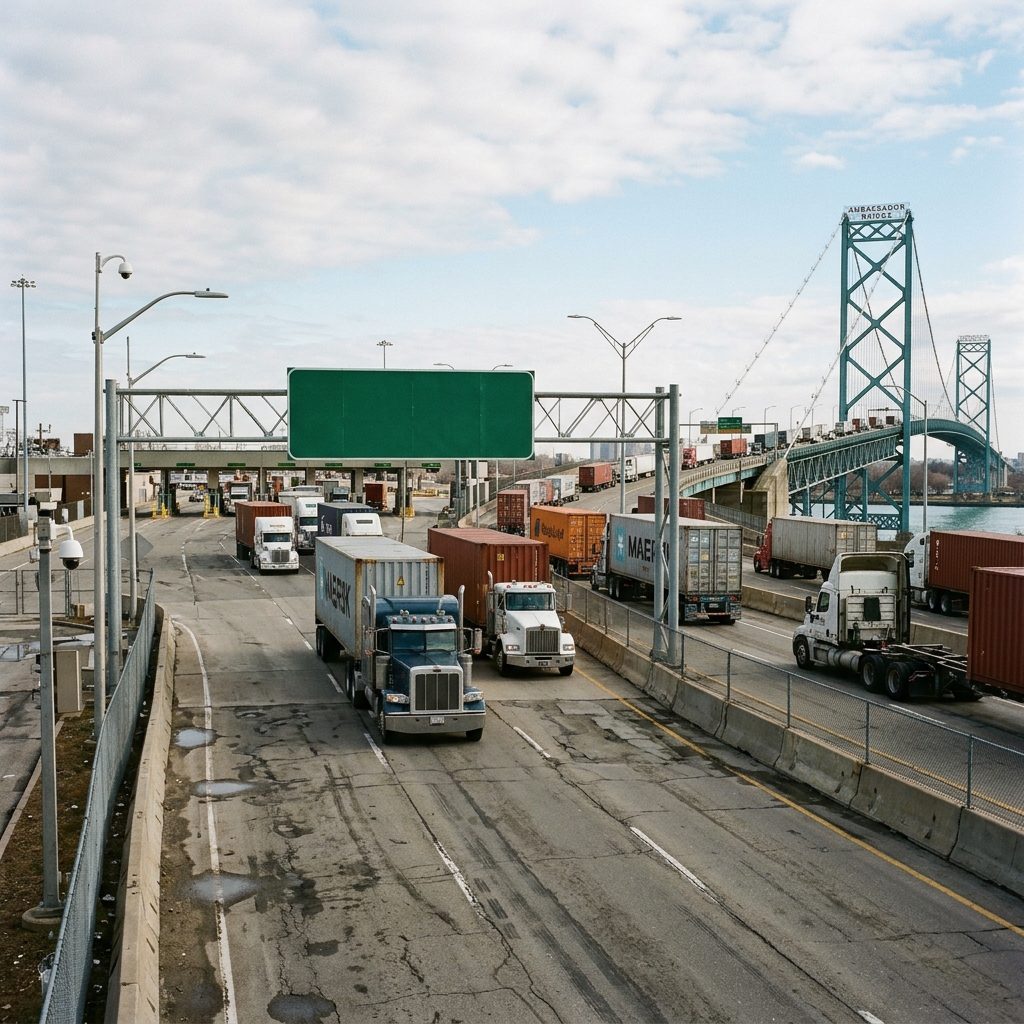
Fertilizer supply routes linking the Canadian Prairies to the US Corn Belt illustrate this bilateral strain. Potash moving south from Saskatchewan on the Canadian Pacific Kansas City rail network into Minneapolis and Chicago distribution hubs met steady wholesale demand, but retail buyers are putting off forward contracts. Retail agricultural cooperatives across the Upper Midwest report that growers are trimming discretionary applications of phosphate and potash to conserve line-of-credit headroom. This deferral strategy hurts input suppliers and slows early-season traffic through customs plazas along the Blue Water Bridge and International Falls corridors.
Equipment dealers on both sides of the border already feel the impact. Dealership inventories of high-horsepower tractors and combines rose by more than 28 percent year-over-year. Producers facing 8.5 percent interest charges on five-year retail financing plans have halted regular trade-in cycles. This pullback hits cross-border equipment flows through North Dakota and Manitoba via border stations at Pembina and Emerson. Major manufacturers including Deere and CNH Industrial have cut production schedules, citing excess dealer yard inventory and tighter bank approvals on wholesale floor-plan facilities.
3. Regulatory Scrutiny Deepens as Central Bank Divergence Looms
Regulators are tracking agricultural credit performance closely. The Federal Deposit Insurance Corporation and the Office of the Comptroller of the Currency issued joint guidance urging regional community banks to monitor concentration risk in farm production loans. Many small agricultural lenders hold farm real estate and operating exposure that exceeds 300 percent of total risk-based capital. A prolonged run of negative cash flows among regional producers will force institutions to classify loans as substandard, triggering mandatory increases to their allowance for credit losses.
Diverging central bank policies complicate the outlook. The Bank of Canada initiated three consecutive 25-basis-point cuts during the second half of 2024 to ease domestic economic softness, while the Federal Reserve held rates higher for longer. Canadian agricultural borrowers see marginal rate relief at chartered institutions like RBC and TD Bank, but their machinery and imported chemical costs remain tied to strong US dollar invoices. South of the border, US producers deal with steep carry costs on unpriced grain held in commercial storage.
USMCA agricultural committees continue to track credit disputes, particularly regarding trade flows of dairy and specialty grains. Canadian grain buyers are lowering counterparty exposure limits for suppliers. When US regional banks restrict lines of credit, American grain elevators lose the liquidity required to execute prompt-payment contracts. Cross-border grain settlements handled under the Canada Grain Act and US Perishable Agricultural Commodities Act rules demand verified liquidity lines. If bank syndications pull back, supply contracts between Midwest grain cooperatives and Canadian processing plants will face payment delays.
4. Long-Term Debt Restructuring and Capital Reallocation
The current credit squeeze is driving structural changes in agricultural land ownership. Institutional asset managers and private credit funds are deploying capital to acquire farmland through leaseback arrangements. Producers unable to renew traditional bank operating lines sell isolated parcels to private buyers, retaining operational control through multi-year cash leases. This sale-leaseback trend supplies immediate liquidity to retire delinquent operating notes held by regional banks. It also permanently alters the equity structure of family farming operations throughout the Upper Midwest.
Farmland values have remained firm so far, which keeps operations from slipping into outright collateral insolvency. Land sales across southern Minnesota and northern Iowa averaged $11,500 per acre in late 2024, down only 3 percent from peak records. This equity cushion has prevented a wave of forced foreclosures like those seen during the 1980s farm crisis. Lenders are using that real estate equity to roll short-term operating losses into 20-year amortized mortgages. The strategy protects banks from immediate charge-offs, but it leaves producers with elevated fixed overhead for decades.
Over the next twenty-four months, commercial agricultural lenders will enforce stricter underwriting criteria. Borrowers must show detailed cost-of-production management, active commodity price hedging, and disciplined capital allocation to retain access to credit. Loose operating liquidity and unhedged production have run their course across the sector. Regional banks that misprice risk will face earnings compressions, while producers who manage cash flow efficiently will pick up acreage from over-leveraged neighbors on both sides of the border.