1. Williams Reaffirms Restrictive Bias and Rejects a Shock Rate Move
New York Fed President John Williams said he still favors tighter monetary policy, but he told Reuters now is not the time for dramatic action. The comment sets a clear boundary for the Federal Open Market Committee. Williams is vice chair of the FOMC and a permanent voter. His words carry weight beyond a single speech. They tell traders that the Fed wants a restrictive federal funds rate without a sudden 50 basis point shock or an emergency tightening cycle. That approach leaves the Fed room to move later.
The Fed's policy rate remains the main lever. Williams favors a restrictive stance because inflation has cooled from its 2022 peak but has not settled at the 2% target. He has pointed to a labor market that is looser than in 2022 yet still firm. The FOMC can hold the target range and use balance sheet policy as a second tool. A gradual path avoids a repeat of the March 2023 regional bank stress that forced emergency liquidity through the discount window.
Dramatic action has a specific meaning in Fed communications. A 50 basis point move, an intermeeting hike or a sudden change to balance sheet runoff would qualify. Williams rejected that path for now. His stance leaves the FOMC room to respond to CPI, PCE and nonfarm payroll reports without pre-committing to a cut. It also keeps the 2-year Treasury yield anchored to a view that rates stay high for longer. Traders who had priced an imminent cut must adjust. That repricing runs through money markets and corporate credit.
2. Treasury Yields, Dollar Funding and the Loonie Face a Gradual Fed
Williams's message lands in the Treasury market first. The 2-year yield tracks FOMC expectations; the 10-year yield reflects growth and term premium. A restrictive Fed with no dramatic move supports a flatter curve and a firm dollar. The dollar index then feeds directly into the loonie. Canadian banks price US dollar funding off SOFR and cross-currency basis swaps. A 25 basis point shift in the expected fed funds path can move those costs by several basis points. That link is quick.
The Bank of Canada faces a different inflation and housing mix. Its overnight rate target has less room to diverge from the fed funds rate without pressuring the Canadian dollar. A wider US-Canada rate gap raises the cost of imported capital goods for Ontario manufacturers and Alberta energy producers. It also affects CRA and IRS withholding calculations on cross-border interest and dividends. Portfolio managers compare after-tax yields, so a 10 basis point move in the US-Canada gap can shift allocation between Toronto and New York.
Currency markets will test Williams's resolve. The loonie trades near levels that matter for Canadian exporters and for CBP and CBSA border processing volumes. A firm US dollar raises the Canadian cost of US-made machinery and software licenses. It also makes Canadian goods cheaper for US buyers on the Ambassador Bridge and Blue Water Bridge corridors. The net effect on bilateral trade is uneven. Auto parts, lumber and agri-food flows respond to contract terms and hedging, not to the spot rate alone.
3. USMCA Freight Corridors Face Higher Financing Costs
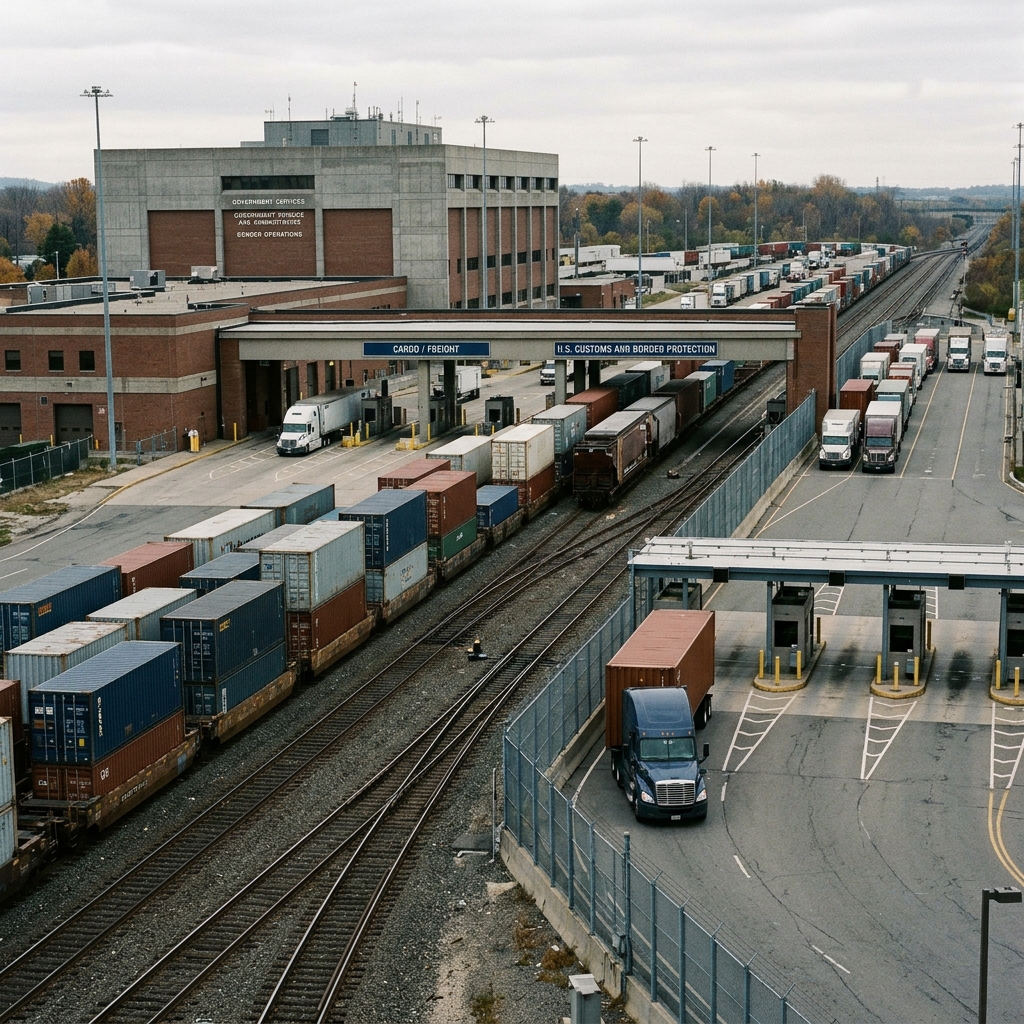
The Fed's stance reaches the real economy through credit. CPKC rail networks, truck fleets and warehouse operators finance equipment in US dollars. A fed funds path that stays high for longer raises interest expense on revolving credit lines and equipment leases. That cost moves through freight rates on the Pacific Gateway and the Ambassador Bridge. Canadian shippers that invoice in Canadian dollars but borrow in US dollars carry a double exposure. They face currency risk and a wider US-Canada rate gap at the same time.
USMCA rules of origin add a second layer. Auto suppliers must document regional value content to avoid tariffs. Financing costs affect the landed cost of components and the price used in USMCA dispute panels. A 25 basis point rise in US dollar borrowing costs can erase thin margins on parts that cross the border several times. CBP and CBSA auditors examine transfer pricing and customs valuation. Higher interest expense changes those calculations. The result is more scrutiny at the border and more work for trade compliance teams.
The financing channel is not uniform across sectors. Energy producers with US dollar revenue can absorb higher rates. Retailers and food processors with domestic cost bases feel more pressure. The Blue Water Bridge handles a large share of auto and chemical freight. A 50 basis point move in dealer floorplan rates would change inventory decisions there. The Fed's gradual approach limits that shock. Williams's refusal of dramatic action gives transport planners a stable rate assumption for the next two quarters. That stability has value for capital budgets.
4. Bank of Canada Divergence and the Bilateral Investment Outlook
The Bank of Canada and the Federal Reserve are not on the same schedule. Canada's economy is more sensitive to mortgage renewals and housing. US demand and fiscal policy keep the Fed's restrictive bias in place. Williams's comments reinforce that gap. A Bank of Canada cut of 25 basis points while the Fed holds would widen the policy spread. That spread feeds into forward FX contracts used by Canadian pension funds and US private equity buyers. It also changes the hurdle rate for cross-border acquisitions in manufacturing and logistics.
Corporate treasurers should read Williams's message as a planning signal. The Fed wants restrictive policy without a funding shock. That supports a base case of no intermeeting move and a gradual response to inflation data. Canadian firms with US dollar debt should extend hedges and stress test a 50 basis point rise in SOFR. US firms with Canadian operations should model a wider rate gap and CRA withholding costs. The USMCA review process adds another variable. Trade and tax teams should coordinate their assumptions before the next fiscal quarter.
The bilateral outlook depends on inflation and labor data, not on one speech. Williams's stance gives the Fed room to wait. It also gives the Bank of Canada room to move first if Canadian inflation cools faster. Investors should watch the 2-year US-Canada yield spread, the loonie and freight volumes on the Pacific Gateway. A stable Fed path helps capital spending on both sides of the border. A sudden shift would hurt. For now, the signal is restraint without shock. Cross-border businesses can plan around that.