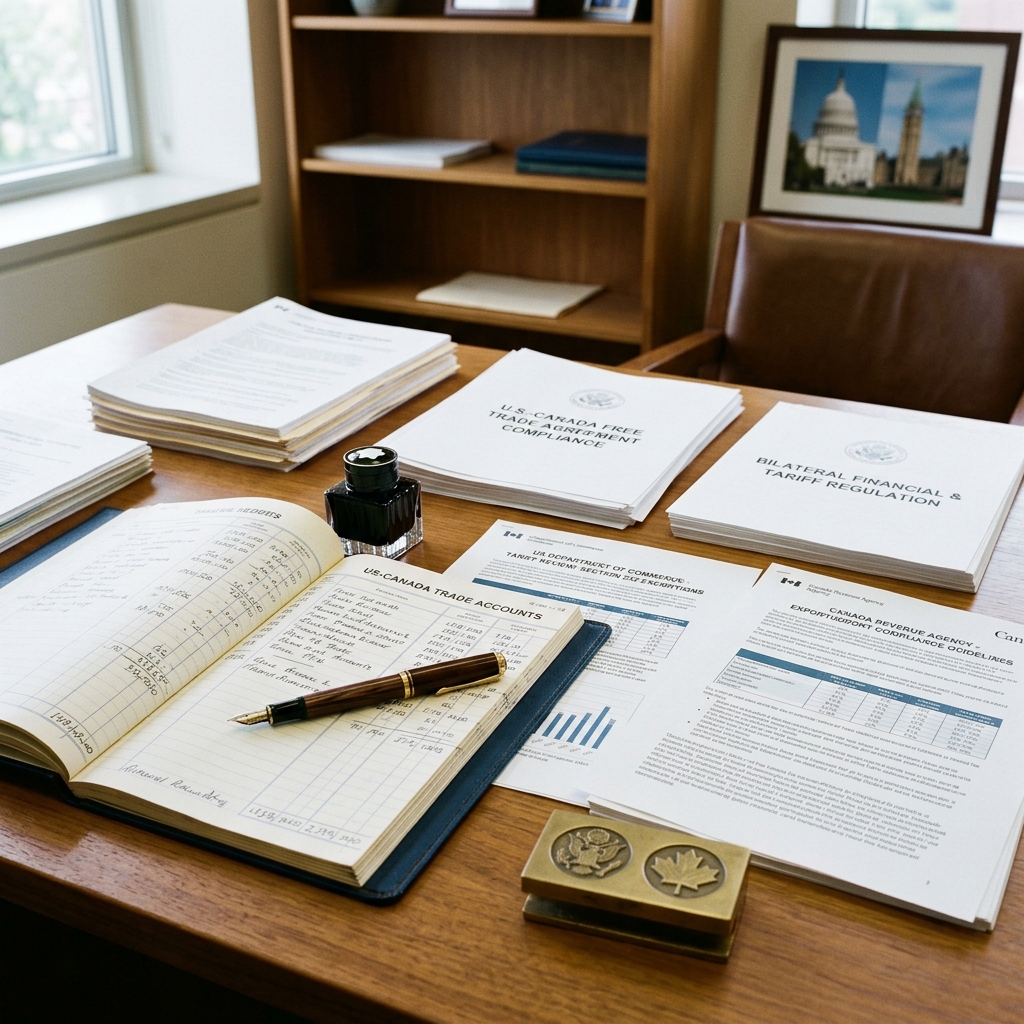
1. Capitol Hill Drafts Statutory Checks on Executive Tariff Powers
Congressional Democrats are drafting legislation to curb executive tariff powers, according to reporting from CNBC. Lawmakers on the House Ways and Means Committee and Senate Finance Committee are zeroing in on the statutory mechanisms used to impose across-the-board levies. For decades, the White House has relied on broad authority delegated by Congress, primarily Section 232 of the Trade Expansion Act of 1962 and the International Emergency Economic Powers Act of 1977. The new bills would force national security tariffs to expire within 60 days unless Congress passes a joint resolution approving them.
Passing these measures remains a difficult fight in a closely divided Congress. Floor managers must balance the demands of industrial states against import-reliant districts. Several members are quietly reaching out to border-state Republicans whose local supply chains depend on steady trade with Ontario and Quebec. The draft bills mandate economic impact reviews from the US International Trade Commission before any new duties take effect. Proponents point out that sudden executive actions disrupt capital spending for domestic manufacturers and trigger immediate foreign retaliation against American exporters.
The legislation also tightens the definition of an economic emergency under IEEPA. Under the proposed rules, presidents could no longer treat bilateral trade deficits as foreign policy crises. By raising the legal threshold for tariff actions, sponsors want to force trade disputes back into formal adjudication forums. The move marks a direct institutional effort by Capitol Hill to reclaim Article I, Section 8 powers over foreign commerce, which lawmakers have surrendered in pieces over the past half-century.
2. Cross-Border Freight and Supply Chains Face Customs Friction
The legislative push comes as commercial freight corridors between Canada and the United States brace for delays. Cross-border trade runs at roughly 2.1 billion dollars in goods every day. High volumes move through major bottlenecks like the Ambassador Bridge in Detroit and the Blue Water Bridge in Port Huron. Importers already deal with thorough compliance checks from US Customs and Border Protection and the Canada Border Services Agency. Broad new duties would force automotive, aerospace, and farm shipments into contested classifications under the Harmonized Tariff Schedule.
Modern North American supply chains rely on parts that cross the border multiple times before final assembly. Auto plants in Windsor and Oshawa exchange engine blocks and subassemblies with facilities in Michigan and Ohio every day. A baseline 10 or 25 percent levy cuts straight into thin operating margins across these just-in-time networks. Freight carriers on Canadian Pacific Kansas City (CPKC) and Canadian National (CN) lines expect sudden swings in cargo traffic as shippers reconfigure bonded warehouses and file duty drawback claims.
US Customs and Border Protection has deployed more personnel to audit country-of-origin documentation. The agency wants to prevent Chinese steel and components from evading tariffs through Canadian hubs. These inspections slow down border processing at northern crossings. Democratic lawmakers maintain that blunt tariffs create border logjams without improving domestic competitiveness. Their bills include fast-track review systems for importers facing retaliatory duties on goods covered by the United States-Mexico-Canada Agreement.
3. The Regulatory Battlefield Shifts to the Court of International Trade
Beyond Capitol Hill, opponents are turning to the federal courts. Trade associations, industrial importers, and Democratic legal allies are preparing lawsuits at the US Court of International Trade in New York. These filings argue that blanket tariffs exceed executive authority when levied without specific industry investigations. Plaintiffs cite the Supreme Court's major questions doctrine, arguing that sweeping economic penalties require explicit authorization from Congress rather than broad readings of old emergency statutes.
The court fight will examine whether supply chain gaps qualify as national security threats under Section 232. Judges have traditionally given the executive branch wide latitude on trade. Still, corporate litigators argue that recent administrative law rulings give courts the basis to strike down tariffs enacted without formal public comment periods. A decision limiting the use of IEEPA would change how multinational companies manage risk across their Canadian operations.
Customs lawyers are telling corporate clients to file administrative protests under Section 514 of the Tariff Act of 1930. These filings preserve an importer's right to duty refunds if federal courts strike down the tariffs later. In the meantime, company balance sheets take a hit: tariffs must be paid in cash at the border, regardless of pending lawsuits or negotiations in Congress.
4. USMCA Governance and Central Bank Projections Under Trade Tension
The tariff fight coincides with early planning for the mandatory 2026 review of the USMCA. Canadian trade officials in Ottawa are watching the congressional debate closely. Unilateral US duties would violate specific market access guarantees in the trade pact. Ottawa has made it clear that unjustified tariffs will bring immediate, dollar-for-dollar retaliation against American exports, targeting Midwestern pork, bourbon, and structural steel from competitive political districts.
Central banks on both sides of the border are modeling the financial impact. The Bank of Canada warned that broad American import duties could knock up to 1.5 percentage points off Canadian GDP growth while stoking inflation. At the Federal Reserve, staff economists are monitoring how tariffs filter into consumer prices and factory input costs. Higher import costs complicate the path for interest rate cuts, keeping debt service and infrastructure financing expensive.
The pushback from Democrats reflects corporate concern over trade barriers within North America. Business leaders in Toronto, Calgary, and Chicago view steady cross-border rules as essential for long-term investments in clean energy, critical minerals, and manufacturing. As the legislative fight plays out in Washington, companies are reviewing their exposure to customs rulings, seeking backup suppliers, and preparing for ongoing cross-border trade friction.