Brussels Rewires the Border Clearance Engine
A major overhaul of European customs architecture is moving forward, and corporate treasuries across North America are taking note. Alvarez & Marsal released an advisory detailing the European Union's modernized Union Customs Code, known across trade desks as the UCC reform package. The initiative represents the most comprehensive operational rewrite of EU border procedures since the single market formed in 1993. The European Commission plans to replace twenty-seven separate national customs IT systems with one operational nerve center called the EU Customs Data Hub. Implementation will roll out in phases through 2038, but the operational pressures on North American exporters begin much sooner.
The reform aims to close revenue leakages and enforce commercial parity. European Commission tax estimates show that roughly one billion low-value consignments entered the bloc in 2023 alone, swamping national border agents in member states like Germany, Belgium, and the Netherlands. Under the legacy system, foreign exporters routed parcel shipments through decentralized entry portals with inconsistent document screening. The new mandate eliminates these procedural arbitrage points. European authorities will demand end-to-end cargo visibility, harmonized product safety verifications, and real-time ledger accounting well before container vessels tie up at Rotterdam or Antwerp.
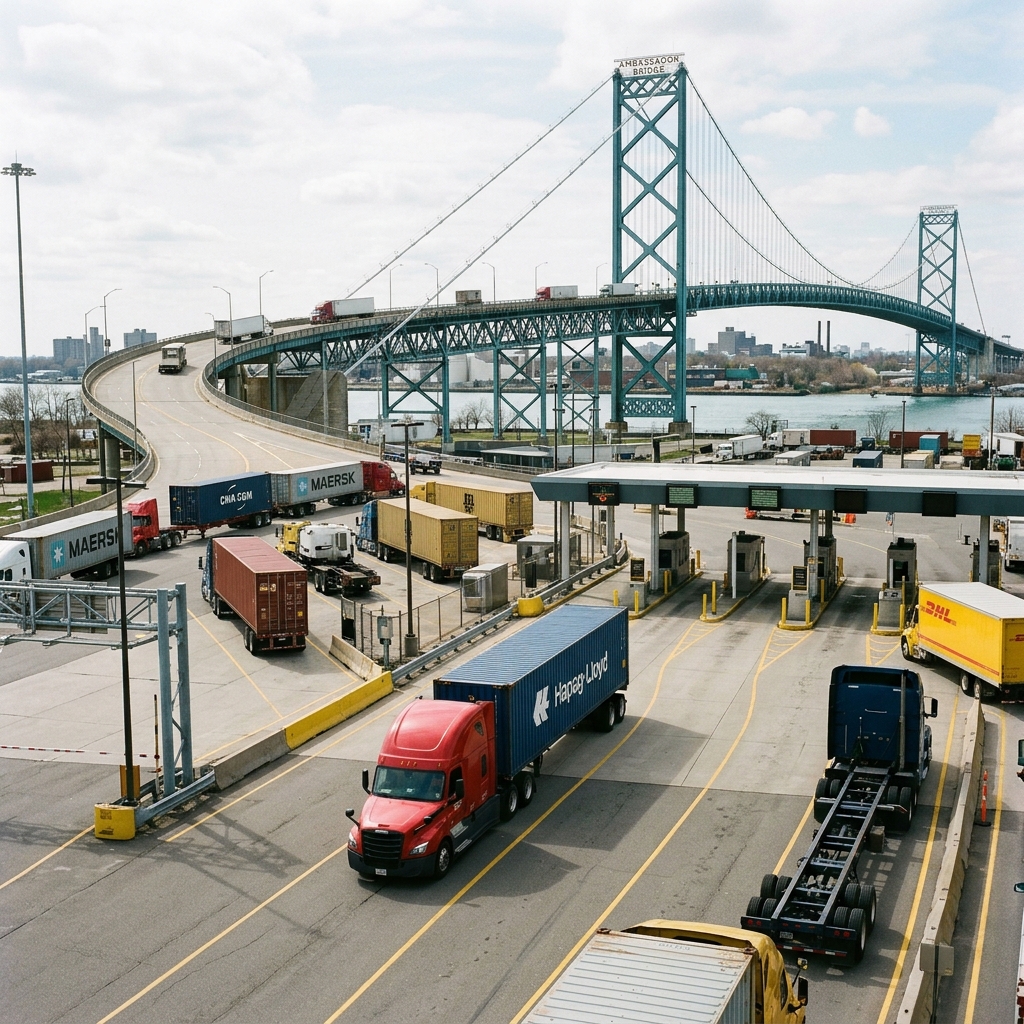
For manufacturing hubs in Ontario, Quebec, and the American Midwest, the regulatory changes alter transatlantic commercial distribution. Supply chain directors who move automotive components across the Ambassador Bridge between Detroit and Windsor frequently route finished assemblies eastward through the Port of Montreal or the Port of New York and New Jersey to European buyers. Under the modernized UCC, these shipments will no longer receive routine paper-based customs deferrals. European buyers will require direct data integration into the central repository in Brussels, cutting into traditional middleman margins.
Abolition of the 150-Euro De Minimis Threshold
The economic centerpiece of the reform package is the complete elimination of the 150-euro duty-free import threshold. Previously, low-value parcels entering the European Union bypassed formal customs tariffs, attracting only value-added tax. Alvarez & Marsal points out that this carve-out encouraged systematic commercial undervaluation and serial parcel splitting by non-EU sellers. European finance ministers have now targeted this loophole directly. By scrapping the threshold, the European Union expects to collect an additional 1 billion euros in annual tariff revenues across cross-border consumer goods, apparel, and precision tools.
This structural change mirrors the intensifying political fights over de minimis rules on both sides of the Canadian-American border. In Washington, U.S. Customs and Border Protection manages Section 321 entries, which permit up to 800 dollars daily in duty-free import exemptions per recipient. Lawmakers on Capitol Hill have drafted bills to restrict that limit to block untaxed foreign goods. In Ottawa, the Canada Border Services Agency enforces a low 20-dollar duty-free threshold on postal imports, alongside a 40-dollar threshold under the United States-Mexico-Canada Agreement. The European pivot reinforces customs crackdowns gaining traction across North America.
Online platforms, fulfillment operations, and direct-to-consumer manufacturers in North America must adjust their pricing algorithms now. Under the new EU rules, online marketplaces become the deemed importer for consumer transactions. If a machine parts maker in Ohio or a specialty apparel brand in British Columbia sells directly to a customer in Lyon, the digital storefront is legally responsible for calculating and paying customs duties. There will be no passing off liability to local postal agencies. Freight forwarders will demand upfront tariff escrow deposits before loading pallets onto outbound transatlantic cargo flights.
The Trust and Check Model Replaces Authorised Economic Operators
Beyond consumer parcels, the UCC reform introduces a regulatory tier designed for high-volume commercial shippers: Trust and Check trader status. This designation will replace the current Authorised Economic Operator program. To qualify for this high-tier customs lane, corporations must grant European customs authorities full, real-time access to their internal enterprise resource planning systems. Border authorities will monitor supply records, inventory tracking, and tax reconciliations continuously. In exchange, verified companies will receive automated green-light clearances, bypassing physical border inspections and recurring manual paperwork filings.
For Canadian and American multinationals, this standard demands significant enterprise software capital expenditures. Enterprise systems managed on platforms like SAP or Oracle must integrate directly with the upcoming EU Customs Data Hub via open application programming interfaces. Alvarez & Marsal emphasizes that while the operational upside is substantial, the compliance exposure is unforgiving. If a Canadian industrial supplier misclassifies Harmonized Tariff Schedule codes or misstates country of origin calculations on steel forged in Hamilton, automated algorithms in Brussels will flag the discrepancy instantly, triggering audits across all twenty-seven member states simultaneously.
The bilateral friction points run deep into existing trade architecture. North American firms have long relied on trade facilitation agreements and mutual recognition arrangements between CBP's Customs Trade Partnership Against Terrorism and the European AEO framework. Trust and Check resets those baselines. Trade attorneys warn that unless the United States Trade Representative and Global Affairs Canada negotiate formal data-interoperability protocols with Brussels, North American exporters will face dual compliance burdens. They must satisfy traditional domestic clearance requirements while maintaining active European digital interfaces.
Supply Chain Realignment Along the Atlantic Seaboard
The commercial reverberations of the modernized code will reshape logistics assets across North America's premier export gateways. Major freight rail carriers, including CPKC and CN Rail, have spent billions developing integrated intermodal lines that funnel inland industrial freight to deepwater Atlantic ports like Halifax, Montreal, and Saint John. Maritime terminal operators at these hubs are reviewing container processing workflows. If European ports demand automated pre-departure data packets under the new UCC timeline, North American logistics operators must verify compliance before railcars leave yards in Chicago, Toronto, or Calgary.
Corporate executives are already running financial models on the operational friction. Alvarez & Marsal advises corporate boards to conduct immediate supply chain audits to assess exposure to EU tariff adjustments and data infrastructure mandates. Mid-market North American exporters operating on thin margins face an immediate risk. If a firm's IT infrastructure cannot link to the EU hub by the time voluntary onboarding begins in 2028, its cargo will face manual inspection queues at European entry terminals, incurring demurrage costs and transit delays.
Over the next decade, international trade will belong to enterprises with completely transparent, machine-readable logistics systems. The European Union's modernized Union Customs Code marks an aggressive first phase in the digital overhaul of world trade controls. With border authorities in Washington, Ottawa, and Brussels turning away from paper declarations and post-clearance reviews, cross-border corporate strategy must elevate customs compliance from an administrative back-office chore to an urgent executive priority.