1. The Quiet Tariff Creep Reshaping North American Supply Chains
The trade war between the United States and Canada is not a single headline event. It is a slow accumulation of tariff lines, regulatory interpretations, and counter-tariffs that have expanded since 2018. American manufacturers sourcing aluminum extrusions from Ontario now pay a 10% Section 232 tariff plus a 7.5% counter-tariff on certain downstream products. These costs do not appear in broad CPI readings, but they land squarely on the balance sheets of mid-sized firms in Michigan, Ohio, and Pennsylvania. The EnergyNow report highlights that many of these businesses lack the legal teams to challenge CBP classifications or pursue USMCA exemptions.
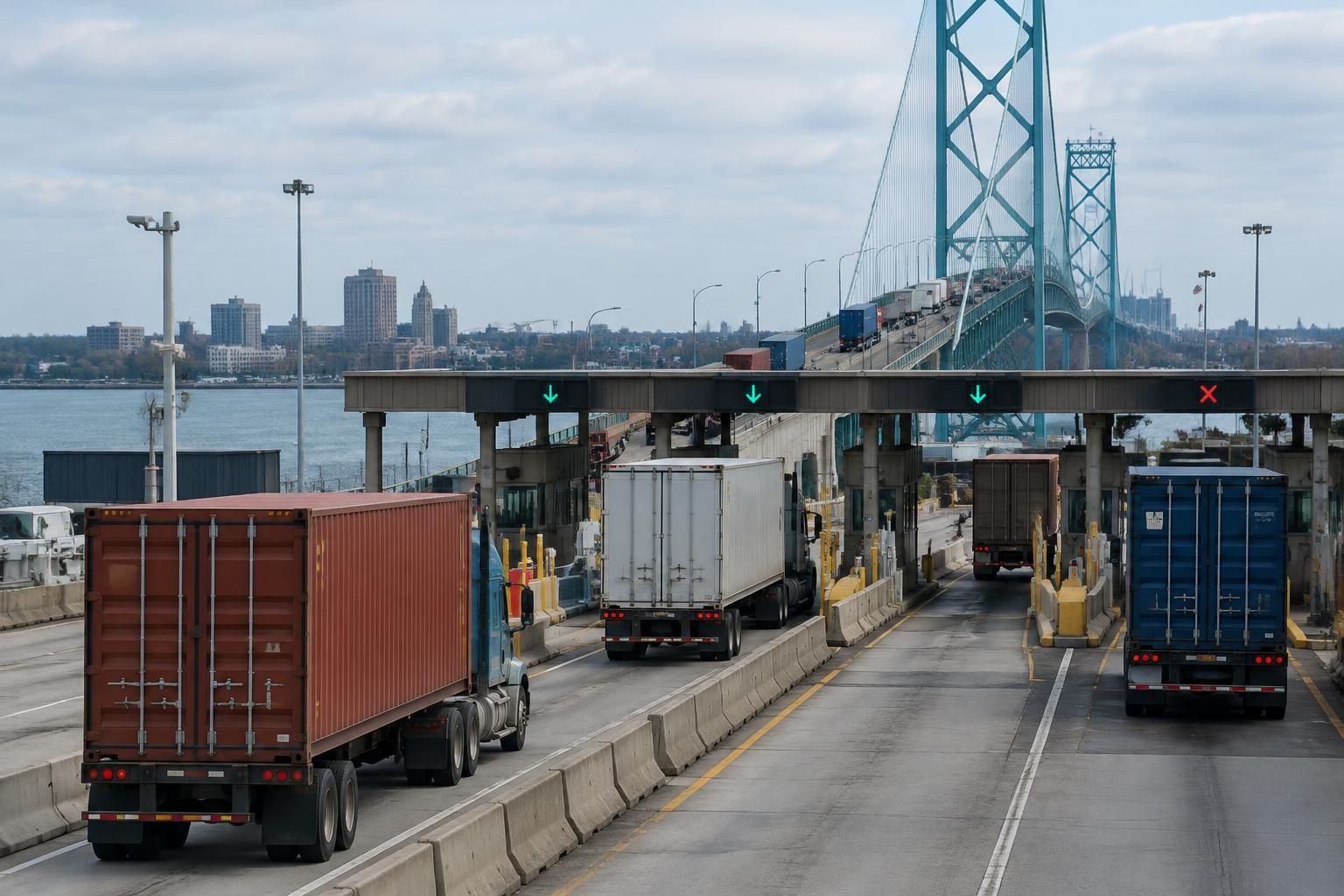
Consider the automotive corridor. A single wiring harness can cross the Ambassador Bridge three times before final assembly in Dearborn. Each crossing carries documentation requirements under USMCA rules of origin. CBP has increased audits of these certificates by 22% since 2022, according to trade compliance consultancy data. A missing field or an incorrect tariff shift rule can trigger a detention, a $5,000 penalty, and a week of lost production time. For a Tier 2 supplier with $40 million in revenue, that is a material event. The Canadian dollar's 3-5% swing against the greenback over any given quarter adds another layer of unpredictability to already thin margins.
The Canadian response has been measured but real. Ottawa's surtax on US ketchup, playing cards, and washing machines was designed to hit politically sensitive districts. Less visible is the CBSA's stricter enforcement of valuation rules on US-origin goods, which has increased the average time to clear commercial shipments at the Blue Water Bridge by 18 minutes since 2023. That sounds trivial until you multiply it by 8,000 trucks per day. Freight operators are passing these costs along. The result is a stealth inflation tax on cross-border commerce that neither the Federal Reserve nor the Bank of Canada captures in their core inflation metrics.
2. Digital Services Taxes and the Regulatory Thicket Beyond Goods
The trade friction is not confined to physical goods. Canada's Digital Services Tax, enacted in 2024, imposes a 3% levy on revenues from online marketplaces, social media, and user data. The US Trade Representative has called it discriminatory against American tech firms. For mid-sized US software companies with Canadian customers, the DST creates a compliance burden that often exceeds the tax itself. Firms must determine whether their SaaS platform qualifies as an online marketplace, track Canadian user revenues separately, and file returns with the CRA. Legal fees for the first year of compliance routinely run $50,000 to $150,000 for a company with $20 million in Canadian revenue.
The IRS and CRA have also tightened transfer pricing documentation requirements. The base erosion and profit shifting framework now demands contemporaneous benchmarking studies for intercompany transactions above $10 million. A US parent licensing software to its Canadian subsidiary faces a 25% withholding tax on royalties unless the treaty exemption is properly claimed. The paperwork is not optional. CRA auditors have increased transfer pricing adjustments by 31% since 2021, according to the agency's annual report. These adjustments often come with interest and penalties that can double the original assessment.
Financial services face their own set of frictions. The Bank of Canada's overnight rate sits at 4.75% while the Federal Reserve's target range is 5.25% to 5.50%. That 50-75 basis point spread has widened the cross-currency basis swap, making it more expensive for Canadian banks to hedge US dollar exposure. US insurers writing policies in Canada must post collateral under provincial regulations that differ from state-level US rules. The Office of the Superintendent of Financial Institutions has signaled it will not soften capital requirements. The net effect is a higher cost of capital for cross-border financial activity, which ultimately flows to corporate borrowers and consumers.
3. USMCA Dispute Panels and the Slow Machinery of Resolution
The USMCA replaced NAFTA with a more enforceable dispute settlement mechanism. In practice, the panels are slow. A state-to-state dispute over Canada's dairy quota allocations took 19 months from filing to final report. A challenge to US anti-dumping duties on Canadian softwood lumber has been in process for over two years. For businesses caught in the middle, the timeline is punishing. A US importer paying $2 million annually in duties may wait 18 months for a refund, with no guarantee of success. The interest cost alone can erode the entire margin on the affected product line.
The CPKC rail network and Pacific Gateway ports handle roughly $250 billion in annual two-way trade. A dispute over rail car interchange rules or port fee assessments can disrupt thousands of shipments. The Surface Transportation Board and the Canadian Transportation Agency have overlapping jurisdiction, and their processes are not synchronized. A US shipper challenging a demurrage charge at the Port of Vancouver must file with the CTA, then potentially seek USMCA panel review, then coordinate with CBP on duty drawback claims. Each step requires separate counsel and separate documentation. The legal fees can exceed the value of the disputed charge.
USMCA's automotive rules of origin require 75% regional value content, up from 62.5% under NAFTA. That change forced suppliers to audit their bill of materials line by line. A single electronic component sourced from Asia can disqualify an entire assembly. CBP's verification audits now include onsite visits to Canadian plants, and the agency has assessed $180 million in penalties for USMCA violations since 2021. The Canadian Automotive Parts Manufacturers' Association estimates that compliance costs add 1.5% to 2% to the price of every part. That is a structural cost increase that does not disappear when the political rhetoric cools.
4. What Executives Should Watch as the Corridor Tightens
The Bank of Canada and Federal Reserve policy divergence is likely to persist through 2025. That means the CAD/USD exchange rate will remain volatile, and hedging costs will stay elevated. CFOs of cross-border firms should review their foreign exchange exposure quarterly, not annually. A 3% move in the loonie can wipe out the operating margin on a $50 million supply contract. Forward contracts and options are available, but they carry their own costs. The key is to build that cost into pricing rather than absorb it as a surprise.
On the regulatory front, the USMCA joint review is scheduled for 2026. Both governments will use that process to air grievances and potentially seek modifications. Industries most exposed to rule changes include automotive, agriculture, and digital services. Trade associations are already lobbying for clearer rules of origin for electric vehicle batteries and critical minerals. Companies should document their compliance positions now, because the review will likely trigger new audits and verification requests. The CRA and CBP are both increasing headcount for trade enforcement, which signals that scrutiny will intensify.
The most important variable is political will. Neither Washington nor Ottawa wants a full-scale trade war. The integrated nature of the auto and energy supply chains makes a clean break impossible. But the current trajectory is toward more friction, not less. Mid-sized firms that treat cross-border compliance as a core competency will outperform those that treat it as an afterthought. The trade war many Americans do not know they are in is real, and it is being fought in customs offices, tax filings, and freight yards rather than in headlines. The winners will be the operators who read the fine print.