1. Trade Minister Links Interim U.S. Deal to CUSMA Review in CBC Interview
Canada's international trade minister told CBC that reaching an interim U.S. trade agreement would kickstart new CUSMA talks. That sequence puts a narrow tariff truce ahead of the pact's scheduled 2026 joint review. The minister did not release a draft tariff schedule or a list of covered sectors. The comments matter because Ottawa has spent months trying to contain tariff escalation from Washington while preserving the legal architecture of CUSMA, the trilateral pact known in the United States as USMCA. A mini-deal would give negotiators a political bridge into the formal review.
The politics are simple. U.S. Section 232 tariffs on steel, aluminum and autos, plus broader reciprocal tariff threats, have raised costs for Canadian exporters and forced Ottawa to impose retaliatory surtaxes. CBP and CBSA officers now face more origin questions at ports of entry. An interim agreement could pause some of that escalation without reopening every chapter of CUSMA. The risk is that a narrow deal leaves the hardest files for a review that could become more contentious once U.S. and Mexican electoral calendars crowd the timetable. Those files include dairy access, softwood lumber and automotive content rules.
CUSMA's joint review is set for July 1, 2026. Under the agreement, each party confirms whether to extend the pact. If they do not, annual reviews follow until the sunset date. That calendar gives Washington leverage and gives Ottawa a deadline. The minister's CBC comments suggest Canada wants an early, limited agreement to reduce tariff risk before the review begins. For companies, the difference between an interim deal and a full renegotiation is practical. An interim deal may cover customs facilitation and sectoral tariff relief. A full review would reopen rules of origin, dispute panels and market access.
2. Auto Rules and Border Agencies Face the First Test From Any Mini-Deal
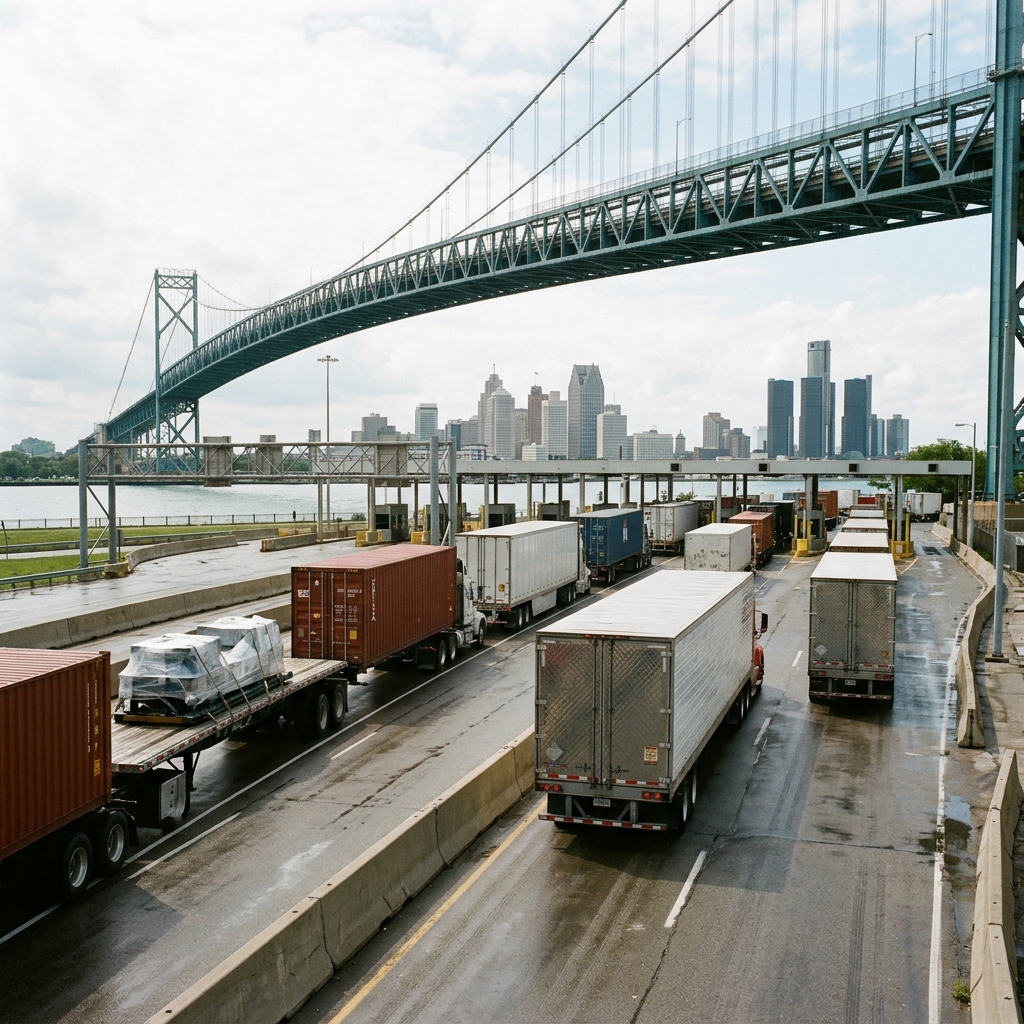
The automotive supply chain is the first test. CUSMA requires 75 percent regional value content for vehicles and 40 to 45 percent high-wage labor content, with tracing rules for parts. CBP and CBSA verify those claims. A single misclassified shipment can trigger penalties and retroactive duties. Any interim deal that lowers tariff risk for autos must say how origin is proved and how existing rulings are treated. The Ambassador Bridge between Detroit and Windsor and the Blue Water Bridge at Sarnia carry a large share of just-in-time parts. Customs friction there reaches assembly plants in Ontario and Michigan within hours.
Agriculture and forestry are the second test. Canada's supply management system for dairy and poultry is a perennial U.S. target. Softwood lumber remains subject to U.S. countervailing and antidumping duties. An interim deal that avoids those files could be signed quickly, but it would leave Canadian producers exposed to future disputes. CUSMA dispute panels have handled dairy and labor complaints, and their rulings shape the political room for concessions. The minister's sequencing implies Ottawa wants to secure a narrow win first. That approach may protect supply management in the short run while postponing the fight over market access.
Financial markets read trade headlines through rate differentials and currency. The Bank of Canada and the Federal Reserve are balancing inflation against slower growth. A tariff truce could narrow the risk premium embedded in the Canadian dollar. A 25 basis point move in two-year yield spreads can change hedging costs for mid-sized exporters. CRA and IRS transfer-pricing rules also matter for cross-border subsidiaries that shift profits between jurisdictions. An interim deal would not rewrite tax law, but it would reduce the odds of retaliatory surtaxes that complicate cost allocation and audit trails.
3. CUSMA Review Mechanics Give Ottawa and Washington Leverage Over Mexico
The CUSMA review is a legal process, not a photo opportunity. Article 34.7 sets the joint review, and Chapter 31 state-to-state panels handle disputes. Labor rapid response mechanisms can target specific factories. If Canada and the United States reach an interim deal outside that architecture, Mexico will ask whether its access is being diluted. CUSMA is trilateral, and U.S. tariffs on Mexico have moved in parallel with tariffs on Canada. A bilateral Canada-U.S. mini-deal could ease one border while leaving another dispute open. That complicates North American sourcing decisions.
Customs cooperation is the most likely early harvest. CBP and CBSA already run trusted trader programs and preclearance lanes. An interim deal could expand data sharing on shipments, add audit capacity and set response times for origin verification. CPKC rail networks and the Pacific Gateway ports in Vancouver and Prince Rupert depend on predictable clearance for intermodal freight. A deal that reduces inspections at the Ambassador Bridge or Blue Water Bridge would help truckers. Rail and port operators need the same certainty. Without written rules, carriers will keep building buffer stock and paying for expedited brokerage.
U.S. trade law limits what an interim deal can do. The USTR must publish notices and consult Congress. Canada's Global Affairs Canada and Finance Department must align tariff schedules and surtax orders. A memorandum of understanding can be signed quickly, but it cannot amend CUSMA without the full review. That distinction matters for investors who price legal durability. A deal that lasts only as long as a presidential statement is weaker than a tariff schedule published in the Federal Register and Canada Gazette. The minister's comments point to a political bridge, not a final settlement.
4. A Narrow Truce Buys Time but Leaves Exporters Exposed to 2026 Review
Canada sends about 75 percent of its goods exports to the United States. That dependence gives Washington leverage in any interim negotiation. A narrow truce could stabilize orders for auto parts, machinery and energy equipment, but it would not remove the structural risk of U.S. tariff action. Companies planning capital spending for 2026 need to know whether CUSMA rules will be extended or reopened. The Bank of Canada has cited trade policy uncertainty as a drag on business investment. An interim deal would help, but it would not erase the review risk.
Mexico's reaction is the wild card. If Canada gets a better interim deal than Mexico, Mexican officials may demand parallel treatment or slow-walk trilateral talks. U.S. automakers with plants in all three countries would face conflicting incentives. CUSMA's rules of origin are designed to keep production in North America, but they depend on consistent enforcement. A Canada-only deal could shift sourcing toward Canada for some parts and toward Mexico for others. That outcome would raise costs for assemblers and complicate compliance for suppliers that move components across multiple borders.
The next signals are procedural. Watch for USTR Federal Register notices, Canada Gazette tariff orders and CBSA customs notices. Watch the July 1, 2026 joint review date and any Article 34.7 consultations. Watch Bank of Canada and Federal Reserve commentary on trade uncertainty. The minister's CBC interview sets a strategy: reach a limited U.S. agreement first, then use that momentum to start new CUSMA talks. The strategy can work if the interim deal is written, enforceable and coordinated with Mexico. If it is vague, it will add another layer of uncertainty for exporters on both sides of the border.