Scout Keeps Seven-Store Canadian Retail Plan Despite Tariff Stack
Scout Motors has kept its plan for seven Canadian retail locations intact despite tariffs, according to Automotive News. The Volkswagen Group brand is spending US$2 billion on a plant in Blythewood, South Carolina, where it will build the Traveler SUV and Terra pickup. Canada is a small market next to the United States, but it is a wealthy one with a federal zero-emission vehicle sales mandate and strong EV adoption in Quebec and British Columbia. Seven stores is a lean network for a country of about 40 million people. Scout can cover major metropolitan areas without the capital burden of a legacy dealer body.
The tariff math is concrete. Canada imposed a 25 per cent counter-tariff on U.S.-built vehicles that do not meet USMCA rules of origin, and Washington has its own 25 per cent Section 232 auto tariff. A C$75,000 Scout could face C$18,750 in Canadian duty if it fails the origin test. Scout's South Carolina assembly helps on the U.S. side. The Canadian side depends on regional value content, battery sourcing and the paperwork that CBSA reviews at the border. CBP rules on U.S. imports and USMCA certification also shape the parts flow into South Carolina.
Scout's decision to keep the seven-store plan is a bet on timing. Tariffs can change through USMCA dispute panels, executive action or negotiated settlements. A retail network takes years to build, and provincial franchise laws, leasing rules and service requirements do not wait for a trade truce. The brand also needs Canadian reservations and fleet contacts before its first vehicles arrive. Automotive News reports the plan is intact. That does not mean every store opens on schedule. It means Scout is preserving the option to sell in Canada rather than ceding the market to established EV brands.
Tariff Math Turns on USMCA Origin, CBP Filings and CBSA Assessment
USMCA is the key. To avoid Canada's counter-tariff, a vehicle must qualify under the agreement's rules of origin. For passenger vehicles, that means 75 per cent regional value content, core-parts tracing and labor value content tests. Scout's South Carolina plant can meet those tests only if its battery pack, drive units and electronics supply chain is documented to the letter. CBSA assesses duty at the port of entry. CBP enforces the same origin rules on imports into the United States. A missing certificate or a battery cell from a non-qualifying source can turn a zero-duty vehicle into a 25 per cent duty vehicle.
The cost can show up in several places. A 25 per cent duty on a C$80,000 vehicle is C$20,000 before freight, GST/HST and provincial levies. CRA administers the GST/HST and Canada's luxury tax on vehicles above C$100,000. IRS rules on the US$7,500 Section 30D credit and the commercial clean vehicle credit shape U.S. demand, not Canadian duty, but they affect Scout's production volume and cost per unit. Volume matters because Scout's US$2 billion plant needs utilization. Tariffs that cut Canadian volume raise the fixed cost per vehicle in South Carolina.
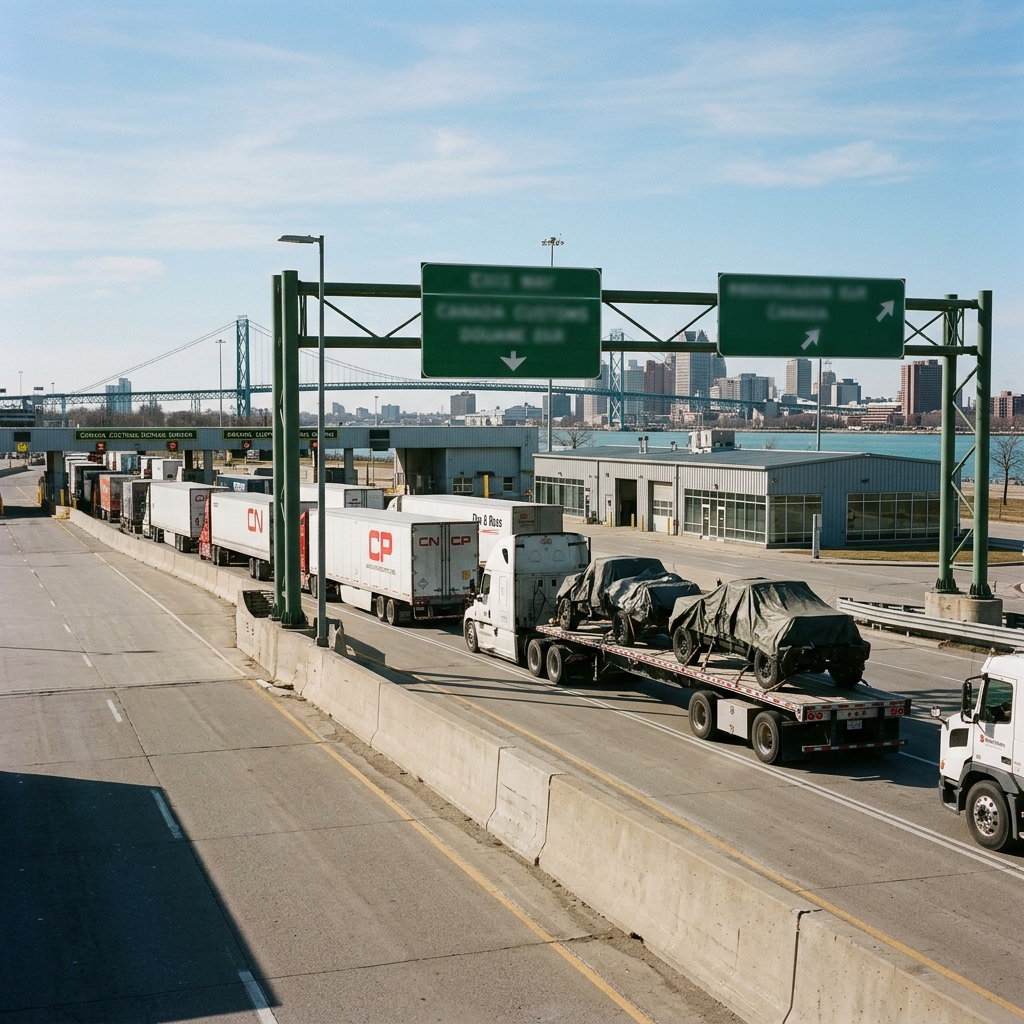
Freight corridors add cost and complexity. Vehicles from South Carolina can move by truck over the Ambassador Bridge or Blue Water Bridge, or by rail through CPKC and CN networks. Parts can enter through the Pacific Gateway and cross the border more than once before final assembly. Each crossing creates a documentation point for CBP and CBSA. USMCA cumulation helps if the paper trail is clean. It does not help if a supplier cannot prove origin. Scout's direct-sales model gives it pricing control, but it cannot control the border assessment. That risk is now part of the Canadian business case.
Direct-Sales Model and Provincial Rules Shape Scout's Canadian Bet
Scout's Canadian network is not a copy of a legacy dealer body. The brand has favored direct sales and company-owned retail points, a model that faces provincial franchise rules in Ontario, Quebec, British Columbia and Alberta. Seven stores can act as hubs for delivery, service and test drives while lower-cost satellite locations handle maintenance. That structure lowers capital spending and protects Scout from dealer inventory pressure. It also gives Scout control over MSRP at a time when tariff pass-through is a decision senior executives will make. Automotive News reports the seven-store plan remains intact despite tariffs. The retail design matters as much as the tariff headline.
Policy risk runs through USMCA dispute panels and domestic politics. Canada's counter-tariff is a response to Washington's Section 232 auto duties. If a USMCA Chapter 31 panel finds fault with either side's measures, the tariff stack can change quickly. Scout cannot build a retail plan around a ruling that may arrive after launch. It can build flexibility into lease terms, delivery timing and trim mix. Direct sales help there because Scout can adjust incentives without renegotiating with franchisees. CBP and CBSA rulings on specific parts also matter more than broad headlines. A favorable origin ruling can cut thousands of dollars from a Canadian transaction.
Freight and logistics add another constraint. Scout's South Carolina plant sits outside the traditional Canadian auto corridor, so finished vehicles will rely on rail and truck links to Ontario and Quebec. CPKC's network and the Ambassador Bridge are the main arteries for Ontario-bound volume. Blue Water Bridge handles truck traffic into southwestern Ontario. Pacific Gateway matters for imported components that feed the South Carolina plant. Tariffs on steel, aluminum and battery components can raise input costs before a vehicle ever reaches Canada. Scout's seven-store plan assumes those costs stay manageable or that USMCA qualification offsets them.
Bilateral Outlook Hinges on USMCA Review and EV Demand
Scout's Canadian plan is a modest but real sign of confidence in EV demand. Canada's federal zero-emission vehicle mandate requires 20 per cent of new light-duty sales to be zero-emission by 2026, 60 per cent by 2030 and 100 per cent by 2035. Quebec and British Columbia have their own EV rules and purchase incentives. Those policies support a new EV brand. Tariffs raise the price of U.S.-built vehicles and can slow adoption. Scout's seven stores give it a physical presence if the tariff stack eases. The risk is that Canada's market is small enough that a 25 per cent duty makes the difference between a viable launch and a delayed one.
The broader economic backdrop adds pressure. The Bank of Canada and the Federal Reserve are moving at different speeds, and a wider rate gap can weaken the Canadian dollar. A weaker CAD raises the Canadian price of a U.S.-built Scout even before duty. A 100-basis-point gap in policy rates can move monthly lease payments by tens of dollars. CRA's GST/HST and provincial sales taxes sit on top of the tariff-inclusive price. IRS credits in the United States can support Scout's domestic volume, but they do not lower Canadian landed cost. Scout's Canadian pricing will depend on exchange rates, USMCA qualification and the pace of Bank of Canada cuts.
For suppliers and investors, the signal is plain. Scout is not abandoning Canada because of tariffs. It is keeping a seven-store option alive while the USMCA review, CBP and CBSA rulings and provincial dealer rules sort themselves out. Canadian parts makers with USMCA documentation can benefit if Scout sources more content from the corridor. Investors in Volkswagen Group should watch Scout's Canadian reservation count, store opening dates and origin rulings. A tariff settlement would allow more volume. A prolonged tariff war would force Scout to choose between absorbing duty and delaying the Canadian launch. Seven stores is a small bet that will tell Scout a lot.