1. Conservative Legal Pushback Challenges Revival of Smoot-Hawley Tariff Powers
Advancing American Freedom, the policy group founded by former Vice President Mike Pence, has launched a direct legal challenge against proposals to resurrect Section 338 of the Tariff Act of 1930. The statute dates to the Great Depression. It allows the executive branch to impose tariffs of up to 50 percent on foreign countries that discriminate against American trade. In a legal memorandum, the group argues that using this antique provision violates Article I of the Constitution by usurping congressional authority. Modern trade disputes, the group contends, belong under modern legislative frameworks.
The legal offensive takes aim at trade hawks trying to bypass the procedural limits of Section 232 national security rules and Section 301 unfair trade probes. Section 301 requires formal investigations and findings by the United States Trade Representative. Section 338 allows the president to unilaterally levy duties by decree. Conservative lawyers warn that this unchecked approach will trigger immediate constitutional lawsuits in the U.S. Court of International Trade. Canadian exporters are tracking the fight closely. Past cross-border trade spats routinely snared Canadian producers in broadly targeted U.S. trade measures.
Trade analysts note that Section 338 has sat dormant for decades. Congress established a modern trade architecture under the Trade Act of 1974, setting out formal administrative hearings, public comment periods, and clear evidentiary standards. Advancing American Freedom argues that treating a 1930 retaliation provision as a blank check violates the Supreme Court's major questions doctrine. The group warns that this scale of executive overreach will chill private capital investment across integrated North American industrial hubs.
2. Northern Border Supply Chains Face Fallout from Unilateral Duties
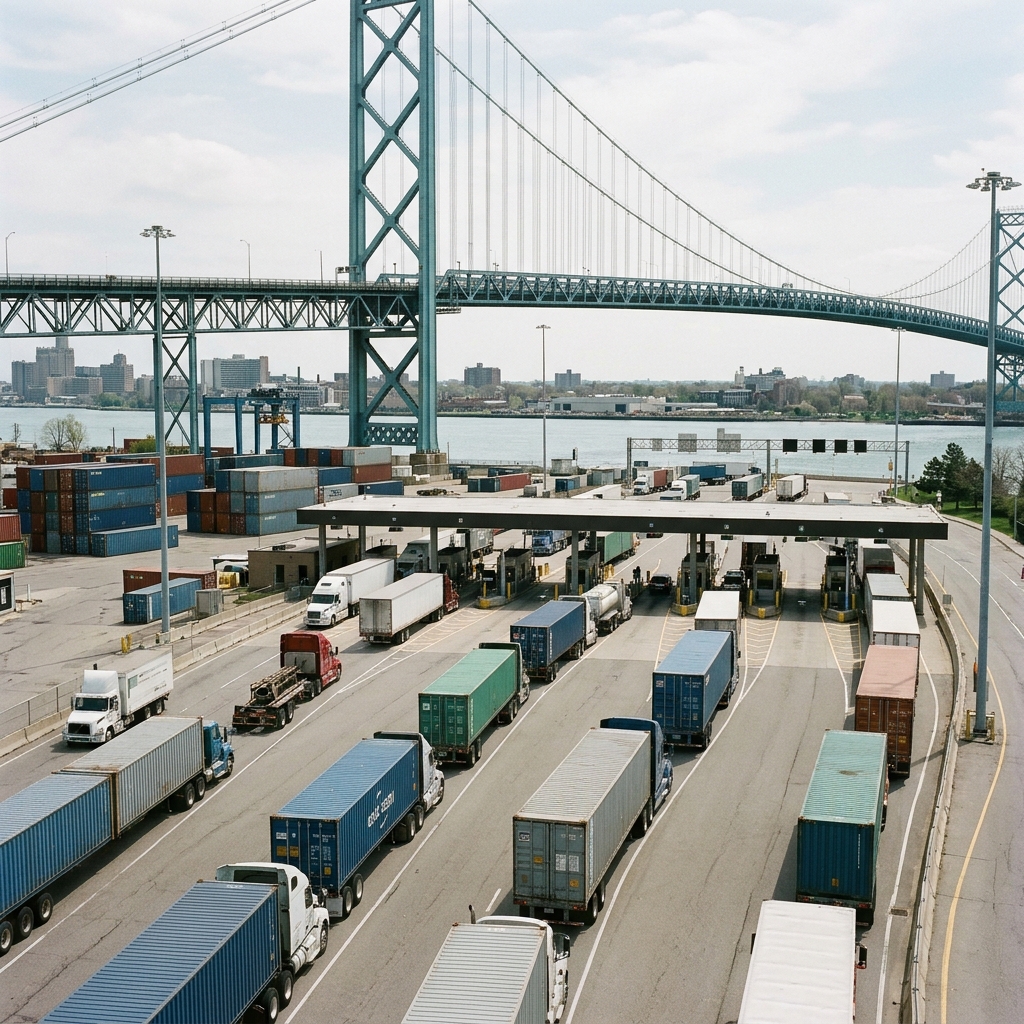
Any revival of Section 338 tariffs would hit cross-border manufacturing between Ontario and the American Midwest overnight. More than 40,000 commercial trucks cross northern border checkpoints every day, primarily over the Ambassador Bridge and the Blue Water Bridge. Car parts routinely crisscross the Detroit River six or seven times before vehicle assembly finishes. If U.S. Customs and Border Protection receives orders to collect Section 338 penalties, customs brokers will face immediate classification nightmares. Freight corridors could back up within hours.
Canadian industry groups are raising alarms over collateral damage to steel, aluminum, and farming operations. Sudden tariff shocks would disrupt freight networks operated by Canadian National Railway and Canadian Pacific Kansas City, which haul billions of dollars in industrial inputs and finished goods each week. In Ottawa, trade officials are already reviewing retaliatory tariff lists through the Canada Border Services Agency to respond to any new American duties. Canadian officials maintain that unilateral tariffs break both the spirit and the binding terms of the United States-Mexico-Canada Agreement.
Lenders on both sides of the border are calculating the potential inflation hit. The Federal Reserve and the Bank of Canada are trying to keep borrowing rates steady against stubborn services inflation. Imposing duties between 10 percent and 50 percent would immediately lift input costs for industrial equipment, farm fertilizers, and consumer packaged products. Treasury yields and corporate credit spreads across automotive supply chains are already pricing in higher risk premiums over the threat of trade litigation.
3. The Major Questions Doctrine Enters the Cross-Border Trade Arena
Advancing American Freedom centers its case on the major questions doctrine. That legal standard requires Congress to speak with unmistakable clarity when assigning decisions of massive economic and political weight to the executive branch. Section 338 includes sweeping language that allows import taxes up to 50 percent ad valorem, or outright import bans, against targeted countries. The conservative group argues that lawmakers during the Depression never intended to give modern presidents unilateral power to rewrite global supply lines without congressional approval.
The strategy borrows tactics from administrative fights over environmental and labor mandates, applying courtroom scrutiny to federal trade policy. Federal judges historically gave the executive branch broad discretion over foreign relations and national security. Even so, recent decisions from the Court of Appeals for the Federal Circuit show that deference to trade actions has real limits. If a presidential administration imposes tariffs under Section 338, commercial importers will immediately seek emergency injunctions at the Court of International Trade in New York.
Those court filings could freeze tariff collections at border crossings, creating huge headaches for customs authorities and the Internal Revenue Service. Escrow demands, customs surety bonds, and contested tariff deposits would lock up working capital across the private sector for years. Importers forced to post cash reserves for contested Section 338 rates would face severe cash flow squeezes. Corporate supply managers are already hiring trade attorneys to redraft supply agreements and adjust force majeure language.
4. USMCA Stability at Risk Ahead of the 2026 Joint Review
The conflict over Section 338 comes as trade officials prepare for the mandatory 2026 joint review of the USMCA. Under Article 34.7 of the pact, the three partner countries must meet to assess the agreement and decide whether to renew it. Levying unilateral tariffs under a statute from 1930 undermines the basic legal framework holding the agreement together. Canadian Export Promotion Minister Mary Ng and U.S. trade representatives have repeatedly stressed that stable rules are essential for continental manufacturing.
Deploying Section 338 would prompt prompt formal challenges under Chapter 31 of the USMCA dispute settlement system. A ruling against the United States would give Canada and Mexico legal cover to suspend equivalent trade benefits. Retaliatory measures traditionally focus on American farm shipments from politically sensitive districts, including Midwestern soybeans, dairy products, and heavy farm machinery. That blowback would hurt American export centers, matching the warnings from Advancing American Freedom about unintended economic damage.
Business leaders across North America want regulatory consistency, not trade policy experiments. Two-way trade between the United States and Canada hit nearly $800 billion last year, carried by interconnected regional supply networks. The stance taken by Advancing American Freedom shows that pushback against expansive executive tariffs is no longer just a liberal talking point. Mainstream conservative groups are stepping in to halt the unilateral use of the tariff code, defending statutory limits and the broader North American trade compact.