1. GoExport Diagnostic Reveals Structural Realignment in Upper Midwest Corridors
Trade operations across the Great Lakes industrial basin are shedding years of complacency. In discussions with WisPolitics, Louis-Philippe Bourgeois, president of Montreal-based trade consultancy GoExport, laid out the operational arithmetic facing mid-tier exporters. Midwestern manufacturers in states like Wisconsin, Illinois, and Minnesota depend heavily on Canadian input materials. Yet many of these firms fail to audit their supply chains for regulatory compliance. Bourgeois observed that currency spreads and localized trade friction are forcing companies to rethink supplier contracts that stood untouched for fifteen years.
The economic footprint of this bilateral exchange remains massive. Two-way trade between Wisconsin and Canada alone exceeded $13 billion last year, anchored by industrial machinery, paper goods, and specialized plastics. Bourgeois pointed out that mid-sized manufacturers frequently lack dedicated trade compliance desks. Consequently, they absorb unexpected tariff bills or shipping delays when cross-border declarations trigger automatic customs reviews. The margin for administrative error has vanished. Sustained borrowing costs set by the Federal Reserve and the Bank of Canada have compressed operating margins across the board.
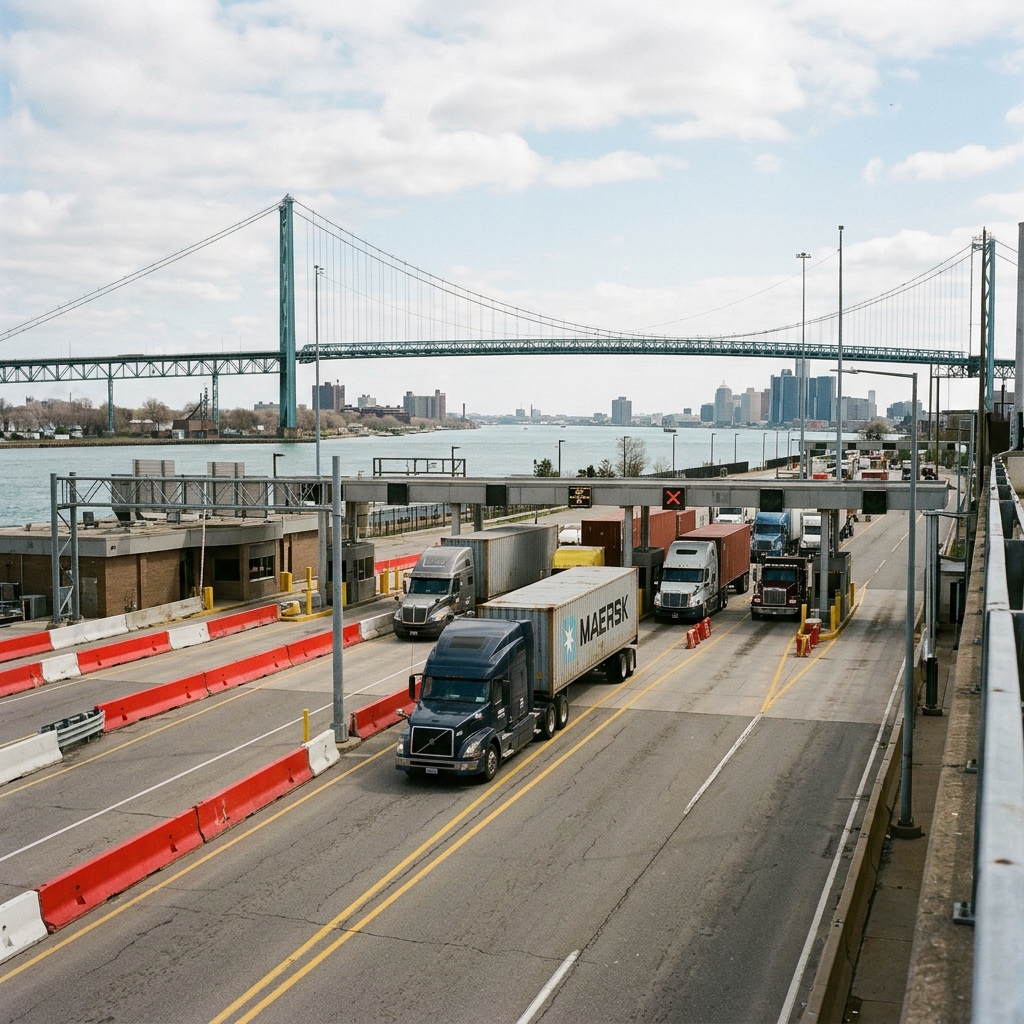
Bourgeois emphasized that market entry strategies cannot treat Canada as an informal domestic extension of the American market. Canadian provinces enforce distinct commercial packaging laws, product certification regimes through the Canadian Standards Association, and bilingual labeling mandates under federal statute. Companies entering the corridor without direct regional partners face slow distributor adoption and customs clearance holds at primary land ports like the Ambassador Bridge and the Blue Water Bridge.
2. Heightened Border Bureaucracy and the 2026 USMCA Joint Review Horizon
Regulatory enforcement at border crossings has hardened over the past twenty-four months. U.S. Customs and Border Protection officers now cross-reference electronic manifest data against forced-labor enforcement registries with zero tolerance for documentation gaps. Simultaneously, the Canada Border Services Agency has rolled out its Assessment and Revenue Management portal, known as CARM. Bourgeois noted that CARM fundamentally changes how commercial importers post financial security and account for duties, catching hundreds of unprepared American exporters off guard.
The overarching shadow across these conversations is the 2026 USMCA sunset review. Chapter 34 of the trade pact mandates a formal evaluation by Washington, Ottawa, and Mexico City six years post-ratification. Bourgeois made clear that automotive rules of origin and steel melt-and-pour certifications will dominate these negotiations. Mid-sized industrial fabricators must prove their regional value content reaches 75 percent to preserve tariff-free treatment. Meeting that threshold requires complete audit trails that trace materials directly back to the smelter.
Dispute panels convened under USMCA Chapter 31 continue to scrutinize dairy access and automotive assembly benchmarks, injecting friction into long-term capital investments. Corporate treasurers are holding back discretionary capital expenditures until the outcome of upcoming bilateral negotiations becomes clearer. For Bourgeois, this environment rewards firms that formalize internal compliance operations and move away from spot-market supply arrangements in favor of vetted North American vendor networks.
3. Freight Arbitrage and Supply Chain Reconfiguration Along Rail Arteries
Transportation managers across the corridor are altering how they route freight to bypass highway border delays. Heavy freight moving across the Detroit River often sits idle during peak inspection cycles, driving up drayage surcharges. As a result, the Canadian Pacific Kansas City rail network is drawing container traffic directly between Quebec, Ontario, and Midwest logistics terminals in Chicago and Milwaukee. Intermodal rail contracts provide fixed rate cards that protect shippers from volatile trucking spot markets.
Bourgeois highlighted that cross-border logistics decisions now hinge on total landed cost rather than simple freight tariffs. Industrial space in suburban Montreal and Toronto costs substantially less than comparable warehouse footprint in core American transport hubs. Pragmatic operators use Canadian distribution hubs to stage inputs, clear CBSA assessments in bulk, and release goods south across land crossings on precision delivery schedules that feed just-in-time factory shifts in Wisconsin.
Currency values add another lever. With the Canadian dollar trading near 73 cents against the greenback, Canadian manufacturing inputs remain attractive to American procurement directors. Bourgeois explained that GoExport spends considerable time helping Midwestern buyers structure supply agreements that capture this exchange-rate spread without violating IRS foreign contractor reporting standards or CRA withholding requirements under Section 105 regulations.
4. Execution Framework for Middle-Market North American Expansion
Success in the US-Canada corridor requires moving away from passive exporting habits. Bourgeois argued that firms must conduct thorough market validation before signing exclusive distribution rights over to regional intermediaries. Many American manufacturers sign agreements with single agents who promise coast-to-coast coverage across Canada but only hold commercial reach within the Greater Toronto Area. This error locks companies out of resource extraction and manufacturing markets in Quebec and Western Canada.
The regulatory burden is also shifting toward digital supply chain transparency. Tier-two and tier-three suppliers are regularly asked by original equipment manufacturers to furnish cryptographic proofs of origin and emissions documentation. Bourgeois advised industrial clients to invest in enterprise software systems that track regional value content dynamically. Doing so ensures that when customs inspectors audit a shipment at entry ports, the importer can produce verifiable bills of materials within hours.
Cross-border commercial integration between the Upper Midwest and Central Canada remains an essential industrial partnership. Bourgeois concluded that the winners of this cycle will not be the companies that lobby for trade barriers. Instead, the edge belongs to operators that master customs mechanics, build resilient transport routes, and capitalize on bilateral currency dynamics. As regulatory checkpoints tighten, disciplined execution remains the only dependable path to cross-border growth.