1. Brinkmanship Paused at the Forty-Ninth Parallel
A sudden halt to the threatened 50 percent tariff on Canadian goods brought visible relief to trading desks in Toronto and New York this morning. The prospective border levy threatened to freeze roughly 3.6 billion dollars in daily bilateral commerce. Trade negotiators confirmed the pause following late-night calls between Ottawa and Washington. The reprieve prevents an immediate supply shock across North American industrial corridors. Still, underlying tensions remain raw. The White House noted that the suspension depends on fast progress in high-level trade discussions.
Energy security quickly emerged as the central fulcrum of the talks. Washington revived interest in the abandoned Keystone XL pipeline, pitching the project as necessary compensation for American industrial concessions. For Ottawa, the asset is a political minefield with thorny jurisdictional entanglements. Alberta Premier Danielle Smith voiced qualified support for new conduit capacity, but federal officials in Ottawa are moving cautiously. The Canadian negotiating team knows energy diplomacy offers the only real leverage to shield domestic manufacturing, steel, and agriculture from punitive tariffs under United States trade enforcement authorities.
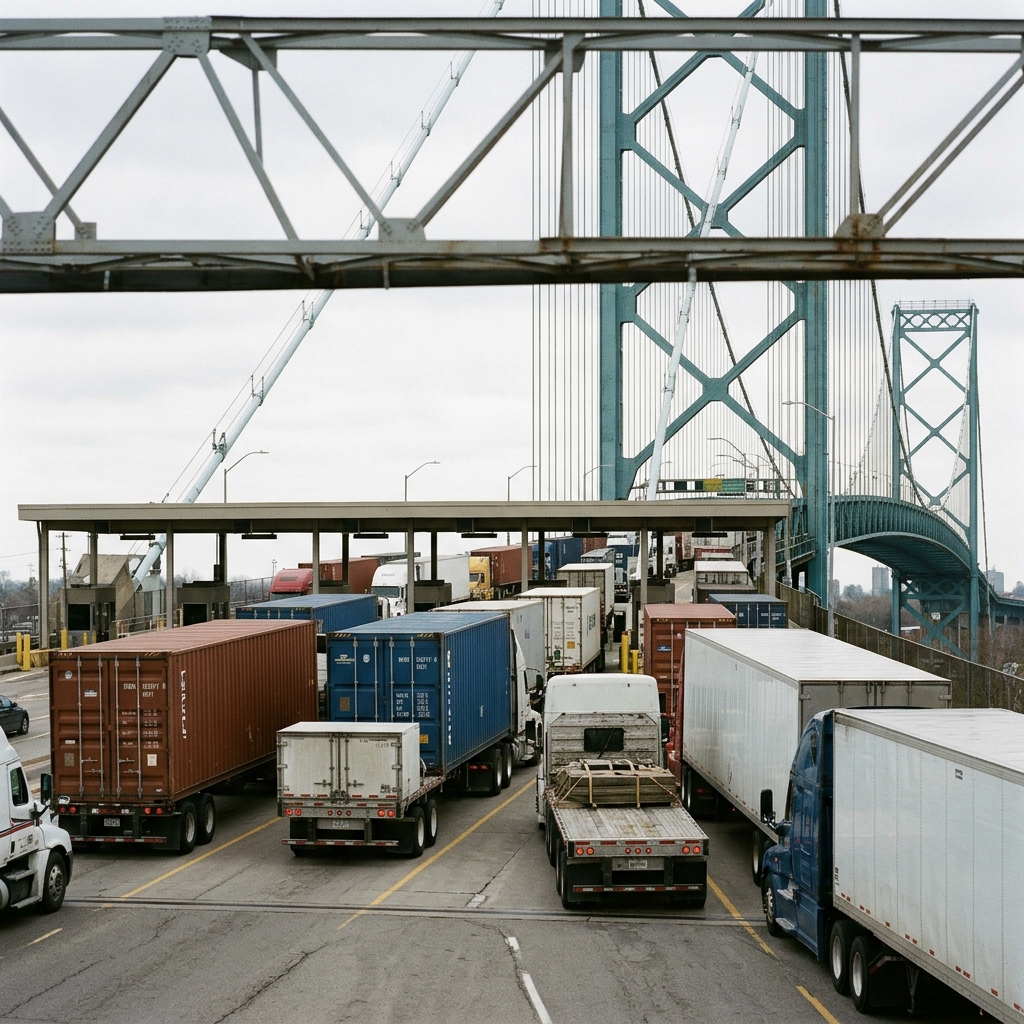
Market benchmarks tracked the sudden change in tone. The Canadian dollar gained 42 basis points against the greenback, trading back near 71.8 cents US after touching multi-month lows. Spreads on Western Canadian Select crude narrowed against West Texas Intermediate by nearly 1.50 dollars per barrel. Institutional traders had priced in severe supply chain snarls across the Ambassador Bridge and the Blue Water Bridge freight routes. This temporary truce stems panic selling, but corporate treasurers view the postponement as a brief tactical breather rather than a durable treaty resolution.
2. Refining Arithmetic and the Ghost of Keystone XL
Reanimating Keystone XL is far more complicated than signing an executive order. TC Energy abandoned the 830,000 barrel-per-day project in 2021 after years of environmental litigation and federal permit cancellations. The company absorbed a multi-billion-dollar impairment charge and sold off staging yards, pipe segments, and pump stations. Rebuilding the route today would require an estimated 12 billion dollars in fresh capital, alongside renewed regulatory filings with the Canada Energy Regulator and the US Federal Energy Regulatory Commission. Neither institutional equity investors nor commercial debt syndicates have an appetite for open-ended political risk.
Refining infrastructure on the US Gulf Coast remains hungry for heavy sour feedstock. Complex conversion units at facilities in Port Arthur and Lake Charles rely on Canadian oil sands barrels to maximize catalytic cracking capacity. Mexican Maya shipments continue to drop as Pemex diverts crude to domestic plants, and Venezuelan supplies remain constrained by infrastructure rot. If Washington imposes steep import duties on Canadian oil, Gulf refiners face margin contractions of up to 4 dollars per barrel. American drivers would pay the price at the pump through higher retail diesel and gasoline costs along the Atlantic seaboard.
Pipeline politics also cross paths with western Canadian export capacity on the West Coast. The newly operational Trans Mountain expansion moves 590,000 barrels per day to Pacific tidewater, giving Calgary producers a direct line to Asian buyers. Canadian producers are no longer captive to American buyers as they were a decade ago. If the United States imposes sweeping tariffs, Canadian crude will accelerate its shift toward Chinese and Indian refineries via the Westridge Marine Terminal. That supply diversion undercuts the continental energy security goals long advocated by conservative lawmakers in Washington.
3. Supply Chain Mechanics Across Border Corridors
Border agencies prepared for substantial logjams before the tariff pause took hold. US Customs and Border Protection had drafted emergency classification guidelines to assess duties on total product value rather than net regional value content. The Canada Border Services Agency prepped retaliatory tariff schedules targeting American plastics, dairy, and heavy machinery. Commercial rail operators, including Canadian Pacific Kansas City and Canadian National, warned that unexpected customs checks would congest intermodal yards from Montreal to Chicago. Cross-border freight networks rely on regulatory consistency to sustain just-in-time logistics.
Automotive supply chains face outsized exposure to regulatory shifts. Vehicle assemblies cross the Detroit River multiple times as components move between Ontario stamping plants and Michigan assembly lines. A 50 percent duty would bring light-vehicle manufacturing in the Great Lakes region to a stop within seventy-two hours. Representatives from the Automotive Parts Manufacturers' Association confirmed that component suppliers operate on cash-flow margins under 6 percent. A tariff shock of this scale would trigger contract defaults, force emergency plant shutdowns, and lead to swift layoffs among thousands of unionized auto workers on both sides.
The legal framework under the United States-Mexico-Canada Agreement provides explicit protections against arbitrary border duties. Ottawa argues that unilateral tariffs violate dispute settlement rules in Chapter 10 and Chapter 31. However, citing national security under Section 232 of the Trade Expansion Act allows Washington to sidestep standard trade panel schedules. Canadian trade lawyers are readying formal dispute filings, but international arbitration provides little defense against fast administrative actions. Corporate legal departments are advising manufacturing clients to stockpile key inventory while customs gates remain open.
4. The 60-Day Window and Industrial Realpolitik
The negotiating calendar leaves both countries roughly eight weeks to hammer out an agreement. US officials want enforceable commitments on border security, immigration interdiction, and preferential energy pricing. Ottawa must craft an economic package that defends domestic sovereignty without triggering another tariff threat. Prime Minister Justin Trudeau faces steady pressure from provincial premiers demanding federal backing for traditional resource sectors. Yielding on pipeline infrastructure risks pushback from urban voters, but allowing national manufacturing exports to buckle under 50 percent duties would cause deeper economic damage.
Capital allocation across North America remains on hold. Financial chiefs at major manufacturing companies have paused final investment approvals on cross-border tooling, warehouse expansions, and fleet purchases. Commercial lenders report wider spreads on cross-border supply chain financing facilities as credit teams weigh counterparty tariff exposure. The Bank of Canada and the Federal Reserve are tracking the dispute closely. Unilateral tariff shocks introduce stubborn stagflationary pressures that would complicate central bank interest rate policies over the coming quarters.
Any lasting settlement will probably lean on broader energy coordination rather than an outright restart of the Keystone XL route. Industry analysts expect negotiations to center on expanding throughput across existing networks, including Enbridge Mainline and Line 9, paired with joint critical mineral pacts. Washington wants reliable access to lithium, cobalt, and rare earths mined in northern Ontario and Quebec to limit dependence on foreign processing hubs. Swapping resource guarantees for industrial tariff relief offers the most realistic off-ramp for both governments as talks pick up speed.