1. Trump's 'Fair' Trade Deal Signal Reaches Ottawa as Tariff Clock Ticks
CBC reported that President Donald Trump says he is working on a 'fair' trade deal with Canada. That phrase matters in Ottawa, Washington and the freight yards between them. The comment lands after months of Section 232 tariffs on steel, aluminum and autos, plus long-running fights over dairy supply management and softwood lumber. Canadian officials have answered with targeted counter-tariffs and a push for USMCA dispute panels. For technology executives, the headline matters because tariff treatment and border clearance decide where AI servers, networking gear and cloud capacity get built.
The political language is broad. The machinery is not. Any 'fair' deal must address USMCA rules of origin, CBP tariff classifications and CBSA valuation rulings. Those rules decide whether a server rack or electric vehicle battery enters at zero duty or at a punitive rate. The USMCA joint review is scheduled for July 2026. Dispute panels already handle cases on automotive content and dairy access. Trump's team has linked market access to digital services taxes and procurement rules. Canada shelved its digital services tax in 2025, a concession that removed one irritant from the table.
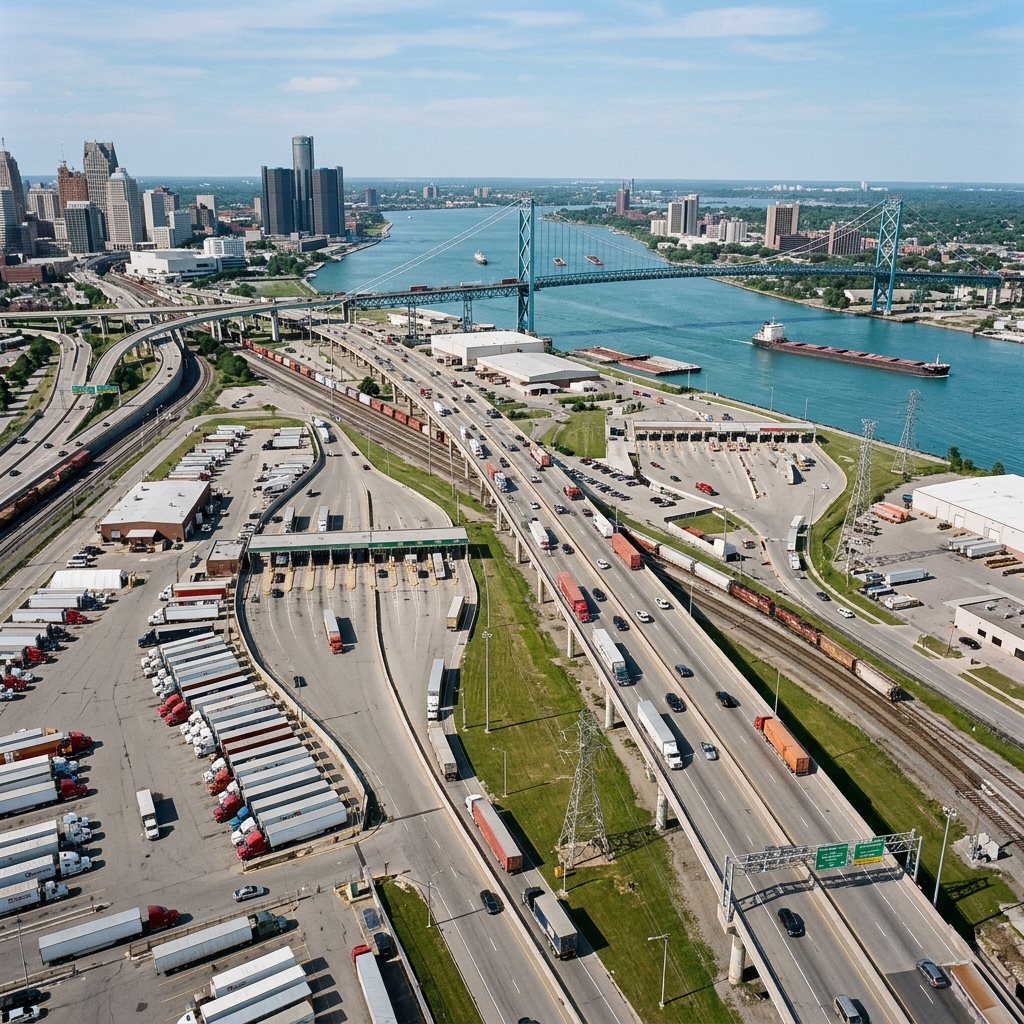
Business groups in Detroit, Windsor and Vancouver are reading the CBC report as a signal that tariff relief could arrive before the 2026 review. They are not pausing contingency plans. CBP's Customs Trade Partnership Against Terrorism and CBSA's CARM system now define how quickly goods move through Ambassador Bridge and Blue Water Bridge. Freight operators say a single misclassified AI accelerator shipment can cost more in detention and bond than the tariff itself. The gap between a presidential statement and a Federal Register notice remains the risk executives must price.
2. Tariff Math and the 25-Basis-Point Border Premium
Currency and rate differentials sit underneath the trade talks. The Bank of Canada has cut its policy rate in 2025 while the Federal Reserve has held a higher range, leaving a gap that has pressed the Canadian dollar toward 70 US cents. Every 25-basis-point move in that spread changes the landed cost of US machinery for Canadian AI data centers and the price of Canadian electricity and critical minerals for US buyers. Importers with USD payables feel the move first. Exporters with US contracts often absorb it in margin before they reprice.
Tax authorities add another layer. The CRA and the IRS are auditing cross-border transfer pricing for cloud services, royalties and contract research. Canada's decision to shelve the digital services tax reduced the risk of a retaliatory US tariff, but the CRA still scrutinizes payments from Canadian subsidiaries to US hyperscalers. The IRS watches cost-sharing arrangements for AI models and semiconductor design. A 'fair' deal that lowers tariffs without clarifying transfer pricing leaves finance teams with the same exposure. Auditors care about documentation, not press conferences.
Tariff classification is where much of the fight happens. A graphics processing unit may enter under one HS code as a computer part and under another as an electronic component, with duty rates that differ by several percentage points. CBP rulings and CBSA advance rulings can lock in treatment for years. Companies shipping AI hardware through Pacific Gateway ports or CPKC intermodal terminals need binding rulings before they scale. The cost of a wrong code compounds with volume, bond requirements and retroactive assessments. A fair deal at the political level does not erase that paperwork.
3. Ambassador Bridge, CPKC and the AI Hardware Lane
Roughly one quarter of Canada-US merchandise trade crosses the Ambassador Bridge, and the Blue Water Bridge carries another heavy share of auto and chemical freight. CBP and CBSA officers clear trucks under FAST and trusted trader programs, but AI hardware often needs additional documentation for encryption, export controls and end-use checks. A tariff deal that speeds clearance at these crossings would lower working capital for server makers and cloud providers. A deal that leaves export controls untouched would still leave some high-end chips in a slower lane.
Rail matters as much as road. CPKC's network links Calgary, Kansas City and Monterrey, and its intermodal terminals feed US data center construction and Canadian mining suppliers. Canadian critical minerals, aluminum and electricity are inputs for US AI infrastructure. US semiconductors and software are inputs for Canadian model developers. USMCA rules of origin determine whether a rail car of components qualifies for preferential treatment. A dispute panel ruling can stop a shipment at the border even when the tariff schedule looks favorable. The corridor is physical, and the paperwork follows every container.
Pacific Gateway ports in Vancouver and Prince Rupert connect Canada to Asian chip and battery supply chains. A 'fair' deal with Washington could reduce the risk of US retaliation against Canadian ports and rail rates, but it will not remove US export controls on advanced semiconductors. Canadian importers still need CBP and CBSA rulings for re-exports and transshipment. Freight forwarders are advising clients to model three scenarios: tariff relief, status quo and a new Section 232 action. Each scenario changes inventory carrying costs by millions for large AI hardware buyers.
4. What a 'Fair' Deal Would Mean for AI Corridor Investment
Investment decisions in the AI corridor depend on more than tariff rates. Hyperscalers weigh power costs, data residency rules, privacy law and the availability of skilled labor in Montreal, Toronto and Vancouver. A trade deal that reduces tariff uncertainty would help Canadian data center developers finance projects and help US suppliers price equipment. A deal that leaves procurement rules and digital trade out would limit the benefit. The Bank of Canada's rate path and the Fed's stance also shape the discount rate for these long-lived assets. Capital moves when policy risk falls.
Regulators will set the pace. The CRA's audit posture, the IRS's transfer pricing rules and provincial electricity tariffs affect operating costs for AI compute. Canada's privacy commissioner and the US Federal Trade Commission shape how data crosses the border. CBP's export control enforcement and CBSA's sanctions screening add compliance steps for chip shipments. A 'fair' trade deal could create a joint forum on AI standards, but it cannot override domestic regulators. Executives should read the implementing regulations, not the headline. The details decide whether a project clears hurdle rates.
The next six months will test whether Trump's words become a formal proposal. Watch the USMCA joint review calendar, Federal Register notices on Section 232 exclusions, and CBP and CBSA rulings on AI hardware. Watch the Bank of Canada and Fed meetings for basis-point moves that change landed costs. Companies with exposure should audit tariff codes, country-of-origin data and transfer pricing files now. A fair deal is possible. A cheap one is not guaranteed. The corridor's investors need both the politics and the paperwork to line up.