1. Washington Signals Carve-Outs for Canadian Resource Corridors
President Donald Trump's trade team is shifting its rhetoric to protect continental resource security. Speaking on cross-border commercial ties, the administration's chief trade architect indicated that Canadian oil, natural gas, and critical minerals occupy an essential category. The White House continues to threaten across-the-board tariffs on global trading partners. Yet American industry relies on Canadian inputs. The Gulf Coast refining complex runs on heavy crude from Alberta. U.S. nuclear utilities buy fuel from Saskatchewan mines. A sudden disruption would trigger immediate price spikes across the American Midwest.
According to EnergyNow.com, Washington wants to build joint supply chains that exclude Chinese state-backed processing firms. The strategy targets metals like lithium, graphite, cobalt, and rare earths required for military hardware and industrial equipment. Ottawa has allocated 3.8 billion Canadian dollars under its Critical Minerals Strategy to speed up extraction projects in northern Ontario and Quebec. American policymakers recognize that domestic reserves cannot meet current manufacturing targets alone. By aligning regulatory approvals, the two nations aim to establish a secure processing perimeter across North America.
The stance reflects practical realism in Washington. Trade hardliners want to balance tariff leverage against industrial demand. Canadian natural resource exports to the United States exceeded 160 billion dollars in 2023. Nearly 4 million barrels of crude oil cross the border every day through systems like Enbridge Mainline and TC Energy pipelines. Taxing or cutting those flows would drive up feed costs for refineries in Illinois, Ohio, and Minnesota. The trade czar acknowledged that American manufacturing cannot decouple from Canada without eroding domestic profit margins.
2. Refining Economics and the Mechanics of Heavy Crude Flows
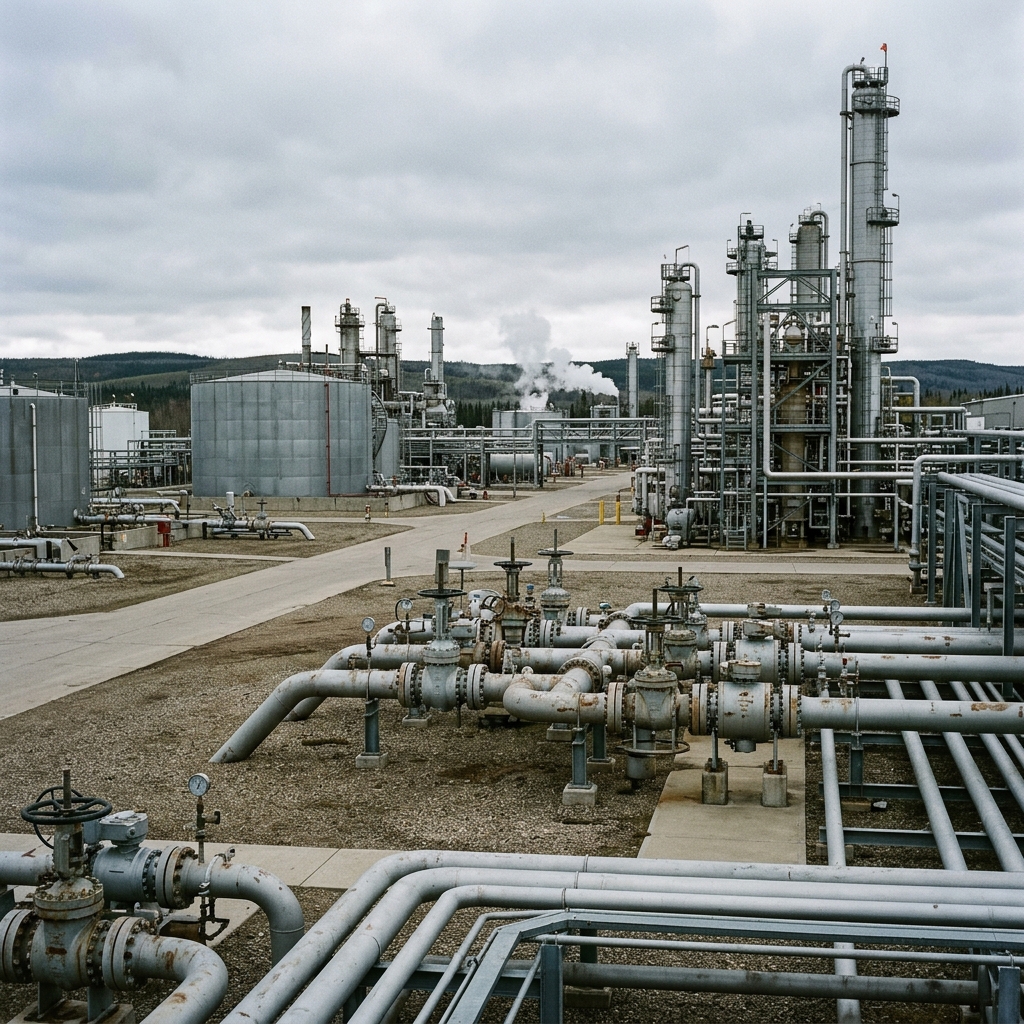
Midwest and Gulf Coast refineries are configured to process heavy, sour Canadian crude. Facilities operated by Marathon Petroleum, Phillips 66, and BP along the Great Lakes depend on uninterrupted pipeline shipments from Hardisty, Alberta. Western Canadian Select trades at a structural discount to West Texas Intermediate, giving U.S. refiners an edge on margins. If Washington imposes a 10 percent border duty, U.S. importers will pay the bill. Domestic refiners would struggle to replace four million daily barrels from elsewhere, especially with Mexican Maya crude exports falling.
The crude discount widened earlier this month to fifteen dollars a barrel as traders factored in geopolitical risks. Pipeline operators are monitoring capacity utilization across the Enbridge network and the newly expanded Trans Mountain pipeline. Trans Mountain redirects crude toward Pacific export terminals in British Columbia, but most Canadian output still moves south. Canadian energy firms like Suncor Energy, Cenovus, and Canadian Natural Resources hold long-term throughput contracts with U.S. buyers. Any federal tax policy that alters these economics would trigger disputes under chapter ten of the USMCA.
Uranium represents another strategic pinch point for U.S. grid reliability. Canada supplies roughly twenty-seven percent of the uranium purchased by American commercial nuclear plants, led by Cameco's operations in the Athabasca Basin. With the U.S. Congress passing bans on Russian enriched uranium imports, Canadian supply is vital. Imposing duties on Canadian uranium would clash with the Department of Energy's plan to expand baseload low-carbon generation. As a result, Washington trade officials are looking at bilateral procurement agreements that bypass conventional customs friction.
3. The 2026 USMCA Review and Cross-Border Regulatory Clashes
The proposed cooperation unfolds ahead of the scheduled 2026 USMCA joint review. Article 34.7 of the trade pact allows any signatory to terminate the agreement after six years if all parties do not agree to an extension. The Trump trade team intends to use the threat of termination to extract concessions on digital services taxes, supply-managed dairy quotas, and Chinese investment screens. Ottawa holds leverage through its upstream resource base. Canadian officials argue that supply chain security requires mutual tariff exemptions for basic materials.
Cross-border infrastructure remains exposed to local politics and state regulators. Enbridge Line 5 continues to face legal challenges in Wisconsin and Michigan, despite the protections of the 1977 Transit Pipelines Treaty. Trade groups argue that federal authorities in both capitals must protect existing energy conduits from regional closures. The Canadian Chamber of Commerce has urged Ottawa to tie critical mineral access directly to transit guarantees for oil and gas. If the United States wants guaranteed access to northern nickel and lithium deposits, it must safeguard Canadian pipeline and rail networks.
Customs compliance adds operational friction. The Canada Border Services Agency and U.S. Customs and Border Protection are standardizing electronic manifests for bulk freight moving across key rail links. CPKC and Canadian National Railway transport millions of tons of potash, aluminum, and chemicals through crossing points in Detroit, Port Huron, and International Falls. Clear rules of origin under USMCA protect these shipments from external levies. Diverging from these terms would create backlogs, inflate logistics expenses, and prompt Canada to file formal dispute proceedings.
4. Industrial Realignment and the Race for Mineral Independence
The Department of Defense is already using Title III of the Defense Production Act to finance mineral processing facilities located in Canada. Grants have gone to projects like Fortune Minerals in the Northwest Territories and Lomiko Metals in Quebec. Washington views Canada as part of its domestic industrial base for national security procurements. This relationship insulates the mining sector from standard protectionist measures. Canadian firms gain access to capital from the Export-Import Bank of the United States and the Pentagon, which cuts project financing costs.
Bank of Canada and Federal Reserve monetary decisions will influence capital allocation across these extraction sectors. High borrowing rates slow down exploration and long-cycle mine construction. If bilateral trade pacts lower political and tariff risks, institutional investors will deploy capital into northern exploration with greater certainty. The Toronto Stock Exchange lists almost half of the world's public mining companies, giving Canadian capital markets a key role in raising debt and equity for joint ventures. Stable policy is required to turn resource deposits into working mines.
The relationship is moving toward a strategic bargain. Canada secures protected access to the world's largest consumer market for its raw materials. The United States secures energy resources while reducing reliance on rival foreign powers. Difficult negotiations over dairy access, intellectual property, and industrial emissions rules will still occur in 2026. Yet resource integration acts as a stabilizing force. The remarks from the Trump trade team confirm that Canadian energy and mining assets remain indispensable components of the American industrial economy.