Ottawa Prepares Legal Offensive Over Contractual Plant Commitments
Canadian federal and provincial officials have drawn a firm boundary with Stellantis NV. Following reports that the transatlantic automaker is reviewing plans to reallocate future Jeep vehicle production to the United States, Ottawa and the Ontario government confirmed they will launch immediate litigation to recover public funds. Innovation, Science and Economic Development Canada, led by François-Philippe Champagne, and Ontario Premier Doug Ford have coordinated a joint legal response. Both jurisdictions signed binding multi-billion-dollar capital contribution agreements with Stellantis during the past three years. Those contracts legally obligate the company to maintain minimum vehicle production quotas and specific employment thresholds across its assembly plants in Windsor and Brampton.
The dispute centers on automotive platforms that received direct Canadian capital support. In 2022 and 2023, federal and provincial governments finalized an industrial agreement committing more than C$5 billion in combined capital assistance for Stellantis plants. That package included support for the NextStar Energy battery joint venture with LG Energy Solution in Windsor, alongside a comprehensive retooling of the Brampton assembly complex. Canadian officials insist that any corporate decision to redirect designated vehicle architectures to American assembly sites violates these signed covenants. Ontario has explicitly instructed Crown legal counsel to audit the company's regional capital outlays and draft clawback notices.
The confrontation represents a shift in how middle-power governments manage industrial strategy contracts. Rather than absorbing corporate policy adjustments quietly, Canada is deploying its commercial agreements as binding constraints. Stellantis management, working under interim leadership while searching for a permanent chief executive, faces an aggressive cross-border enforcement posture. If the automaker reallocates production mandates to Michigan or Ohio, Canadian authorities have stated they will seek immediate repayment of disbursed capital subsidies, terminate ongoing tax credits, and pursue compensatory damages in commercial arbitration proceedings.
White House Tariff Threats Collide With Integrated Auto Supply Lines
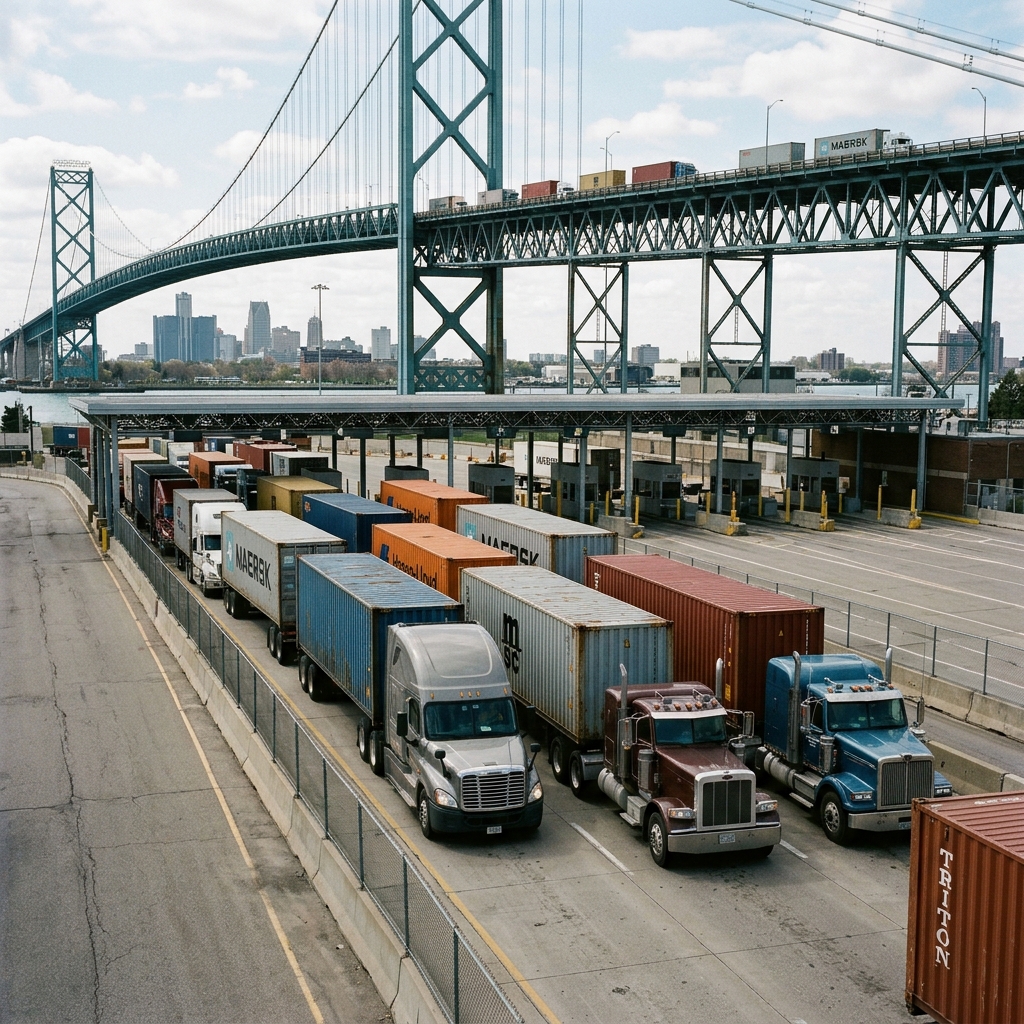
The immediate catalyst for the Stellantis review is Donald Trump's public pledge to enact a 25 percent tariff on all Canadian and Mexican imports. The automotive sector across the Great Lakes basin remains the most vulnerable industrial segment to such an executive order. Modern automotive production between Ontario and Michigan relies on single production systems rather than independent national operations. Parts cross the Ambassador Bridge and the Blue Water Bridge multiple times before arriving at a final assembly facility. A universal tariff would invalidate the operational economics of these plants overnight, adding thousands of dollars in input costs per assembled unit.
Stellantis executives have attempted to shield their high-margin truck and sport-utility portfolios from potential border taxation. Jeep models, which generate a major share of the group's North American operating margin, face severe financial penalties if assembled in Canada and sold across the border under a 25 percent levy. Approximately 85 percent of all light vehicles assembled in Ontario are destined for export to the American market. Automakers operating in Canada cannot absorb border fees of that scale without either incurring catastrophic operational losses or losing market share to American-built competitors.
The United States-Mexico-Canada Agreement was specifically negotiated to prevent this type of unilateral commercial disruption. The trade pact mandates regional value content thresholds of 75 percent for light vehicles to qualify for tariff-free treatment, a standard Canadian assembly facilities currently meet. If the executive branch uses emergency trade legislation, such as the International Emergency Economic Powers Act, to override USMCA preferences, the bilateral manufacturing treaty effectively ceases to protect Canadian investments. Corporate boards are consequently recalculating capital commitments to preserve market access.
Enforcement Mechanisms and the Mechanics of Subsidy Recovery
The legal mechanics governing Canada's clawback strategy reside within the commercial contracts managed by the Ontario Ministry of Economic Development and the federal Department of Industry. These agreements are private commercial contracts entered into by the Crown. They contain specific covenants regarding job preservation, capital expenditures, and plant utilization rates. If Stellantis pulls product allocations from Brampton or reduces shifts at Windsor, the company triggers default clauses that allow the Crown to demand immediate principal repayment, plus accrued interest.
Canadian revenue authorities possess substantial administrative reach over domestic corporate entities. The Canada Revenue Agency and the Ontario Ministry of Finance administer the production-linked tax credits that offset operational costs for the NextStar battery facility. If the dispute escalates, Ottawa can freeze these scheduled disbursements. Under the terms of the 2023 performance agreement, Canadian support matches the operating subsidies offered under the American Inflation Reduction Act. However, that aid is entirely contingent on production milestones. Stellantis cannot collect public funding for assembly capacity that executives systematically shift abroad.
Corporate executives in Auburn Hills, Michigan, and Hoofddorp, Netherlands, must now weigh the litigation risk against tariff avoidance. Legal action in Canadian courts will create protracted legal liabilities and complicate relations with the Canadian union, Unifor. Unifor represents thousands of assembly workers at the Windsor and Brampton operations. Union leadership has already warned that moving product programs south would violate the collective bargaining agreements signed in late 2023. Stellantis faces simultaneous resistance from domestic labor and Canadian state prosecutors if it attempts to dismantle its Canadian footprint.
Bilateral Trade Friction and the 2026 USMCA Review
The dispute between Canada and Stellantis is an early indicator of the industrial realignments coming ahead of the formal 2026 USMCA joint review. As Washington signals an aggressive economic policy focused on American reshoring, Canadian policymakers are adjusting their strategy. Canada is signaling to the Detroit Three, Japanese original equipment manufacturers, and tier-one suppliers that sovereign capital support comes with non-negotiable legal attachments. The era of unconditional government underwriting for foreign automakers has ended.
Suppliers across southwestern Ontario are already preparing for secondary impacts. Tier-one component manufacturers, including Magna International, Linamar Corporation, and Martinrea International, maintain deep commercial relationships with Stellantis assembly plants. These firms operate just-in-time logistics facilities connected by CPKC and CN rail corridors directly to assembly hubs on both sides of the border. If Stellantis strips product mandates from Canadian plants, domestic parts suppliers will lose direct delivery volumes, forcing supply-chain contracts to be renegotiated under duress.
The coming months will test whether bilateral trade commitments can withstand executive pressure from Washington. Canadian officials are preparing parallel trade remedies alongside their commercial lawsuits. These measures include formal Chapter 31 dispute settlement filings under USMCA and retaliatory tariffs targeting American agricultural and industrial products. As Stellantis evaluates its regional strategy, the company finds itself caught between direct tariff threats from the United States and immediate, costly breach-of-contract penalties from Canada.