1. Capitol Hill Arrivals Confront Northern Border Realities
Freshmen lawmakers arriving on Capitol Hill face an immediate test of economic coherence. Campaign rhetoric prioritized sweeping import levies. Yet representatives from Michigan, New York, and Washington state carry direct mandates from border communities. CBC reporting highlights an acute tension among incoming members who must defend domestic production while acknowledging that Canadian intermediate goods sustain local payrolls. Cross-border manufacturing rarely matches the clean lines of campaign speeches. Plants in upstate New York and across the industrial Midwest rely on daily inputs from Ontario and Quebec to run their assembly shifts.
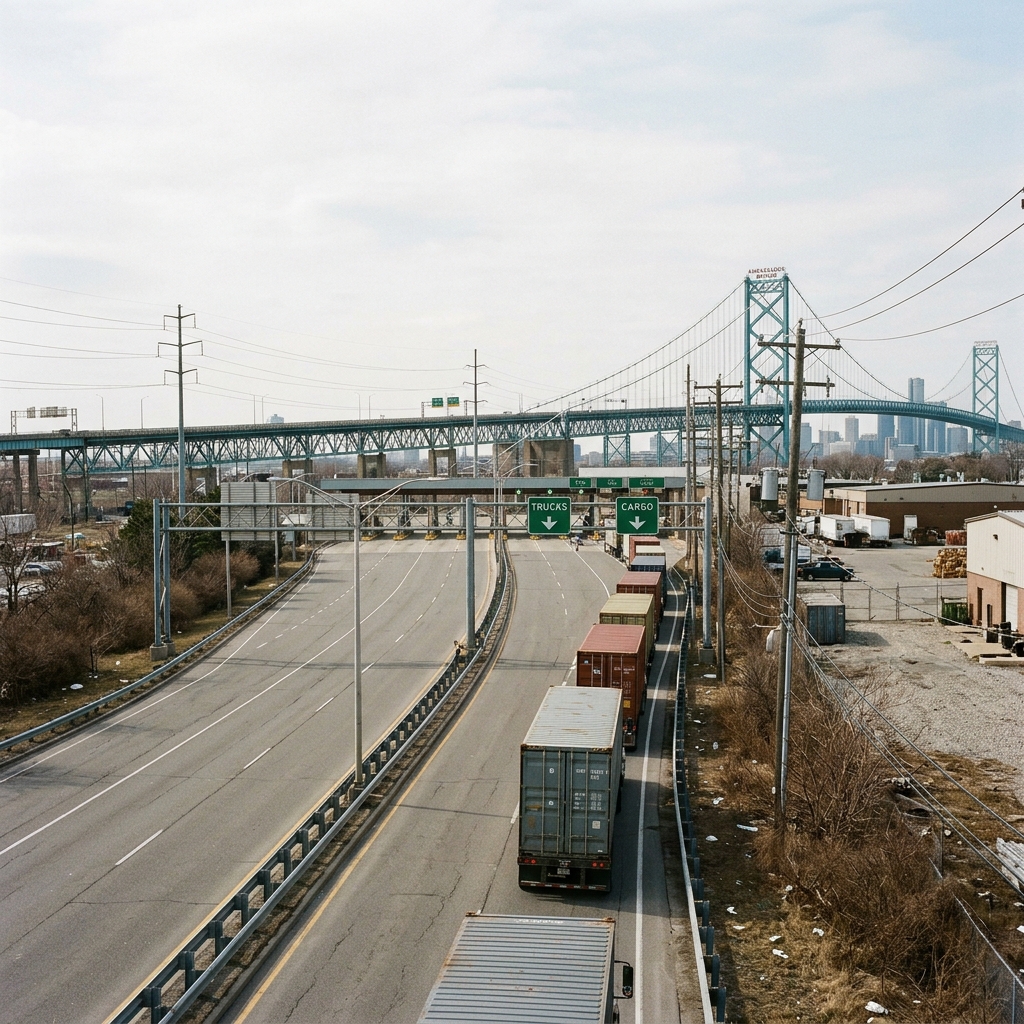
The economic footprint of these border districts leaves little room for ideological experimentation. Representatives from communities flanking the Blue Water Bridge and the Peace Bridge oversee regions where commercial traffic is an hourly lifeline. U.S. Customs and Border Protection logs tens of thousands of commercial trucks each week carrying aluminum billets, auto parts, and refined fuels southward. When incoming lawmakers take their committee seats, they inherit the math of supply chains built over thirty years of free trade. A flat tariff disrupts those calculations instantly, raising unit costs for domestic manufacturers that purchase inputs priced in Canadian dollars.
Several incoming representatives have begun privately signaling caution to leadership. Public statements support broad trade enforcement to protect domestic labor, but conversations with trade associations show distinct regional hesitation. Lawmakers from rural farm districts depend heavily on fertilizer imports from Saskatchewan, where Nutrien and other producers dominate potash production. An indiscriminate 25 percent import levy would hit agricultural operating budgets across the Midwest before spring planting begins. These members find themselves caught between executive trade directives and the quarterly cash sheets of family farms and tier-two industrial suppliers back home.
2. Automotive Corridors and the Pressure on USMCA Rules of Origin
The automotive corridor running between Windsor and Detroit represents the most exposed front in this debate. Parts cross the Detroit River multiple times before landing in a finished vehicle at an assembly plant in Michigan or Ohio. Incoming representatives from these districts understand the vulnerability. Under the United States-Mexico-Canada Agreement, passenger vehicles must meet a 75 percent regional value content threshold to qualify for duty-free treatment. Imposing blanket national security tariffs under Section 232 or emergency economic authorities shatters that regulatory framework. It also invites retaliatory measures from Ottawa against U.S. engine and transmission exports.
Industry groups are already knocking on congressional doors. The Motor and Equipment Manufacturers Association has warned freshman offices that parts suppliers operate on margins rarely exceeding 4 to 6 percent. A sudden tariff wall forces those suppliers to absorb costs or breach long-term delivery contracts with original equipment manufacturers. Rail operators such as Canadian Pacific Kansas City and Canadian National move railcars of unfinished chassis, steel coils, and stamped parts across the frontier every day. Administrative friction at border entry points creates immediate yard backlogs that can halt domestic assembly operations within 72 hours.
Democratic freshmen argue that universal tariffs function as an internal tax on domestic industry. Incoming Republicans counter that tariffs provide essential leverage to force Canadian concessions on defense spending, digital services taxes, and dairy market access. Yet even hardline members acknowledge off the record that local manufacturers cannot switch supply vendors overnight. Sourcing specialized steel alloys or engineered plastics from domestic mills requires years of capital investment, tooling validation, and regulatory safety certification. Lawmakers cannot balance these industrial realities simply by voting along national party lines.
3. Currency Volatility and Central Bank Divergence Complicate Costs
Trade policy shifts do not happen in an economic vacuum. They hit cross-border balance sheets alongside widening interest rate differentials. The Bank of Canada has moved aggressively to cut its policy rate toward 3.25 percent, while the Federal Reserve maintains a higher borrowing corridor. This monetary policy split has pushed the Canadian dollar toward the 71-cent U.S. range, making Canadian exports cheaper in foreign currency terms. However, incoming lawmakers evaluating border tariffs must account for the other side of that equation: a weaker Canadian dollar raises domestic costs for Canadian firms buying U.S. capital goods, shrinking a vital export market.
Corporate treasuries on both sides of the border are already altering their currency exposure strategies. Importers in border states face higher hedging costs as market volatility spikes around trade policy pronouncements. If incoming House members endorse across-the-board tariffs, the combined hit of border duties and currency shifts will compress margins throughout corporate supply chains. In energy markets alone, refiners along the U.S. Gulf Coast and across the northern tier depend on heavy crude deliveries through the Enbridge pipeline network. Imposing import levies on Canadian Western Select crude simply drives up feed costs for domestic refineries.
Internal revenue implications also demand attention from newly appointed members of the House Ways and Means Committee. The Internal Revenue Service and Canada Revenue Agency operate under bilateral tax conventions designed to prevent double taxation on cross-border operations. Tariff friction complicates transfer pricing models for multinational corporations that book revenue across shared North American business units. When cross-border trade slows, corporate tax receipts decline in border jurisdictions. Freshman lawmakers will have to answer to state governors who rely on predictable industrial tax bases to fund local infrastructure, school districts, and municipal public services.
4. Congressional Leverage and the Impending 2026 Joint Review
Pragmatic voices among the new congressional cohort are looking ahead to the formal 2026 review of the USMCA. Under the agreement's sunset clause, all three nations must submit written confirmations to extend the pact for another sixteen-year period. Freshman lawmakers will serve as senior voices by the time those negotiations peak during their second legislative terms. Using the threat of immediate tariffs today allows some members to stake out aggressive postures for the upcoming statutory renegotiation. They intend to extract concessions on Canadian supply management systems for poultry and dairy, alongside firmer digital commerce protections.
Canadian diplomatic officials in Washington have wasted no time initiating contact with newly certified representatives. Team Canada outreach efforts, spearheaded by federal ministers and provincial premiers, focus directly on the district-level statistics of cross-border trade. Every freshman member has received an itemized briefing sheet showing the exact dollar value of exports their specific congressional district sends to Canada each year. In states like Ohio, Pennsylvania, and Wisconsin, Canada remains the primary foreign customer for industrial machinery, agricultural goods, and specialized chemicals. Open trade conflict is economically hazardous for local representatives.
The coming legislative session will test whether Capitol Hill's new arrivals operate as an executive rubber stamp or as regional defenders. The institutional mechanisms of trade policy give Congress constitutional authority over foreign commerce, even as presidents use delegated executive statutes to implement emergency duties. If newly elected members from border states join coalitions across party lines, they retain the power to limit broad tariff authorities through targeted statutory exemptions. The economic health of border crossings from Blaine, Washington, to Houlton, Maine, rests on their willingness to assert that constitutional duty over standard partisan obedience.