1. Ottawa Confirms a China Trade Reset While Keeping USMCA Risk in View
Canada's international trade minister has confirmed that Ottawa wants a trade-based reset with China after years of frozen relations, according to comments reported by U.S. News & World Report. The signal is narrow. It is also practical. Ottawa is testing whether agricultural exports, critical minerals and consumer goods can move through a colder political relationship. The minister framed the opening as trade policy, not a strategic alliance. That distinction matters in Washington, where lawmakers and CBP watch for Chinese goods entering Canada before reaching the United States through Ambassador Bridge, Blue Water Bridge or CPKC rail corridors.
The reset follows a tariff cycle that pushed Ottawa and Beijing into open retaliation. Canada imposed a 100 percent tariff on Chinese electric vehicles in 2024 and a 25 percent levy on Chinese steel and aluminum. Beijing answered with anti-dumping probes and tariffs on Canadian canola oil, canola meal, pork and seafood. Those measures hit Prairie farms and Atlantic processors long before they hit Chinese factories. A trade minister can reopen a channel, but the file still runs through the Canada Border Services Agency, the Department of Finance and the cabinet committee that reviews foreign investment under the Investment Canada Act.
There is a simple reason for the caution. Canada sends roughly 75 percent of its goods exports to the United States, and the USMCA joint review in 2026 will test every concession Ottawa makes elsewhere. China is Canada's second-largest merchandise trading partner, but the gap is large. Bilateral goods trade with China was about CAD 120 billion in recent years, against more than CAD 1 trillion with the United States. A China reset can add export options for canola, pork, potash and critical minerals. It can also invite U.S. scrutiny if Chinese components gain Canadian content and claim USMCA treatment at CBP ports of entry.
2. Border Math: Why a China Reset Runs Through Detroit and the Pacific Gateway
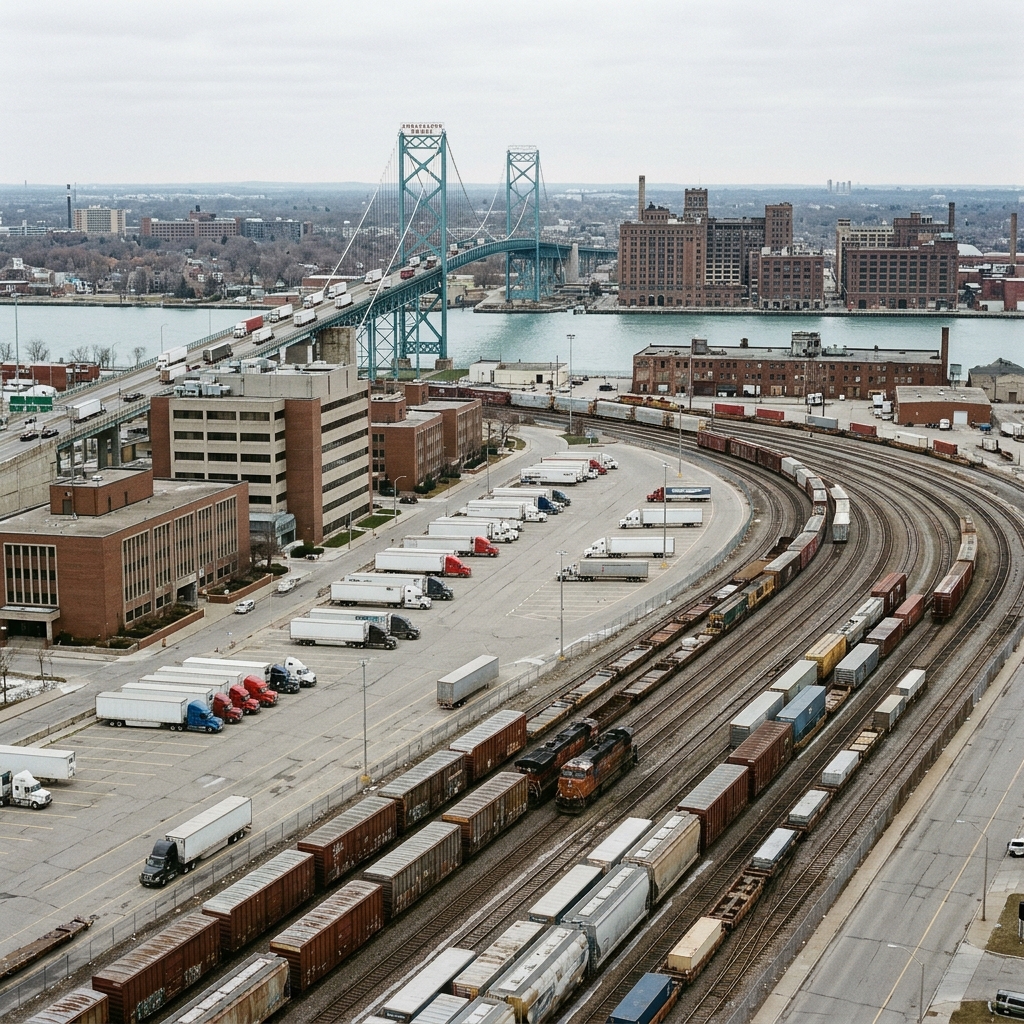
The numbers start at the border. The Ambassador Bridge between Windsor and Detroit carries about USD 400 million in two-way trade each day, and the Blue Water Bridge at Sarnia-Port Huron handles a large share of auto parts, chemicals and agricultural equipment. Those crossings are tied to USMCA rules of origin, not Chinese trade policy. If Ottawa loosens Chinese access to Canadian ports, CBP will ask whether goods are transshipped or transformed. CBSA will face matching questions at Vancouver, Prince Rupert and Montreal. The Pacific Gateway already moves Asian containers onto CPKC and CN rail lines for Chicago and Toronto.
A reset would not change the core imbalance. Canada's merchandise imports from China are dominated by machinery, electronics, furniture and consumer goods. Exports are concentrated in canola seed, canola oil, pork, seafood, potash and wood pulp. China's retaliatory tariffs hit those farm and food lines directly. A trade minister can seek technical talks on sanitary and phytosanitary rules, but the real test is whether Beijing removes duties on canola and pork. For U.S. shippers, the risk is diversion. Canadian ports could become a cheaper entry point for Chinese goods that later move south, and CBP's audit teams would treat that as a rules-of-origin problem.
USMCA dispute panels are already the venue for fights over dairy, auto rules of origin and Mexico's energy policies. A Canada-China thaw adds a new file. U.S. Trade Representative staff will want assurances that Canadian content thresholds are not diluted by Chinese inputs. Ottawa will want room to sell canola and pork without reopening the EV tariff fight. The compromise likely sits in sector-specific protocols, not a broad free-trade agreement. That means more work for customs brokers, more origin certificates and more CBP and CBSA audits at the Ambassador Bridge, Blue Water Bridge and Pacific Gateway terminals.
3. CRA, IRS and the Rate Gap: The Regulatory Plumbing of a China Reset
Regulators will shape the reset more than ministers. The Canada Revenue Agency and the Internal Revenue Service both scrutinize transfer pricing for Chinese subsidiaries that book profits in low-tax jurisdictions. A Canadian bank or manufacturer that expands in China must document intercompany loans, royalties and service fees. The CRA's audit teams have become more aggressive on treaty shopping. The IRS has its own China-focused compliance campaigns. Those files rarely make headlines, but they determine whether a trade opening becomes an investment opening. A minister's statement can open a door. Tax auditors decide how wide the door stays.
Monetary policy adds another layer. The Bank of Canada and the Federal Reserve set policy rates that move the CAD/USD exchange rate, and a 100 basis point gap changes the landed cost of canola, pork and critical minerals. Canadian exporters price in U.S. dollars, so a weaker loonie can offset Chinese tariffs for some sellers. It also raises the cost of imported Chinese machinery for Canadian factories. The Fed's higher-for-longer stance and the Bank of Canada's easing bias create a carry trade that affects hedging by agribusinesses and miners. Executives should model the reset in both currencies, not just in tariff lines.
Investment screening remains the hard stop. The Investment Canada Act allows Ottawa to block or impose conditions on foreign investment that raises national security concerns. Chinese state-linked buyers have faced divestment orders in Canadian lithium and critical minerals. On the import side, CBSA enforces forced-labour prohibitions, and CBP enforces the Uyghur Forced Labor Prevention Act. A trade reset cannot bypass those controls. It can create a formal channel for companies to ask questions before they ship. That channel matters for Canadian pork processors, canola crushers and mineral explorers that want predictable treatment at the border.
4. What the Reset Means for US-Canada Supply Chains and Investors
For investors, the first question is which sector. Canadian canola crushers and pork processors gain if Beijing removes retaliatory duties. Potash miners gain if Chinese buyers sign longer contracts. Canadian critical minerals projects gain access to Chinese processing capacity, but they face U.S. objections if Chinese capital sits in the ownership chain. Automakers face the opposite risk. Any sign that Chinese EVs could use Canada as a back door into the U.S. market would draw immediate attention from CBP and Congress. The EV tariff wall is likely to stay, even if agricultural tariffs fall.
Logistics is the next question. A modest increase in Canadian agri-food exports to China would move through the Port of Vancouver, Prince Rupert and the CPKC network. Those same corridors carry U.S.-bound Asian imports. Capacity is finite. Railcar shortages and port congestion can raise costs for both flows. The Blue Water Bridge and Ambassador Bridge will remain the dominant arteries for U.S.-Canada trade, but their volumes depend on USMCA rules that a China reset does not rewrite. Executives should separate China exposure from USMCA exposure in their risk models. The two files touch, but they are not the same file.
The likely outcome is cautious engagement, not a return to the pre-2018 relationship. Ottawa will keep EV tariffs, investment screening and forced-labour enforcement. Beijing will keep leverage over canola, pork and seafood. The USMCA joint review in 2026 gives Washington a veto point over any Canadian concession that weakens North American content rules. The practical path is a series of small deals on inspection rules, tariff exclusions and business visas. That path can lower costs for Canadian exporters and give U.S. importers more predictable supply. It will not remove the political risk that has kept Canada-China trade on ice since the Huawei and Two Michaels disputes.