1. Ottawa And Washington Stall On Auto Rules As 50% Tariff Threat Hangs Over Talks
Automotive News reported that autos remain the sticking point in Canada-U.S. trade talks as President Donald Trump threatens a 50% tariff on Canadian vehicles and parts. Ottawa and Washington have narrowed differences on agriculture, digital services, and energy permits, according to people briefed on the talks. The auto file is harder. It touches plant investment, union contracts, and USMCA content tests. Canadian officials say a 50% duty would violate the spirit of the 2020 pact and invite retaliation. U.S. officials counter that Canada's vehicle content rules let too many Chinese components enter North American supply chains.
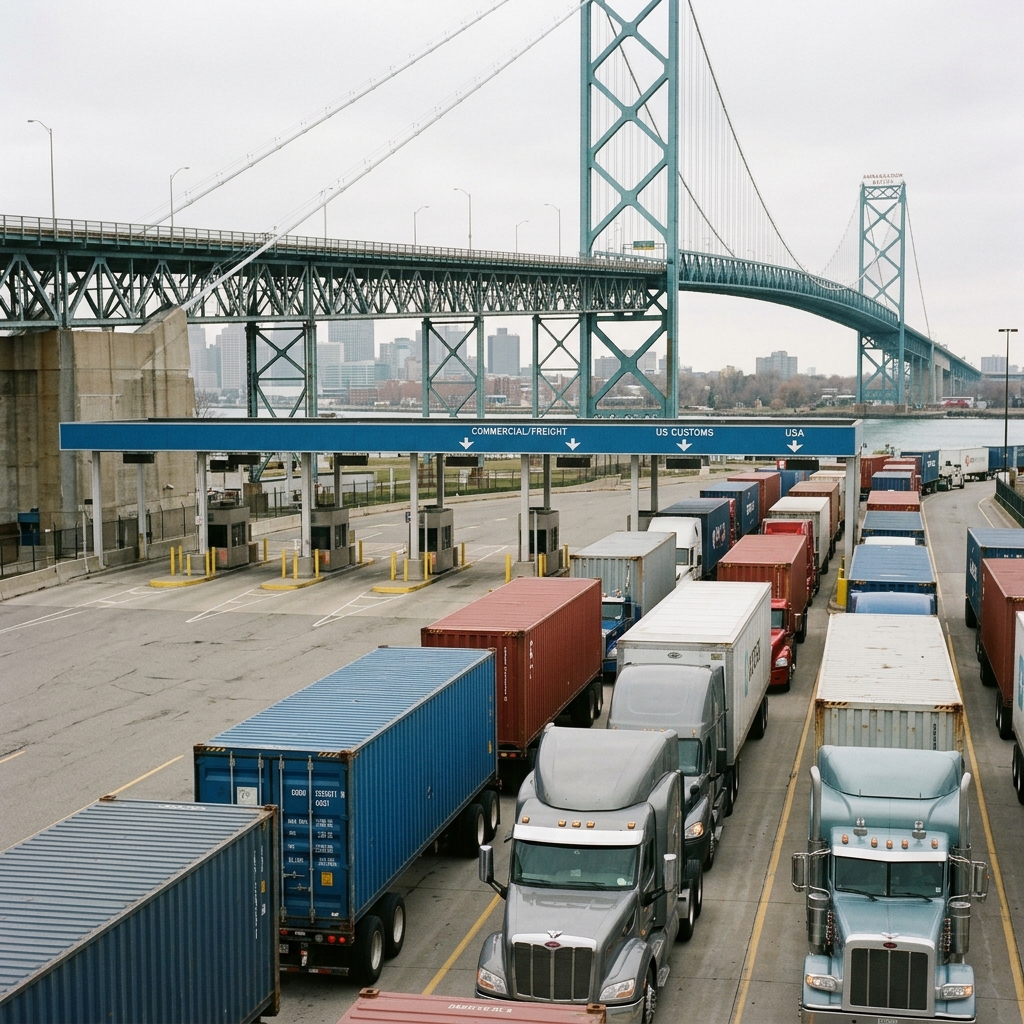
The threat lands on a concentrated industrial base. Ontario builds light vehicles in Windsor, Oshawa, Alliston, and Cambridge. Quebec and Ontario supply castings, seats, batteries, and electronics. Canada exported about C$28 billion of passenger vehicles and C$20 billion of parts to the United States in 2024, according to industry data cited by Automotive News. A 50% tariff at the Ambassador Bridge or Blue Water Bridge would raise landed costs by thousands of dollars per vehicle. Dealers in Michigan, Ohio, and New York would see the first price shock within weeks.
The political calendar adds pressure. Trump wants a deal before Congress turns to the 2026 midterms. Canada's minority Parliament needs a win that protects auto jobs. A narrow agreement on agriculture and critical minerals would leave the 50% threat alive. Automotive News reported that negotiators have discussed a quota or tariff-rate scheme for Canadian vehicles, but no formula has been accepted. Without an auto chapter, the deal would be a partial truce. With one, both sides must sell content rules to unions and producers who have spent five years learning to distrust them.
2. Windsor And Oshawa Factories Confront A 50% Duty And A Stronger Dollar
The market math is simple. A 50% tariff on a C$45,000 Canadian-built crossover would add about US$16,000 at the border, before freight and dealer margin. Stellantis, Ford, and General Motors can absorb some of that cost through incentives, but suppliers cannot. The Bank of Canada's policy rate and the Federal Reserve's stance already shape the loonie. A tariff shock would push the Canadian dollar lower while raising imported parts costs. A 100 basis point swing in operating margin can wipe out a Tier 2 supplier's annual profit. CBP collection at the port of entry is immediate.
The CRA and IRS add another layer. Canada's clean vehicle incentives and the U.S. Inflation Reduction Act credits use different content and assembly tests. A vehicle built in Alliston can qualify for a Canadian rebate and fail the IRS final assembly rule, or the reverse. Treasury guidance and CRA administrative positions have not converged. Automotive News reported that negotiators are debating whether a trade deal should align incentive eligibility with USMCA origin. If it does not, a 50% tariff would hit vehicles that already lose US$7,500 in U.S. consumer credit. That double penalty would slow orders.
Freight corridors are already pricing the risk. The Ambassador Bridge carries about 25% of Canada-U.S. merchandise trade by value. The Blue Water Bridge handles a large share of auto parts moving between Ontario and Michigan. CPKC's rail network moves finished vehicles and containers through Kansas City and Chicago, where customs brokers are asking clients for tariff contingency plans. A 50% duty would not stop every shipment, but it would change routing, inventory, and payment terms. Some suppliers are quoting force majeure clauses. Others are moving production to Mexico, Ohio, or Tennessee. The border is a cost line again.
3. USMCA Origin Tests And Customs Valuation Decide Who Pays The 50%
The legal fight runs through USMCA Chapter 4 and the tariff schedule. To avoid a 50% duty, a vehicle must meet regional value content thresholds of 75% for core parts and 70% for principal parts, plus labor value content rules. CBP auditors trace bills of material, wage statements, and supplier declarations. CBSA officials verify Canadian exports. A single undeclared Chinese battery cell can disqualify an entire vehicle line. Automotive News reported that U.S. trade officials want tighter tracing for batteries, semiconductors, and software. Canada wants credit for North American assembly and mineral processing. The gap is technical and political.
Dispute panels are the fallback. USMCA state-to-state panels can review whether a tariff violates the agreement, but they move slowly. A panel ruling against the United States would not automatically stop CBP from collecting duties. Canada could retaliate with tariffs on U.S. agricultural goods, steel, and consumer products. The WTO adds another forum, though its appellate body remains paralyzed. In practice, the 50% threat is a bargaining lever backed by customs authority. Companies cannot wait for a panel. They must classify, document, and hedge now. The paperwork determines the tariff.
Valuation matters as much as origin. CBP assesses duty on transaction value, including assists, royalties, and freight. Canadian exporters often sell through U.S. affiliates, and transfer pricing can raise or lower the dutiable base. The IRS and CRA review those same intercompany prices for income tax. A 50% tariff turns a routine transfer pricing memo into a cash flow issue. Customs brokers in Detroit and Buffalo report more requests for first sale valuations and duty drawback reviews. A deal that fixes origin but leaves valuation ambiguous would still leave billions at risk.
4. A Partial Deal Leaves Auto Supply Chains Exposed To The Next Tariff Threat
The bilateral outlook depends on whether Washington accepts a sectoral deal. Canada wants autos, agriculture, and critical minerals in one package. The United States wants Canada to align with its China investment screening and to accept tighter vehicle content rules. A partial deal on agriculture and energy would lower some tariffs but leave the 50% auto threat in place. Automotive News reported that Canadian negotiators have warned that a partial deal is worse than no deal for auto investment. Plants need five-year planning horizons. A threat that can be revived by a single executive action does not provide one.
The strategic impact reaches beyond vehicles. Auto parts cross the border multiple times, so a 50% tariff can apply to the same component at each stage. That cascading cost would hit the Pacific Gateway ports, CPKC intermodal yards, and Ontario trucking fleets. The Bank of Canada would face a supply shock and weaker demand at the same time. The Federal Reserve would see higher goods prices. Basis point moves in bond markets would follow. Neither central bank can offset a border tax with rate cuts. A tariff is a fiscal policy imposed by executive order.
The next move is in the details. Canada can offer stronger CBP and CBSA data sharing, a joint audit unit, and a battery tracing protocol. The United States can offer a tariff-rate quota or a phased 50% duty that falls if content rules are met. Automotive News reported that both sides have discussed a six-month review. That timeline is too short for a new battery plant and too long for a supplier without cash reserves. The auto industry will judge the deal by one test: whether a vehicle built in Windsor can cross the Ambassador Bridge without a 50% surcharge.