1. Ottawa's Trade Diversification Push Moves From Speech To Shipping Manifest
Farm Progress reported this week that Canada is preparing for a future with less U.S. trade. The story matters in farm country because Canada's agricultural economy is tied to American buyers by rail, truck, pipeline and contract. Ottawa's rhetoric about diversification has run for years. The difference now is the volume of work at Agriculture and Agri-Food Canada, Global Affairs Canada and Export Development Canada. Officials are mapping alternative buyers for canola, wheat, beef, pork and processed food. Producer groups are asking whether those buyers can absorb Canadian supply at prices that cover input costs.
The details matter. Canada's membership in the Comprehensive and Progressive Agreement for Trans-Pacific Partnership and the Canada-European Union Comprehensive Economic and Trade Agreement gives exporters tariff lines into Japan, Vietnam, Germany and the Netherlands. Trade commissioners in Manila, Jakarta and Seoul are working with Canadian processors on buyer lists. The Canadian Canola Growers Association and Cereals Canada have pressed for port capacity and cargo inspection capacity. A new buyer in Japan is useful only if the Port of Vancouver or Prince Rupert can move the seed, oil or meal on schedule. The farm gate depends on the ship date.
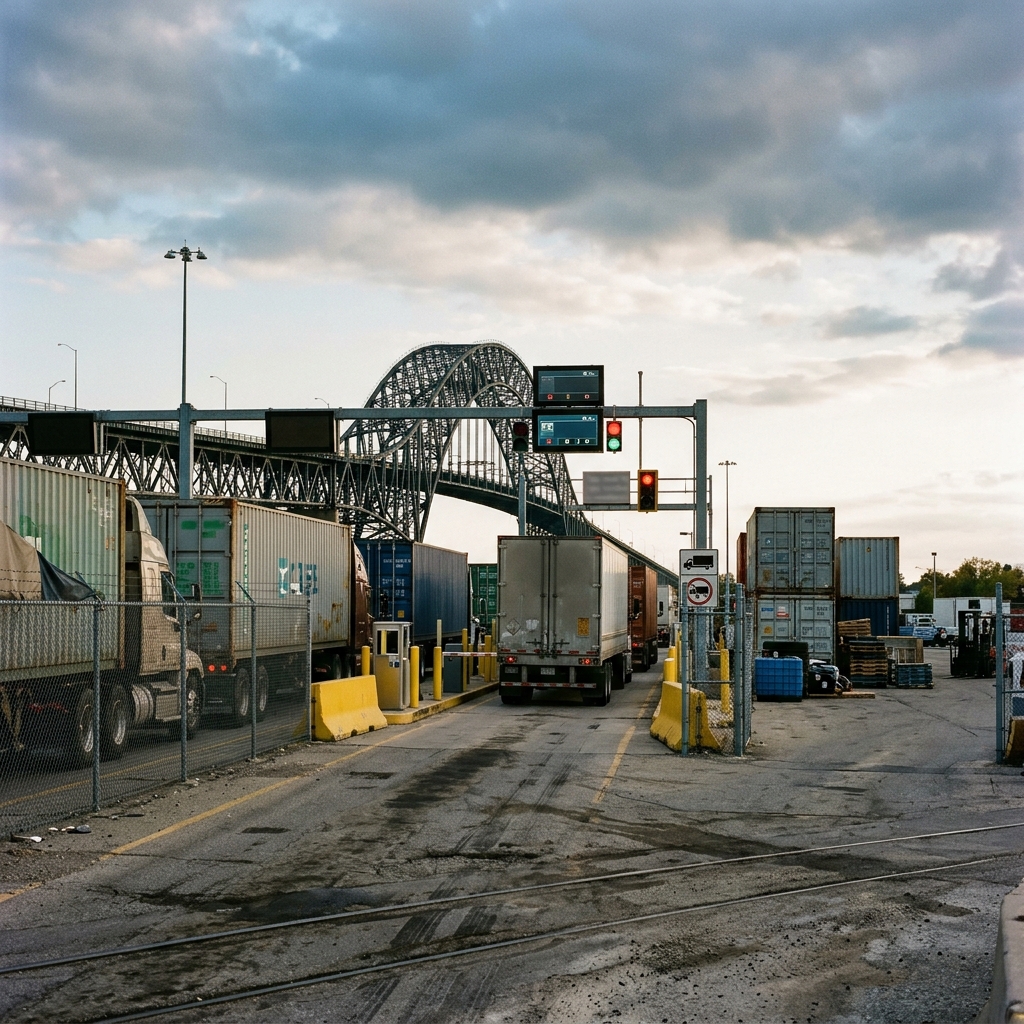
The border remains the first test. CBP and CBSA officers process thousands of truckloads each day at the Ambassador Bridge and the Blue Water Bridge. CPKC rail networks carry grain, meat and processed food to Chicago, Kansas City and Mexico. A customs delay of a few hours can spoil a just-in-time meat shipment. A new sanitary certificate can stop a canola cargo. Canada's plan for less U.S. trade will need customs brokers, freight forwarders and cold-chain operators who know both CBP rules and CBSA rules. The shipping manifest is where diversification becomes real.
2. Farm Gate Economics Meet Customs Codes At The U.S. Border
Canada's exposure is large. The United States buys about 75 percent of Canadian goods exports. For agriculture and food, the share is lower but still dominant. Canola seed, oil and meal, wheat, beef, pork, corn and soybeans move south in volume. U.S. farmers buy Canadian inputs and compete with Canadian output. The Farm Progress report points to a policy shift in Ottawa. The shift is a hedge against the next U.S. tariff threat or USMCA review. Farm balance sheets will feel it through basis, freight and currency.
Interest rates matter at the farm gate. The Bank of Canada and the Federal Reserve set policy rates that move the Canadian dollar, equipment loans and operating credit. Even a 50-basis-point gap in policy rates can change the cost of a new combine or a fertilizer prepayment. CRA and IRS reporting rules for cross-border farm businesses add another layer. Canadian producers with U.S. land or LLCs file two sets of returns. U.S. buyers of Canadian cattle and hogs face withholding and tax reporting. A diversification plan that ignores tax and credit costs is incomplete.
Tariffs are the visible risk. USMCA dispute panels handle cases over dairy, grain and meat access. CBP collects duties at the port of entry. CBSA collects counter-tariffs on the Canadian side. A tariff of 10 percent on a $500,000 shipment is $50,000 before freight. That number moves through the supply chain. Canadian processors absorb some of it. U.S. importers absorb some. Farmers absorb the rest through lower bids. The Farm Progress story is about preparation for that math. Ottawa wants fewer shipments exposed to a single CBP decision.
3. USMCA Review, Rules Of Origin And The Regulatory Friction Map
The USMCA joint review in 2026 is the policy deadline. The agreement requires the three governments to review the pact and decide on extension. U.S. trade officials have used the review to press labor, dairy and auto rules. Canadian farm groups want stable access for supply-managed dairy, poultry and eggs. They also want dispute panels to remain. A panel ruling can reopen a border faster than a ministerial call. The Farm Progress report fits that timeline. Canada is preparing for less U.S. trade because the review could produce new restrictions or new tariffs.
Rules of origin and sanitary rules are the daily friction. CFIA certificates accompany meat, dairy and plant products. USDA and FDA rules govern U.S. imports. CBP and CBSA inspect shipments at border crossings and rail yards. A single label error can hold a truck at the Ambassador Bridge. A feed additive rule can block a feed shipment at the Blue Water Bridge. Canadian exporters need regulatory staff who can read both rulebooks. The cost of compliance is a fixed cost. Small processors feel it more than large ones.
Tax and customs data now move together. CRA and IRS exchange information under the Canada-United States tax treaty. CBP and CBSA use commercial data to target shipments. A Canadian farm corporation with U.S. sales must keep invoices, certificates and transfer-pricing records. Export Development Canada can insure receivables, but insurance does not clear customs. The daily work is document control. A buyer in Japan or Germany needs a different set of papers than a buyer in Ohio. Canada's diversification plan depends on that paperwork.
4. What A Smaller U.S. Share Means For Ports, Rail And Rural Balance Sheets
A smaller U.S. share would change freight patterns. The Pacific Gateway at Vancouver and Prince Rupert is Canada's main door to Asia. CPKC and Canadian National rail lines carry grain from the Prairies to those ports. A shift toward Asian buyers would increase demand for rail cars, port storage and container capacity. It would also raise the cost of backhauls. A ship to Japan does not return with the same empty container as a truck to Michigan. Canadian exporters would pay for that imbalance in freight rates.
U.S. farmers would feel the change too. Canadian canola meal and oil compete with U.S. soy products in feed and food markets. Canadian beef and pork compete with U.S. meat in Japan and Korea. If Canada wins new buyers in Asia, U.S. exporters face more competition. If Canada loses U.S. buyers, U.S. processors may gain an edge on price. The Farm Progress report is a warning to both sides of the border. The integrated North American supply chain is efficient. Breaking it adds cost to every participant.
The longer test is patience and capital. Diversification requires long-term contracts, port investment and trade finance. Farm Credit Canada and Export Development Canada can provide some of that capital. Private lenders will price the risk. The Bank of Canada will watch the exchange rate. The Federal Reserve will watch U.S. demand. A 100-basis-point move in the policy rate can erase the margin on a canola sale. Canada's future with less U.S. trade is possible. It will not be cheap.