1. Ottawa Widens Trade Talks as Farm Exports Face U.S. Tariff Risk
Farm Progress reported this week that Canada is pushing new trade deals to cut U.S. reliance. For farmers, the reason is simple. Canola, wheat, beef, pork, and pulses are Canada's most exposed exports. The United States buys the largest share of each. A single tariff threat from Washington can reprice a harvest in days. Ottawa's answer is a wider network of bilateral and regional agreements, from the Comprehensive and Progressive Agreement for Trans-Pacific Partnership to the Canada-United Kingdom Trade Continuity Agreement and active talks with ASEAN, Indonesia, and India.
The numbers are blunt. Canada exported about C$594 billion of goods to the United States in 2023, roughly 77% of total goods exports, according to Statistics Canada data cited by trade officials. Agriculture and agri-food account for a large slice. Canada's farm exports to the U.S. were about C$40 billion in 2023. New deals with Indonesia, ASEAN, India, and the Pacific Alliance can add buyers, but they cannot match the scale of the U.S. market. Ottawa's goal is risk reduction, not decoupling. A 5% shift in farm export volume would still be a multi-billion-dollar change.
The political message from Ottawa is aimed at producers who remember the 2018-19 tariff fights over steel, aluminum, and dairy. Those disputes hit farm machinery costs and retaliatory tariffs on pork, whiskey, and other goods. Canada's Trade Commissioner Service and Export Development Canada now push harder to sell into new markets. Agriculture and Agri-Food Canada funds market access work. Farm groups want concrete results on sanitary and phytosanitary rules, beyond signed communiques. The test is whether a canola grower in Saskatchewan or a pork processor in Manitoba can book a container to Jakarta or Mumbai without a tariff surprise.
2. USMCA Panels and CBP Inspections Keep Washington at the Center
The United States remains Canada's largest farm customer because geography, rail, and border infrastructure make it cheap to ship. USMCA does not remove every risk. Chapter 19 dispute panels handle anti-dumping and countervailing duty cases. Chapter 31 state-to-state panels handle disputes over sanitary and phytosanitary measures. Canada's dairy tariff-rate quotas remain a live irritant. CBP agricultural specialists inspect produce, meat, and live animals at ports of entry. A single hold at the Ambassador Bridge or Blue Water Bridge can cost a carrier thousands of dollars per day.
CBSA clearance rules add another layer. Trusted trader programs such as FAST and Partners in Protection speed low-risk shipments, but they require audits and record keeping. Canadian exporters also face CRA and IRS reporting rules when they set up U.S. subsidiaries or pay cross-border royalties. Transfer pricing rules apply to agribusiness firms with related-party sales. The Canada Revenue Agency and the Internal Revenue Service share information under the Canada-U.S. tax treaty. New trade deals do not change those tax mechanics. They change market access, tariff rates, and rules of origin.
The regulatory machinery matters because farm exports are perishable. A beef shipment from Alberta to Japan must clear CFIA export certification, shipping line schedules, and importer country rules. A pulse shipment to India must meet plant health requirements. A canola cargo to the EU must meet pesticide residue limits. Canada's new deals aim to lock in science-based rules and faster approval timelines. The U.S. market remains the benchmark for speed and volume. Ottawa can add markets, but it cannot replicate the 24-hour truck lane into Detroit or Buffalo.
3. Ambassador Bridge, CPKC Rail, and Pacific Gateway Carry the Diversification Bet
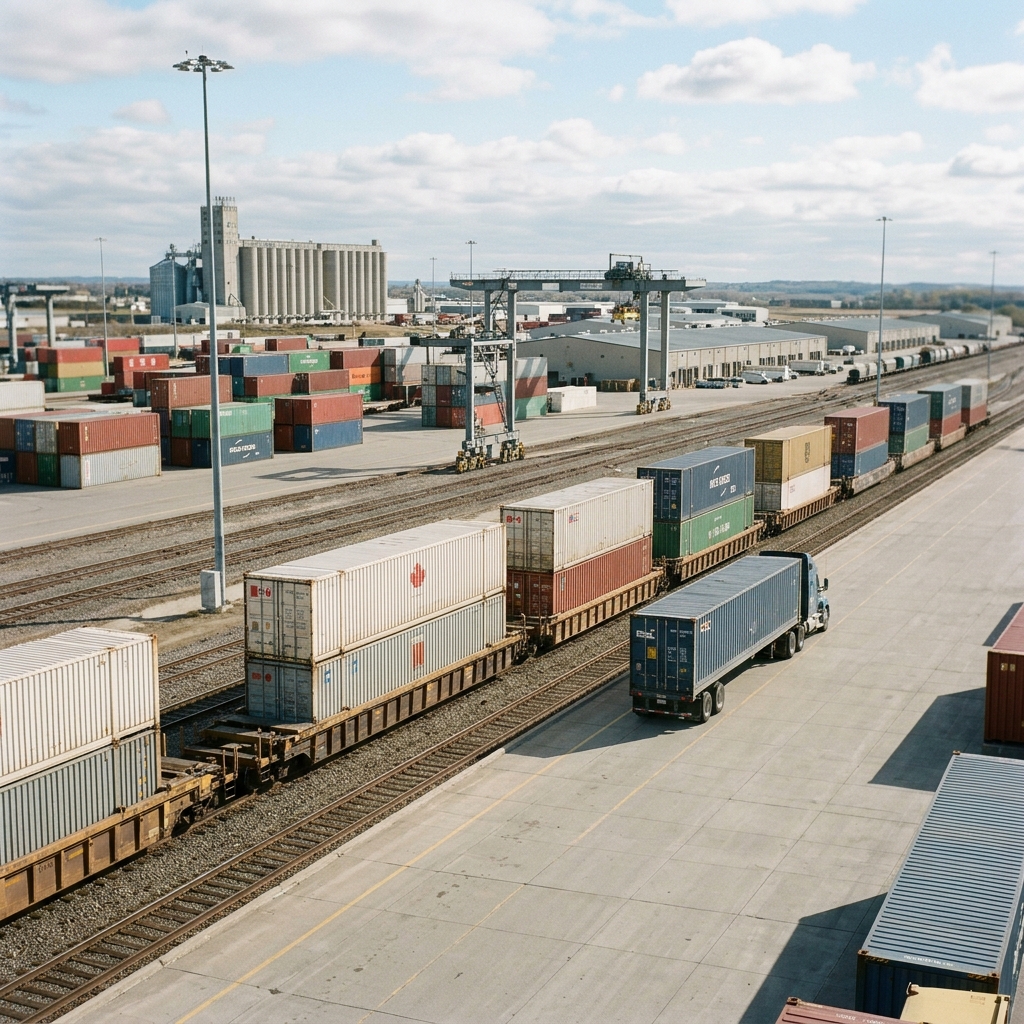
Canada's trade diversification plan depends on freight corridors that already carry U.S.-bound goods. The Ambassador Bridge handles about 25% of Canada-U.S. merchandise trade by value. The Blue Water Bridge at Sarnia-Port Huron carries a large share of auto and agriculture traffic. CPKC and CN rail networks move grain and pulses from the Prairies to Vancouver, Prince Rupert, and U.S. gateways. The Pacific Gateway handles containerized exports to Asia. A new trade deal with ASEAN or India means little if port capacity, rail car supply, and container availability cannot handle the volume.
Ottawa's Indo-Pacific Strategy commits about C$2.3 billion to trade, infrastructure, and security ties. Export Development Canada provides credit insurance and financing for new-market buyers. Farm Credit Canada supports producer investments in storage and processing. The Canada Infrastructure Bank has funded port and rail projects. Those tools matter because Asian buyers often require longer payment terms and different quality specs. A pulse buyer in India may want smaller lot sizes. A pork buyer in Japan may demand specific traceability. Canadian exporters must adapt. The U.S. market still offers the lowest transaction cost.
The corridor math is tight. Canada's two main railways moved record grain volumes in recent years, but port congestion and winter disruptions still create bottlenecks. The Port of Vancouver handles about 25% of Canada's export trade by value. Prince Rupert offers a shorter trans-Pacific route. The St. Lawrence Seaway carries grain and project cargo to Europe. New deals with the EU under CETA and the UK under the Trade Continuity Agreement already use those lanes. Adding ASEAN and India volume will require more container capacity, more cold-chain storage, and faster CBSA and CBP processing.
4. Canada's New Deals Will Not Displace U.S. Farm Trade Soon
There is a strong strategic case for new trade deals. The U.S. market carries political risk. A presidential election, a Section 232 national security tariff, or a new USMCA dispute can change the terms of trade quickly. Canada's farm exporters want options. The economic case takes longer to build. Building a new beef or pork market takes years of plant approvals, label reviews, and buyer relationships. A new canola market requires crushing capacity and logistics. Ottawa can sign deals, but exporters must invest. The U.S. share of Canadian farm exports will likely remain above 60% through the next decade.
Interest rates and exchange rates shape the near-term outlook. The Bank of Canada and the Federal Reserve set policy rates that drive the Canada-U.S. dollar gap. A 100-basis-point gap can push the loonie lower. A weaker loonie helps Canadian exporters price in U.S. dollars. It also raises the cost of imported fertilizer, machinery, and fuel. Canadian farm margins are sensitive to that trade-off. The CRA and IRS tax treatment of cross-border income adds another variable. Investors should watch the Bank of Canada's next 25-basis-point move and the Fed's dot plot.
The bilateral relationship remains the core. Canada and the United States trade about C$3.6 billion in goods and services every day. No new deal with Indonesia, ASEAN, or India can replace that volume. Ottawa's push is a hedge. It gives Canada more bargaining power in USMCA disputes and more options if Washington raises barriers. The risk is that new deals produce paper commitments without commercial follow-through. The opportunity is a more resilient farm economy with more buyers. Both outcomes will be decided at the border, on the rail line, and in the port.