1. Ottawa Sets Year-End Deadline for Stopgap Trade Framework With Washington
CBC reported this week that Canadian officials are seeking an interim trade arrangement with the United States by the end of the year, according to sources familiar with the file. The report did not disclose the proposed terms, and officials at Global Affairs Canada and the U.S. Trade Representative's office did not confirm the talks. The timing matters because the USMCA, known in Canada as CUSMA, faces a joint review in 2026. Ottawa wants a working framework before that review becomes a formal bargaining round with Congress, industry groups and state governments all pushing competing demands.
The phrase interim arrangement covers a wide range of possible instruments. A memorandum of understanding, a sectoral tariff truce or a customs cooperation pact could move faster than a treaty. Two-way goods and services trade between Canada and the U.S. is roughly C$1.3 trillion a year, and more than C$3 billion crosses the border daily. For Ottawa, the goal is to reduce tariff exposure and border friction before the 2026 review. For Washington, an interim deal could extract concessions on dairy, digital services taxes, auto rules of origin or defense procurement without opening a full ratification fight.
Canadian industry groups have pressed for clarity on tariffs covering steel, aluminum, softwood lumber and electric vehicles. Provincial governments care about energy, agriculture and manufacturing corridors that feed the Ambassador Bridge, the Blue Water Bridge and the Pacific Gateway. The CBC report appeared without a formal text, so lobbyists are reading the signal, not the fine print. Trade lawyers in Toronto say the year-end target is ambitious but plausible if both governments use executive authorities. The alternative is a slower, more public process that would invite amendments from Congress and Parliament.
2. Tariff Exposure and Customs Mechanics Will Define Any Interim Deal
The first test is tariff relief. U.S. Section 232 duties on steel and aluminum, anti-dumping and countervailing duties on softwood lumber, and threatened tariffs on vehicles and parts all raise costs for Canadian exporters. Canada wants exclusions, quotas or a suspension of new levies. Washington wants commitments on market access for U.S. dairy and poultry, treatment of Canadian digital services taxes and tighter auto content rules. CBP and CBSA would enforce any bargain at ports of entry. An interim arrangement without clear tariff schedules would be a press release, not a trade policy.
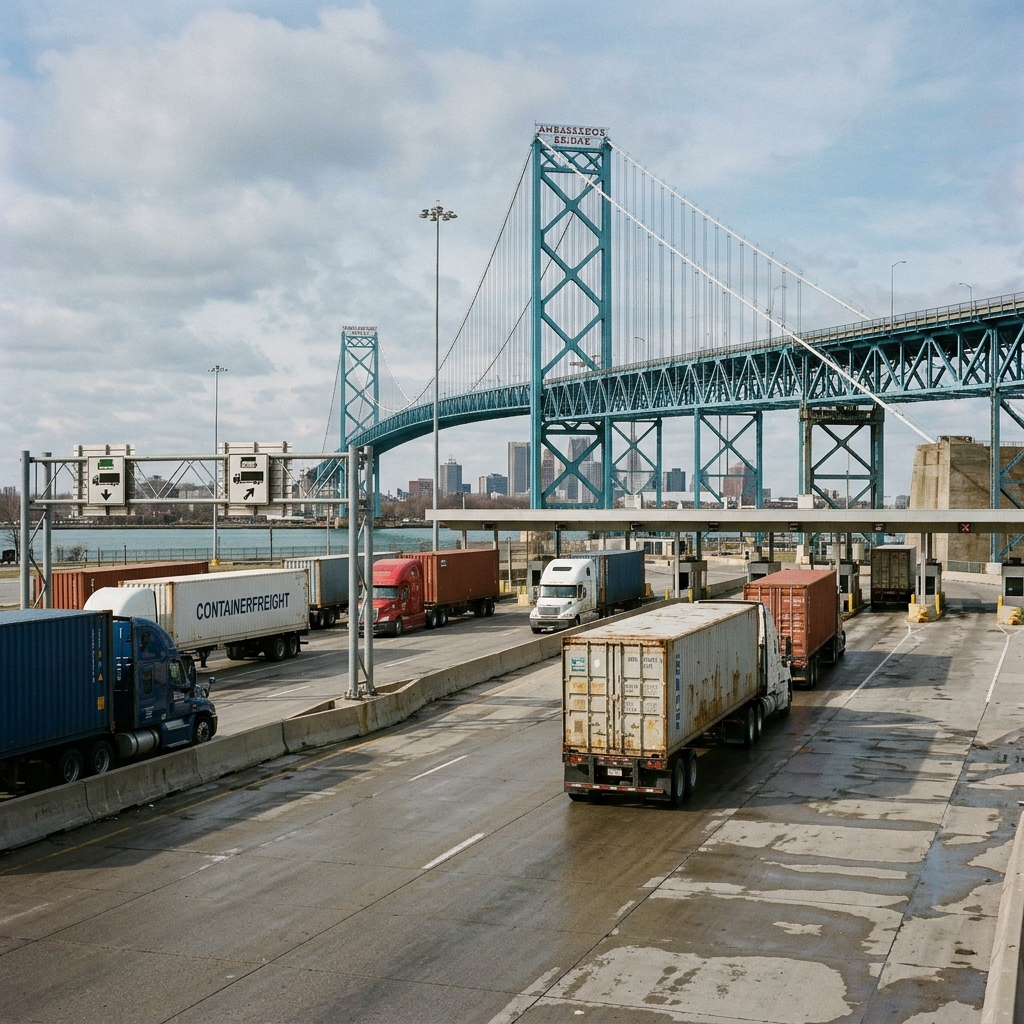
Customs mechanics are the second test. The Ambassador Bridge between Windsor and Detroit handles about a quarter of Canada-U.S. merchandise trade by value. The Blue Water Bridge at Sarnia and the CPKC rail network carry autos, chemicals and agricultural goods. CBP and CBSA already run trusted trader programs such as FAST and preclearance pilots. An interim deal could expand those programs, align electronic manifests and create a single window for tariff exclusions. Each measure requires data sharing and legal authority. Border agencies can move faster than legislatures, but they need political cover from cabinet ministers and the White House.
Rules of origin are the third test. USMCA requires 75 percent regional value content for passenger vehicles and light trucks, plus labor value content thresholds. Canadian parts makers want credit for batteries, semiconductors and critical minerals. U.S. producers want tighter tracing. An interim framework could create a joint technical committee and a fast-track ruling process. It could also revive USMCA dispute panels that have stalled on dairy, energy and auto content. Those panels are legal mechanisms, not diplomatic gestures. Without them, companies face unilateral tariff decisions and slow appeals.
3. Customs, Rules of Origin and Dispute Panels Are the Deal's Hard Wiring
The regulatory details of any interim arrangement run through CBP and CBSA. Both agencies use risk analytics to target cargo, and both face pressure to speed legitimate trade while screening for forced labor, sanctions evasion and food safety. A deal could set common data fields for e-manifests, mutual recognition of authorized economic operators and joint targeting centers at major crossings. It could also cover CRA and IRS information sharing for tax compliance, though privacy laws limit that route. These are unglamorous details. They decide whether a truck clears the Ambassador Bridge in minutes or hours.
The Bank of Canada and the Federal Reserve sit outside trade talks, but their policy paths affect the deal's economics. A wider interest-rate gap can move the Canadian dollar and change the competitiveness of Canadian exporters. A 100-basis-point gap in policy rates can shift hedging costs for mid-sized manufacturers. Currency swings do not appear in tariff schedules, yet they change the effective price of steel, lumber and auto parts. Ottawa and Washington can lower tariff barriers, but they cannot legislate away exchange-rate volatility. Companies will price that risk into inventories and capital plans.
Dispute resolution is the legal backbone. USMCA has state-to-state panels, investor-state rules for Mexico and Canada, and labor rapid-response mechanisms. Canada wants panels to move faster on softwood lumber and dairy. The U.S. wants stronger enforcement on labor and auto content. An interim arrangement could set deadlines for panel appointments and require published rulings. It could also create a bilateral committee of deputy ministers and USTR officials to monitor commitments. Without enforceable timelines, the arrangement becomes a forum without deadlines. With them, it can reduce the risk of retaliatory tariffs before the 2026 review.
4. Bilateral Outlook: What a Year-End Framework Means for Executives and Investors
A year-end framework would lower the uncertainty cost for cross-border supply chains. Rail volumes on CPKC and CN, truck traffic at the Ambassador Bridge and Blue Water Bridge, and energy flows through Enbridge and TC Energy pipelines would benefit from clearer rules. The Canadian dollar could firm if tariff threats recede. Auto suppliers in Ontario, Quebec and Michigan would gain visibility on content rules. Agriculture exporters would watch dairy and grain access. The gains are incremental, not transformative. An interim deal would not repeal Section 232 or resolve every USMCA dispute. It would buy time and reduce the chance of a tariff shock.
Failure carries costs. If talks stall, exporters face another year of tariff uncertainty, border delays and compliance costs. Steel and aluminum producers in Ontario and Quebec would keep paying duties. Softwood lumber producers in British Columbia and Quebec would face continued U.S. countervailing and anti-dumping duties. Auto parts makers would hedge currency and build inventory. The Bank of Canada would factor trade friction into its growth forecasts. The Federal Reserve would hear from U.S. manufacturers about input costs. A breakdown would also weaken Ottawa's leverage before the 2026 USMCA review.
The politics reach beyond bilateral trade. Mexico, China and the U.S. election cycle all shape Washington's calculus. Canada wants to show it is a reliable supplier of energy, critical minerals and food. The U.S. wants allies to align on China and to accept tighter content rules. An interim arrangement could be a first step toward a broader North American industrial policy. Executives should watch official statements from Global Affairs Canada and USTR, tariff exclusion notices in the Federal Register, and the Bank of Canada's business outlook survey. Those signals will show whether the year-end target is real.