1. Ottawa Finds No Concrete US Offer in Tariff Talks
Reuters reported that Canadian officials have seen little movement from Washington on tariff relief after a fresh round of talks with the US Trade Representative and the Commerce Department. Two sources briefed on the discussions said the meetings produced technical exchanges but no text, no timetable and no concrete offer to remove Section 232 duties on steel, aluminum or downstream products. Ottawa has pressed for relief on those duties and on the 25% tariff facing many non-USMCA-compliant goods. The sources spoke on condition of anonymity because the talks are private.
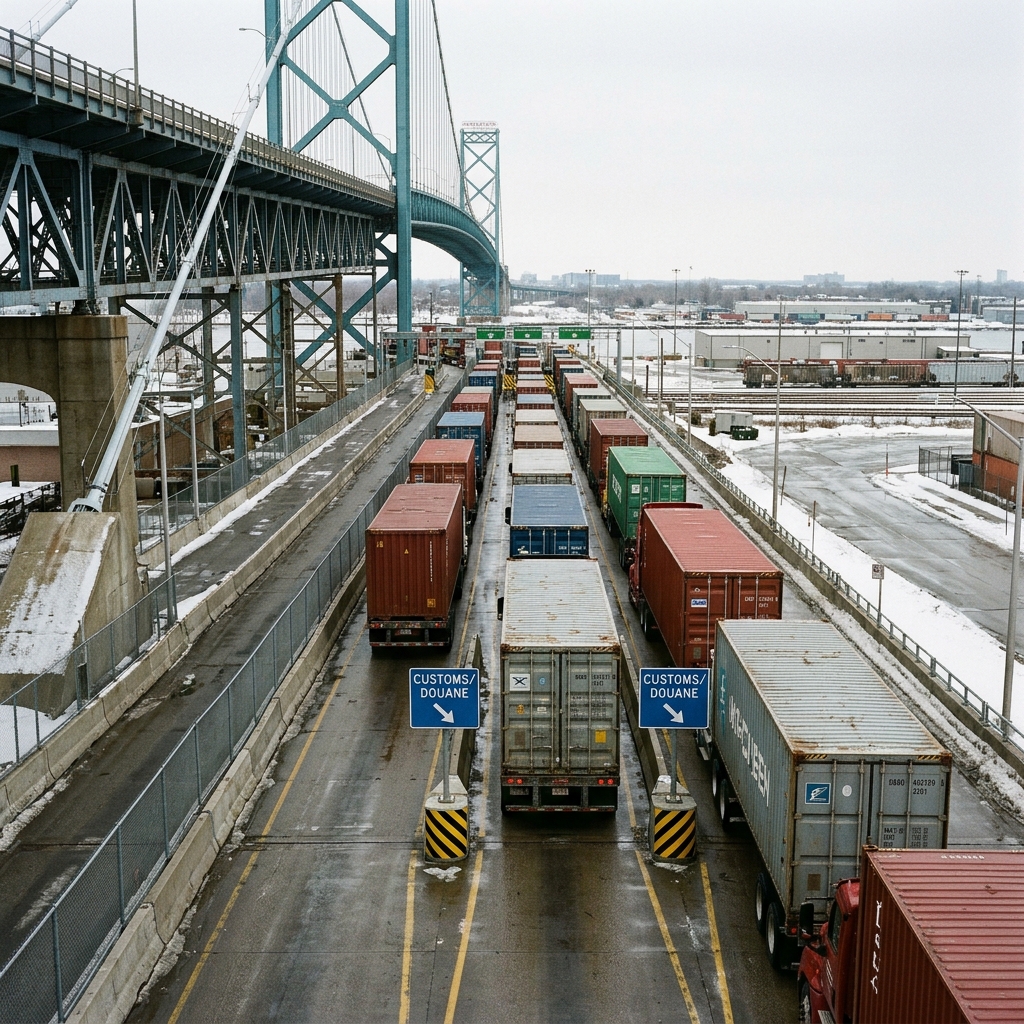
The lack of a written proposal matters for manufacturers that price orders months ahead. Auto suppliers in Ontario and aluminum producers in Quebec use the Ambassador Bridge and Blue Water Bridge to move parts and metal into Michigan and Ohio. CPKC rail networks carry potash, chemicals and finished goods across the border. Without a clear tariff schedule, finance teams at those firms must hold larger cash buffers for duty payments collected by US Customs and Border Protection and by the Canada Border Services Agency on the return leg. That cost shows up in working-capital lines, not in headline tariff rates.
Canadian officials have tried to separate tariff relief from other irritants, including digital services taxes, softwood lumber and Buy American rules. The Bank of Canada has said US trade policy is a source of uncertainty for business investment, while the Federal Reserve has noted tariff effects in its regional surveys. Markets have priced modestly lower odds of a near-term rate cut in Canada, with overnight index swaps implying a few basis points of movement after the Reuters report. For exporters on both sides of the border, the result is a holding pattern.
2. Duty Costs Move Through CBP, CBSA and Corporate Tax Ledgers
Tariff administration is mundane and costly. US Customs and Border Protection assesses Section 232 duties at the port of entry, and importers must post cash or bonds before release. Canada Border Services Agency collects GST/HST and duties on inbound goods, and it audits post-entry compliance. For a mid-sized parts maker shipping $40 million a year into the US, a 25% duty on $20 million of dutiable content can tie up $5 million in cash before any refund or drawback. CRA and IRS rules on input tax credits and transfer pricing then determine how much of that cost is recoverable.
Duty drawback is the main relief valve, but it is slow. US law allows refunds on imported goods that are later exported, and USMCA rules let certain North American content qualify for preferential treatment. Canadian exporters say the documentation burden is heavy. Bills of material must match, and CBP can challenge claims years later. CBSA has its own verification process for goods entering Canada. The result is a compliance cost that hits small and mid-sized firms hardest, especially those without dedicated customs counsel. That cost remains even if Washington eventually lowers the tariff rate.
Tax departments are now part of the tariff response. CRA and IRS auditors are asking how tariff costs are allocated among related entities, and whether transfer prices reflect the new cost base. Finance Canada has fielded questions about GST/HST treatment of rebilled duty costs. The Bank of Canada's business outlook survey has flagged trade policy as a drag on capital spending. None of this replaces a political deal. It does explain why Canadian executives describe the current period as a slow bleed rather than a shock.
3. USMCA Panels Remain the Fallback, Not the Fix
USMCA dispute panels can rule on whether tariffs violate the agreement, but they cannot force Congress or the White House to cut a national security duty. Section 232 tariffs rest on a different legal foundation. Canada has challenged some US measures at the World Trade Organization and under USMCA, with mixed results. A panel ruling can take months, and compliance is political. Ottawa's preference is a negotiated package that covers steel, aluminum, autos and softwood lumber. Reuters' sources said Washington has not put that package on the table.
The supply chain shows why this matters. The Pacific Gateway handles containers from Asia that feed Canadian and US plants. CPKC and Canadian National rail networks move autos, grain and chemicals across the border. The Ambassador Bridge carries roughly a quarter of Canada-US trade by value, and the Blue Water Bridge handles a large share of truck traffic into Michigan. A tariff that applies at the border changes routing decisions, inventory levels and contract terms. Firms can shift some volume, but they cannot move a factory in a quarter.
Canadian officials have offered cooperation on China overcapacity, critical minerals and border security. They have also pointed to CBSA and CBP joint operations at ports of entry. Washington has acknowledged the cooperation but has not linked it to tariff relief in any public document. That gap is the main point in the Reuters report. Canada sees movement on process and little movement on price. The US Trade Representative's office says it is reviewing industry comments. No final rule has been published. For exporters, process does not pay the duty bill.
4. Bilateral Outlook: A Holding Pattern With Higher Cash Costs
The near-term outlook is a holding pattern. The Bank of Canada has cut rates as inflation eased, but trade uncertainty limits how far it can move without watching the Federal Reserve. Futures markets price a small probability of another Canadian cut this quarter, with a few basis points of repricing after each tariff headline. The Federal Reserve has said it needs more evidence before easing. That policy gap supports the Canadian dollar at times and hurts it at others. For importers, the currency swing adds another line to the cost sheet.
Corporate responses are already visible. Canadian steel and aluminum producers are rerouting some volume to domestic buyers and to Europe. US manufacturers are qualifying alternate suppliers in Mexico and the US South. CBP is seeing more requests for binding rulings on tariff classification. CRA and IRS are fielding questions about cost-sharing agreements. The Bank of Canada's surveys show weaker investment intentions in trade-exposed sectors. None of these moves is a full substitute for tariff relief. They are expensive workarounds that raise the cost of doing business on both sides of the border.
The political calendar is the next test. USMCA is scheduled for a joint review in 2026, and Canadian officials want tariff relief before that process begins. US Trade Representative staff have signaled that any relief would come through a negotiated package, not a unilateral waiver. Congress has shown little appetite for handing the White House new tariff authority or for taking it away. Canada's strongest cards are energy, critical minerals and border cooperation. Those cards have not produced a deal yet. Reuters' sources say the wait could extend into the fall.