1. Carney Points to Post-Midterm Window for Cross-Border Tariff Relief
Speaking in Oakville, Ontario, former Bank of Canada and Bank of England governor Mark Carney stated that Canada stands ready to embrace any political moves from Washington to restore uninhibited free trade. Carney, who is chair of Brookfield Asset Management and acts as an informal economic adviser to the federal government, pointed to shifting dynamics in the United States Congress following midterm elections. His remarks directly address the protectionist trade barriers accumulating across the frontier. Two-way trade accounts for more than $900 billion every year. Canadian industrial stability simply cannot survive without open access to American commercial hubs.
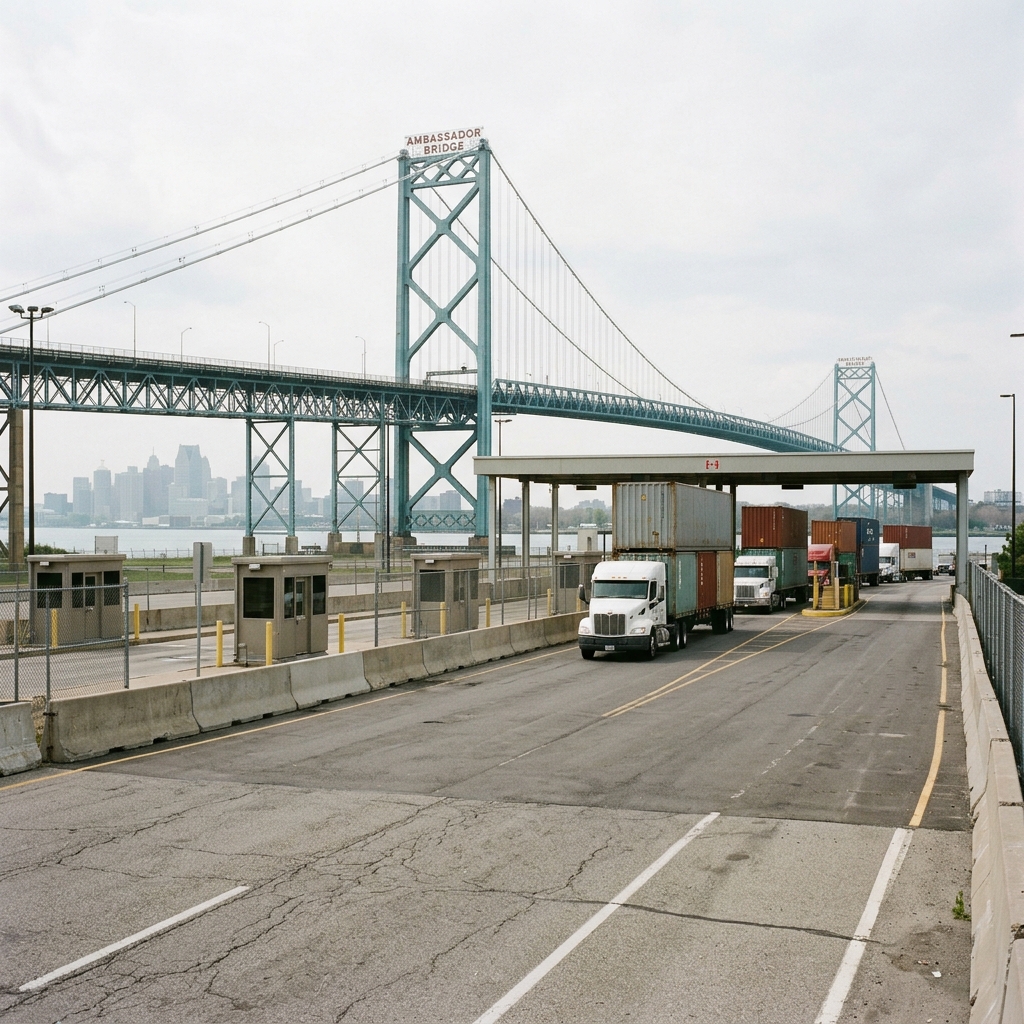
Industrial corridors along the Windsor-Detroit border continue to grapple with compounding trade restrictions. More than 25 percent of all Canada-U.S. merchandise trade moves across the Ambassador Bridge alone. Freight flows face constant disruption from unilateral trade remedies and domestic procurement rules. Carney noted that political realignments in Washington often open narrow windows for regulatory recalibration. With key leadership seats on the House Ways and Means Committee and the Senate Finance Committee changing hands, Canadian policymakers are organizing lobbying efforts to defend export channels for steel, aluminum, automotive components, and forest products.
Carney underscored that protectionist policies drag down productivity on both sides of the border. When Washington imposes local procurement mandates, American manufacturers pay higher intermediate prices for Canadian nickel, aluminum, and crude oil. Canadian operators get hit with punishing compliance costs. The damage lands straight on corporate balance sheets. For Canadian executives, returning to predictable, rules-based commerce is not some abstract diplomatic goal. It is an immediate operational necessity to sustain multi-billion-dollar manufacturing networks across Southern Ontario and the American Midwest.
2. Impending USMCA Joint Review Elevates Risk for Manufacturing Corridors
The mandatory six-year review of the United States-Mexico-Canada Agreement casts a long shadow over cross-border commercial ties. Scheduled for July 2026 under Article 34.7, the process allows any single party to refuse an extension, which would trigger annual joint reviews and start a ten-year countdown to treaty expiration. The automotive sector remains the primary flashpoint. Canada and Mexico previously won a formal USMCA dispute panel against the United States over core parts calculations and regional value content rules. Even so, the Office of the United States Trade Representative has stalled on implementing the panel ruling, stranding cross-border auto assemblers in regulatory limbo.
Assembly plants run by General Motors, Ford, and Stellantis depend on fluid border crossings. Parts regularly cross the international boundary up to six times before final assembly is complete. Bottlenecks at crossings like the Blue Water Bridge between Sarnia and Port Huron pile variable logistics expenses onto supply chain budgets. Freight networks operated by Class I rail carriers, including Canadian National and Canadian Pacific Kansas City, depend on uniform customs processing rules to keep trains moving. Carney observed that political uncertainty around trade pact renewals depresses capital investment across Canadian manufacturing hubs, where direct investment requires steady, long-term tariff visibility.
These frictions reach well past the auto sector into agriculture and energy markets. United States trade officials continue to challenge Canadian supply management quotas for dairy imports through repeated USMCA dispute mechanisms. At the same time, Ottawa faces sharp American opposition to its Digital Services Tax, which Washington claims targets American technology firms. These disputes raise the stakes for the 2026 review. Canadian negotiators want to secure bipartisan support in Washington well before the formal review begins to protect key economic corridors from surprise retaliatory tariffs.
3. Industrial Subsidies and Currency Pressures Reshape Capital Allocation
Aggressive U.S. industrial policy has transformed the commercial relationship between both nations. The U.S. Inflation Reduction Act and the CHIPS and Science Act poured hundreds of billions into tax credits and direct subsidies, pulling capital south into American facilities. Canada answered by allocating over $30 billion in production tax credits and capital expenditure subsidies for clean technology and electric vehicle battery plants. That fiscal duel places heavy demands on the federal budget in Ottawa while forcing Canadian firms to reconfigure their capital allocations to match U.S. tax incentives.
Diverging central bank policies add another layer of friction for corporate treasurers. The Bank of Canada moved to lower its policy interest rate earlier than the Federal Reserve in response to sluggish consumer spending and high household debt loads. That policy gap pulled the Canadian dollar down toward the 72-cent U.S. range. While a cheaper loonie offers a price buffer for Canadian commodity exporters, it drives up the cost of imported machinery and advanced tools needed to boost factory floor output. Higher equipment costs combined with Buy America rules squeeze corporate profit margins from both sides.
Cross-border tax enforcement is driving additional disputes between the Canada Revenue Agency and the Internal Revenue Service. As companies adjust their supply chains to satisfy complex rules of origin, transfer pricing audits have become more common. U.S. Customs and Border Protection officers have also expanded enforcement around forced labor import bans and regional content rules at northern border crossings. Canadian trucking operations now face extensive documentation checks at entry ports. Carney argued that restoring genuine free trade means cutting through this dense administrative overhead, which acts as a hidden levy on cross-border transport.
4. Bilateral Infrastructure and Strategic Supply Chain Realignment
Despite political friction, capital continues to flow into strategic logistics and energy assets designed to anchor cross-border commerce over the long term. The approaching completion of the Gordie Howe International Bridge will create a direct highway link between Windsor and Detroit. The crossing will bypass urban bottleneck streets and provide relief for the Ambassador Bridge corridor. On the rails, CPKC runs a single network connecting Canadian factories straight to the U.S. Gulf Coast and central Mexico. These physical transport links demand clear, consistent customs processing from both the Canada Border Services Agency and U.S. border authorities.
Continental resource security remains Canada's strongest card in post-midterm trade discussions. Canadian producers ship roughly four million barrels of crude oil per day to American refineries, while Canadian hydroelectric power supplies key municipal grids across New York and New England. Northern Ontario also holds deep reserves of battery-grade lithium, cobalt, and nickel that American defense and vehicle manufacturers need to reduce reliance on Chinese refiners. Carney stressed that these integrated resource networks represent a shared commercial foundation that survives partisan shifts in Washington.
Corporate leaders and trade groups must prepare for hard-nosed bilateral talks as the 2026 review approaches. Diplomatic tradition will not carry the day. Canadian negotiators are assembling critical minerals access, defense spending commitments, and continental energy ties into a unified strategic package. Carney's statements in Oakville make it clear to corporate boardrooms that Canada will move on market access whenever Washington creates an opening. Protecting open trade across the 49th parallel remains the single most important factor in Canada's economic outlook.