1. Carney Says Trump's Focus Is USMCA Deficit, Not Canada-China Trade
Mark Carney said Canada's growing trade ties with China are not a top concern for President Donald Trump, according to remarks reported by News4JAX. His argument: Trump's trade agenda centers on the U.S.-Canada merchandise deficit, border enforcement, and the 2026 USMCA review. Canada has about CAD 1.3 trillion in two-way trade with the United States each year. Its annual merchandise flow with China is roughly CAD 120 billion. That gap shapes White House priorities. Washington's northern border still carries more political weight than Pacific shipping lanes.
Carney's comments come during a tariff cycle that has already hit steel, aluminum, electric vehicles, and battery components. Washington imposed steep duties on Chinese EVs. Ottawa followed with a 100 percent tariff on Chinese-made electric vehicles and a 25 percent levy on Chinese steel and aluminum. China retaliated against Canadian canola, pork, and seafood. Those measures sit inside a broader U.S.-China dispute. Carney's point is that Trump's advisers track Canadian transshipment risk. But they weigh it against auto rules of origin and dairy access under USMCA.
The main risk for Ottawa is not a sudden White House obsession with Canada-China trade. It is that U.S. Trade Representative officials and CBP could use Chinese content in Canadian exports as a test case in USMCA enforcement. CBP already audits origin claims at Ambassador Bridge and Blue Water Bridge crossings. CBSA collects export data. One adverse finding on battery components or critical minerals can change tariff treatment and disrupt auto supply chains. Carney's remarks try to keep that risk in proportion.
2. Bank of Canada and Fed Rate Gap Shapes the Currency and Trade Calculus
Currency markets matter as much as tariff schedules. The Bank of Canada has cut its policy rate in 25-basis-point steps as inflation cooled. The Federal Reserve has held a higher floor for longer. A wider Canada-U.S. rate spread pressures the loonie. A weaker Canadian dollar makes Canadian goods cheaper in U.S. markets. It also raises the cost of imported Chinese components and U.S. machinery. For exporters using CPKC rail and Pacific Gateway ports, the exchange rate changes margin math on every container and railcar.
The Bank of Canada's balance sheet and the Fed's reserve management affect cross-border funding. Canadian banks rely on U.S. dollar wholesale markets. The CRA and IRS exchange tax information on interest, dividends, and transfer pricing. A 25-basis-point move in Ottawa can alter hedging costs for manufacturers in Windsor and Oshawa. It can also change the landed cost of Chinese goods moving through Vancouver and Prince Rupert. Carney, a former Bank of Canada governor, knows those channels. His China comment is a signal about political risk, not a forecast of monetary policy.
The loonie's level does not erase USMCA rules. CBP applies the tariff schedule at the port of entry. CBSA enforces Canadian sanctions and export controls. A cheaper Canadian dollar can make Canadian assembly more appealing. It cannot cure a rules-of-origin failure. Automakers must track North American content for engines, transmissions, and batteries. A 2 percent swing in the exchange rate can matter less than a 10 percent content shortfall. That is the arithmetic Carney wants Washington and Bay Street to see.
3. USMCA Review and Transshipment Controls Test Canada's China Strategy
The 2026 USMCA joint review is the real pressure point. USTR will examine autos, agriculture, digital trade, and enforcement. Canada's growing China trade gives critics a template: Chinese components enter Canada, get minimal processing, and ship south. CBP can challenge that under origin rules. USMCA dispute panels can hear cases on dairy, autos, and energy. The White House can also use Section 232 national security tariffs outside USMCA. Carney's claim that Trump is not focused on Canada-China ties does not remove those mechanisms.
Ottawa has tried to manage the file with targeted tariffs and investment screening. The 100 percent EV tariff and 25 percent steel and aluminum duties were designed to align Canada with U.S. policy. China's retaliation against canola and pork hit Prairie producers and Atlantic seafood exporters. The federal government has also weighed restrictions on Chinese investment in critical minerals. Those moves are defensive. They aim to keep Canada inside U.S. supply chains for batteries, semiconductors, and defense goods. The political test is whether Washington accepts Canadian enforcement as credible.
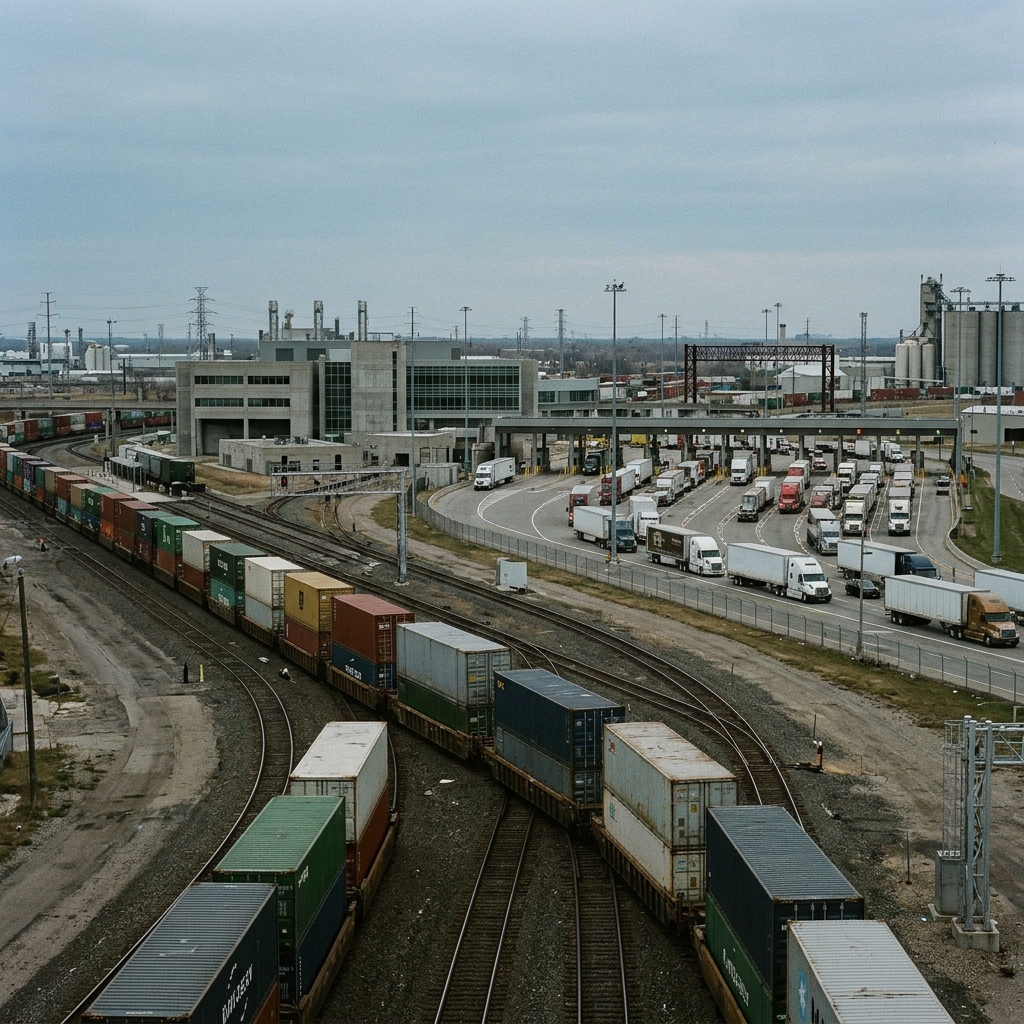
Freight corridors make the issue concrete. The Ambassador Bridge carries roughly 25 percent of U.S.-Canada merchandise trade. The Blue Water Bridge handles a large share of auto and chemical flows. CPKC rail links Vancouver and Prince Rupert to Chicago and Kansas City. Chinese containers can move through Pacific Gateway terminals and then by rail into the U.S. Midwest. CBP and CBSA inspect a small fraction of those boxes. Transshipment risk is real. But it is a compliance problem with known tools, not a new crisis.
4. Ottawa's China Diversification Meets Washington's Tariff Politics
Canada's trade diversification is not a rejection of the U.S. market. It is an insurance policy. China is Canada's second-largest single-country trading partner after the United States. Two-way merchandise trade is roughly CAD 120 billion a year. Canadian exports include canola, pork, seafood, lumber, and minerals. Imports include electronics, machinery, and consumer goods. For provinces such as British Columbia, Alberta, and Saskatchewan, China matters. For Ontario's auto corridor, the United States matters more. Carney's comments acknowledge that hierarchy without dismissing the China file.
Trump's tariff politics are driven by swing-state manufacturing, border security, and the U.S. trade deficit. Canada runs a merchandise surplus with the United States in some months, but energy flows complicate the picture. Alberta crude and Quebec hydropower are central to U.S. input costs. The White House can threaten tariffs on Canadian autos and softwood lumber while ignoring Canadian canola sales to China. That asymmetry is Carney's core point. It also explains why Ottawa keeps USMCA dispute panels busy and why CBP audits matter more than rhetorical fights.
The result is a narrower margin for error. If Canada expands China trade without tight export controls, U.S. lawmakers can demand punitive action. If Canada restricts China trade too hard, Prairie and coastal exporters lose markets. The Bank of Canada and Federal Reserve will set the financial backdrop. CRA and IRS enforcement will shape tax costs. CBP and CBSA will decide whether goods move. Carney's remarks lower the political temperature. But they do not settle the regulatory questions that executives must price into 2026 contracts.