1. Lutnick's Diminished Sway Moves Canada's File Toward USTR and the NEC
Yahoo News Canada's report arrives at a delicate moment for Ottawa. Howard Lutnick remains Commerce Secretary, but his influence inside the White House has narrowed as trade policy moves toward USTR Jamieson Greer, National Economic Council officials and Treasury Secretary Scott Bessent. Commerce still controls the Bureau of Industry and Security, Section 232 investigations and much of the tariff machinery. A weaker Lutnick changes who Canada calls first. It does not erase the legal instruments that CBP enforces at ports of entry.
For Canada, the practical question is whether a diminished Commerce chief makes tariff relief more technical and less personal. Lutnick built a reputation for direct deals and public pressure. Greer's USTR is more process-driven, with USMCA Chapter 31 panels, WTO consultations and Federal Register notices. Ottawa's trade team, including Export Promotion Minister Mary Ng and Finance Minister Dominic LeBlanc, can work those channels. A process-driven White House may accept sectoral carveouts for steel, aluminum and autos if Canada offers verifiable border and supply-chain commitments. It may also move slowly, and that carries its own cost for manufacturers.
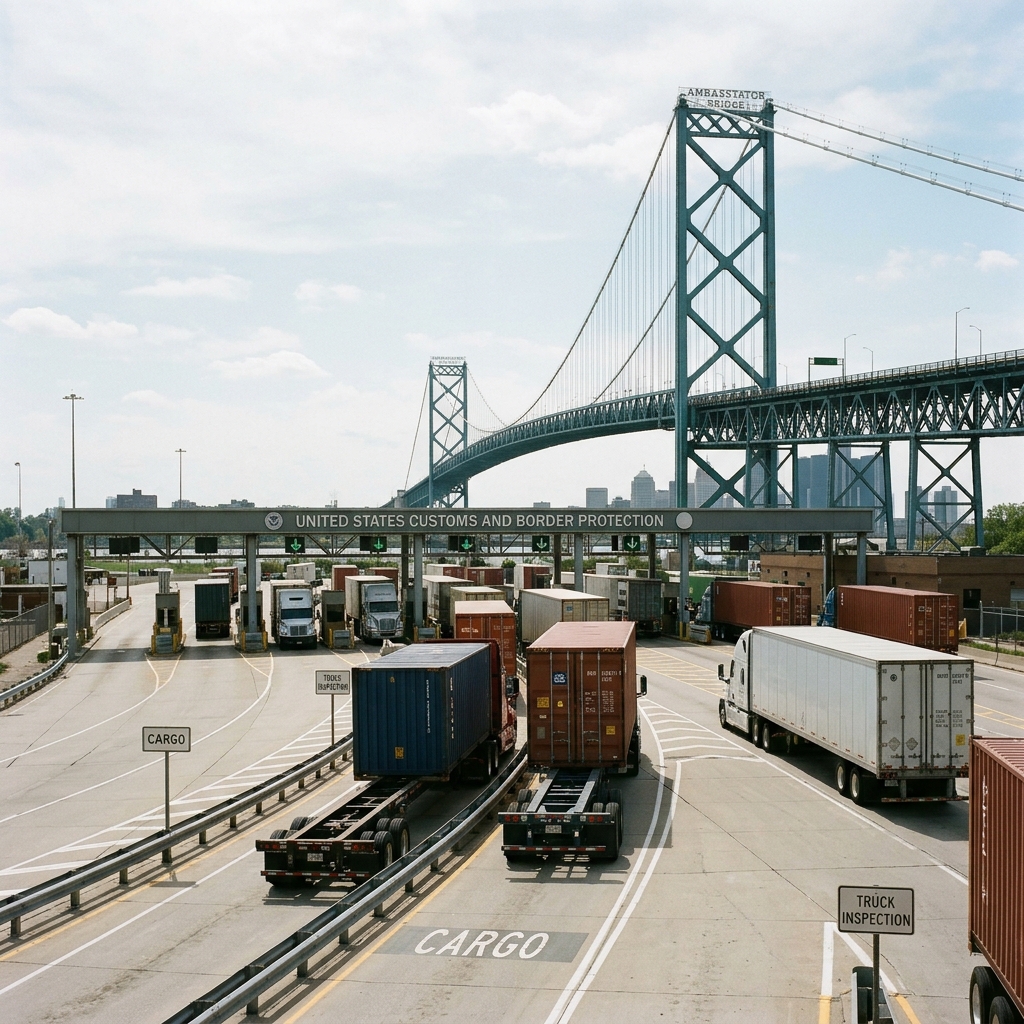
The risk for Ottawa is reading weakness as opportunity. A sidelined Lutnick could leave tariff policy with officials who lack authority to settle a broad deal before the 2026 USMCA review. Commerce's International Trade Administration still runs antidumping and countervailing duty cases on softwood lumber and other products. CBP still collects duties at the Ambassador Bridge and Blue Water Bridge. Canada's best opening is narrow: win administrative exclusions, restart dispute panels and lock in customs protocols. A grand bargain is unlikely while Congress controls implementing legislation and Buy American rules remain popular in both parties.
2. Section 232 Metals Duties and USMCA Review Keep Ottawa's Leverage Narrow
The tariff math is tight. Section 232 duties on Canadian steel and aluminum began at 25% and later reached 50% for some products, with CBP collecting at the border. Canada retaliated with counter-tariffs on U.S. goods worth about C$60 billion. Those measures hit Republican-leaning states and create pressure for relief. Yet the White House can keep duties in place while granting product exclusions. A weakened Lutnick may speed exclusions through Commerce's Bureau of Industry and Security. He cannot unilaterally repeal the underlying Section 232 authority, which sits in statute and survives personnel changes.
The USMCA joint review in 2026 is the larger lever. Chapter 31 dispute panels have ruled against U.S. country-of-origin interpretations and Canadian dairy market access. A USTR-led process may prefer panel outcomes to presidential announcements. Canada wants certainty on autos, where rules of origin require 75% regional value content and wage floors. Every 100 basis point move in the Canada-U.S. two-year yield spread changes hedging costs for cross-border suppliers. Bank of Canada and Federal Reserve policy divergence adds balance-sheet pressure. Ottawa can trade transparency on dairy tariff-rate quotas and supply management for technical relief on metals and autos.
Softwood lumber remains the most difficult file. U.S. producers rely on antidumping and countervailing duty petitions, and Commerce sets margins that CBP then collects. Canada has won WTO and USMCA rulings, but Washington has resisted full compliance. A weakened Lutnick may not change that dynamic. The file runs through the International Trade Commission, the Court of International Trade and Congress. Ottawa's realistic ask is a managed suspension of new cases and a binding consultation mechanism. That outcome would help builders in both countries, where housing costs and lumber prices remain politically sensitive.
3. CBP, CBSA and CPKC Corridors Are the Real Test of Any Deal
Any trade deal must survive the border. CBP and CBSA process millions of truck, rail and pipeline movements each year. The Ambassador Bridge carries roughly 25% of Canada-U.S. merchandise trade, and the Blue Water Bridge handles a large share of auto and chemical freight. CPKC rail networks move grain, potash and intermodal containers through gateways in Manitoba, Ontario and the Pacific Gateway. If Washington demands tighter fentanyl precursor screening or migrant returns, CBP will need staffing and technology money. Canada's response at CBSA and the RCMP becomes part of the trade negotiation, not a side issue.
Customs compliance is where small errors become large costs. A missing USMCA certification can turn a duty-free auto part into a 25% tariff liability. CBP's focused assessment audits and CBSA's trade compliance verifications can reach back years. Companies need clean bills of material, supplier declarations and transfer-pricing records that satisfy both the IRS and the CRA. The Canada Revenue Agency and IRS exchange information under the tax treaty, and cross-border transfer-pricing adjustments can trigger penalties. A technical trade deal should include advance rulings and a joint pre-clearance pilot for trusted traders at the Ambassador Bridge and Blue Water Bridge.
Freight corridors are also political symbols. The Pacific Gateway connects Canadian ports to Asian markets, but U.S. shippers can divert cargo through Seattle and Los Angeles if border delays rise. CPKC and Canadian National compete for cross-border intermodal traffic, and a 24-hour strike or a CBP staffing shortage can shift volumes for months. Canada's leverage includes energy pipelines and electricity exports, which keep U.S. grid operators and refiners exposed. Ottawa should link border funding to tariff relief. That linkage gives USTR and Commerce a concrete deliverable that does not require Congress to rewrite USMCA.
4. Ottawa's Best Play Is Technical Relief, Not a Grand Bargain
The question about a weakened Lutnick matters because it changes the negotiation's focus. If Commerce loses influence, Canada's file moves to USTR, the National Economic Council and Treasury. Those offices care about legal defensibility, macro impact and financial-market stability. Canada can speak to those concerns with hard numbers: about $1.3 trillion in annual two-way goods and services trade, roughly $2.5 billion crossing daily, and energy exports that support U.S. refinery and grid reliability. A technical package on exclusions, customs and dispute panels is more achievable than a broad reset before the 2026 review.
Businesses should prepare for three scenarios. In the first, Lutnick's weakness produces faster product exclusions and a quieter tariff cycle. In the second, USTR takes control and ties relief to USMCA compliance, dairy quotas and auto rules of origin. In the third, the White House keeps tariffs as leverage into the 2026 review. Each scenario requires different hedging. Manufacturers should map exposure by HS code, model C$60 billion in Canadian counter-tariffs and stress-test a 100 basis point move in cross-border funding costs. Investors should watch CBP notices, Federal Register filings and Bank of Canada commentary for early signals.
The practical effect is narrower than the headline suggests. A weakened Howard Lutnick may help Canada by reducing personalized tariff threats and restoring regular order. It will not deliver a deal on its own. Ottawa must convert the opening into binding administrative relief, funded border processing and credible USMCA commitments. Washington must decide whether it wants a predictable North American supply chain or a permanent tariff regime. For now, the corridor from the Ambassador Bridge to the Pacific Gateway remains open, but the rules are moving. Executives who wait for a headline deal will pay for the delay in duties, audits and rerouted freight.