1. Dallas Fed Assessment Details Structural Shifts Across the Permian and Western Canadian Basin
Economists at the Federal Reserve Bank of Dallas brought together researchers, commodity traders, and corporate treasurers this week to evaluate systemic cross-border commodity shocks. Central bank research confirms that the continental energy corridor operates as a single integrated macroeconomic unit. Light tight oil from the Permian Basin and heavy sour crude from Alberta's oil sands now set the marginal cost of refined petroleum products worldwide. Even so, this production matrix faces clear friction from diverging transportation costs, federal decarbonization mandates, and interest rate volatility on both sides of the border.
The Dallas Fed pointed to a structural supply mismatch. Drillers across West Texas and New Mexico yield an increasingly light, volatile condensate with an API gravity often topping 42 degrees. Complex refineries along the Houston Ship Channel, Port Arthur, and Corpus Christi tell a different story. They require dense, low-gravity feedstock to keep secondary coking units running at capacity. Heavy Canadian crude fills the gap. Refiners in the United States took in roughly 4.1 million barrels per day of Canadian crude during the prior quarter, maintaining an interdependent supply chain that runs counter to political posturing in Washington and Ottawa.
Market participants at the conference focused on Western Canadian crude price discounts. The expanded Trans Mountain pipeline (TMX) gave producers an outlet to Pacific Rim buyers through the Westridge Marine Terminal. Yet Gulf Coast buyers remain the primary clearing market for heavy dilbit. Economists noted that softer domestic gasoline crack spreads or industrial distillate demand will quickly curb Gulf refinery runs. That drop immediately hits producers to the north, cutting provincial royalties in Alberta and trimming cash flows for operators on the Toronto Stock Exchange.
2. Refining Economics and Gulf Coast Logistics Dictate Physical Clearing Prices
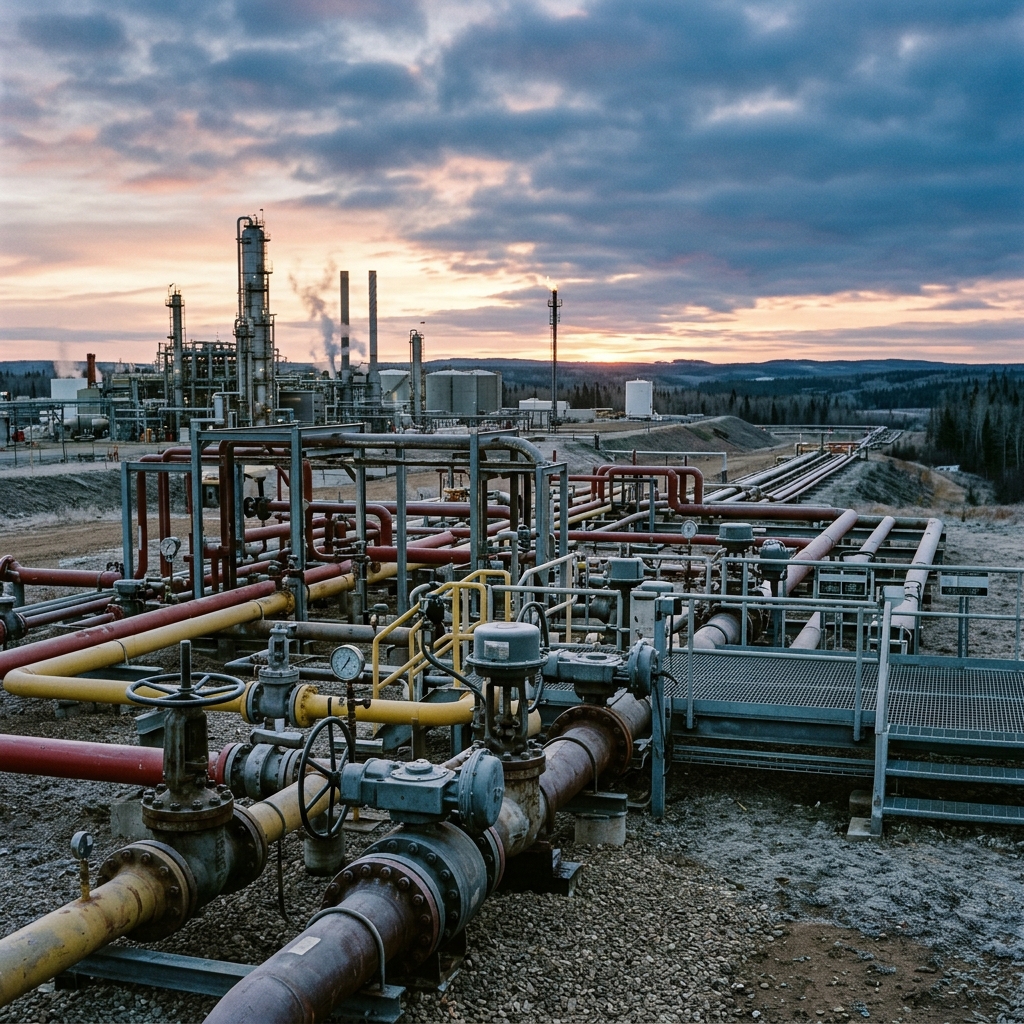
The physical network connecting Texas refining units to Alberta extraction sites depends on a handful of fixed transit corridors. Canadian heavy crude crosses the international boundary through the Enbridge Mainline and Keystone systems, alongside CPKC rail lines that terminate at Port Arthur and Beaumont. Data presented at the Dallas Fed event showed that pipeline tariff adjustments approved by the Canada Energy Regulator and the US Federal Energy Regulatory Commission added an average of 45 cents per barrel to cross-border shipping costs over the past eighteen months.
These tariff increases directly reduce netback realizations for Canadian producers. Western Canadian Select traded at a discount of $13 to $15 under West Texas Intermediate through late autumn. When pipeline maintenance hits or southern storage tanks fill up, that spread frequently widens beyond $18. Dallas Fed analysts warned that wider discounts hurt Canadian upstream operators without lowering fuel prices for American drivers. Midstream handling fees, marine blending costs, and port demurrage charges absorb the price differential along rail and pipeline routes.
Refining margins face tighter operating constraints as well. Over the past twenty years, Gulf Coast plants reconfigured catalytic crackers and hydrotreaters to run discounted Canadian and Mexican heavy crude. Mexican state producer Pemex has reduced crude exports to supply its new Dos Bocas refinery, leaving Canadian crude as the only steady heavy feedstock for complex Gulf plants. Because of this reliance, any bottleneck at Midwest pipeline junctions, including the Superior hub in Wisconsin or the Flanagan interconnect in Illinois, leaves both Gulf refiners and Western Canadian producers vulnerable to sharp regional price swings.
3. Divergent Monetary Policy and Regulatory Frameworks Test Cross-Border Capital Allocation
Diverging monetary policy between the Federal Reserve and the Bank of Canada adds another layer of financial friction for cross-border operators. The Bank of Canada cut its policy rate earlier and faster than the Fed, prompted by heavy household debt burdens and sluggish domestic gross domestic product numbers. This policy spread pulled the Canadian dollar down against the greenback. For natural resource companies, the currency shift cuts both ways. Field labor and extraction expenses billed in Canadian dollars decrease, but equipment purchases and corporate debt serviced in US currency cost more.
Regulatory differences add further financial strain. In Canada, upstream producers must prepare for the federal government's proposed emissions cap, which targets a 35 to 38 percent cut in greenhouse gas emissions below 2019 levels by 2030. Industry groups such as the Pathways Alliance must allocate tens of billions of dollars toward carbon capture, utilization, and storage projects like the Cold Lake trunkline. Across the border, the US Inflation Reduction Act offers 45Q production tax credits of up to $85 per metric ton for industrial carbon sequestration, drawing engineering teams and capital investment south.
Cross-border tax compliance and customs checks create more administrative burdens. Energy shipments passing through checkpoints run by US Customs and Border Protection and the Canada Border Services Agency require extensive documentation under United States-Mexico-Canada Agreement (USMCA) rules of origin. Dallas Fed speakers noted that regulatory compliance expenses for midstream operators increased 12 percent over the past year. Energy companies now face overlapping audits from the Internal Revenue Service and the Canada Revenue Agency regarding cross-border intercompany debt and transfer pricing on blended crude volumes.
4. Long-Term Infrastructure Vulnerabilities Loom Over Continental Energy Security
The broader takeaway from the Dallas Fed symposium is that the North American energy market remains sturdy yet exposed to logistical pressure points. Maritime shipping disruptions through transit passages like the Suez Canal and the Strait of Hormuz have prompted global commodity traders to look toward stable Atlantic and Pacific suppliers. North American output protects domestic consumers from the worst swings in the global market. That protection, however, depends entirely on keeping cross-border transport corridors moving without administrative delays.
Policy risks complicate long-term capital allocation. Permitting delays for major linear infrastructure projects persist on both sides of the border. FERC reviews for interstate natural gas connections often stretch over several years, while Canadian federal impact assessments face regular court challenges from provincial attorneys general and environmental organizations. Without clear regulatory paths and consistent policies between Washington and Ottawa, private midstream firms avoid committing the capital required to build cross-border natural gas pipelines, power lines, and crude pumping stations.
Corporate boards continue to enforce capital discipline. Exploration and production executives in Calgary and Houston are directing free cash flow toward debt reduction, share buybacks, and base dividend growth rather than aggressive drilling programs. This focus on capital returns limits production growth during sudden demand spikes. As the Dallas Fed research makes clear, the durability of the US-Canada energy corridor does not depend on discovering new reserves. It rests on disciplined capital management, regulatory alignment, and keeping the pipelines, rail networks, and refineries running smoothly.