1. Carney Tells CBC Ottawa Will Not Wait for a White House Deal
Prime Minister Mark Carney told CBC that Canada will not freeze its economic agenda while Washington decides whether it wants a trade deal. The line, 'If the U.S. doesn't want to do a deal, we're busy,' is blunt by diplomatic standards. It came during ongoing talks over tariffs, border rules and USMCA compliance. Ottawa and Washington remain in technical contact, but Carney's message is that Canadian domestic policy, from tax credits to customs modernization, will move on its own timetable.
Carney's background gives the remark weight. He ran the Bank of Canada through the 2008 financial crisis and later the Bank of England. He speaks about trade as a balance-sheet problem, not a ceremonial file. His government has paired tariff relief for domestic manufacturers with a push to expand CRA-administered investment credits and speed CBSA cargo processing. The CBC interview did not announce a rupture in talks. It set a boundary: Canada will keep negotiating, but it will not park its budget, regulatory or monetary policy while waiting for a White House signal.
Business groups read the remark cautiously. No deal does not mean no trade. Two-way goods and services trade is worth roughly $900 billion a year, and the corridors that carry it cannot pause for political messaging. The Canadian dollar, Bank of Canada rate expectations and CBP-CBSA clearance times all react to each headline. Carney's phrase gives Ottawa a negotiating posture: patient, unsentimental and focused on work it controls. It also warns U.S. exporters that Canada has alternatives if Washington keeps tariff threats on the table.
2. Loonie, Rates and Border Costs Absorb the Signal
Currency and rates desks treated Carney's CBC remark as a reminder that Canada's policy mix is diverging from the Federal Reserve's. The Bank of Canada has room to move in 25 basis point steps if tariff uncertainty cools demand, while the Fed is watching U.S. services inflation and its own labor market. A weaker loonie raises imported input costs for Canadian manufacturers and complicates CRA and IRS transfer-pricing reviews for cross-border affiliates. Multinationals that price intercompany goods in U.S. dollars should revisit hedge ratios and documentation before the next tariff deadline.
Customs costs move faster than exchange rates. CBP and CBSA classify goods, verify USMCA origin and assess duties at ports of entry. A single misclassified auto part or steel shipment can trigger penalties, detention and amended entries. Brokers are already asking clients for updated bills of material, supplier declarations and CBP Form 7501 data. On the Canadian side, CARM releases and CBSA audit trails matter more when tariff refunds are in play. Carney's 'busy' line tells importers to prepare for a long period of rules-based friction rather than a quick political reset.
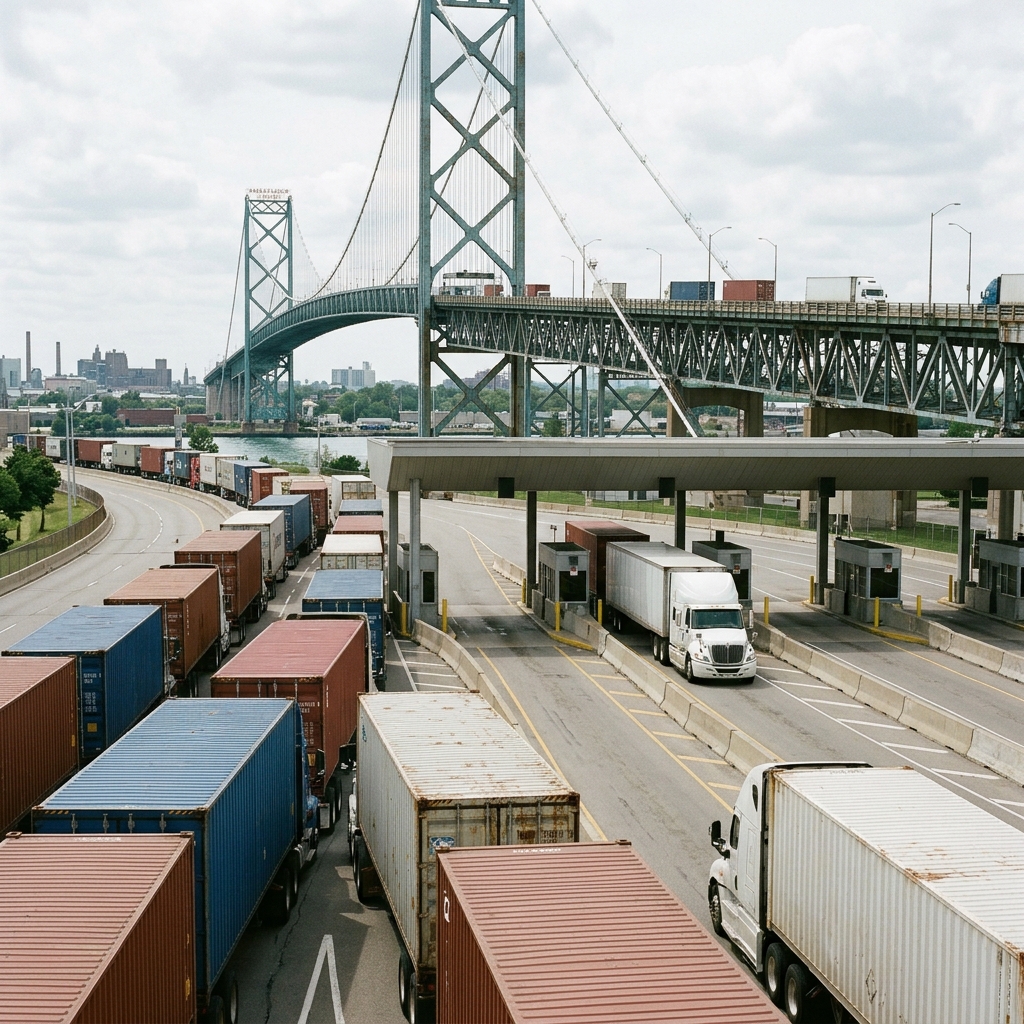
Freight corridors show the strain first. The Ambassador Bridge and Blue Water Bridge carry a large share of Ontario-Michigan truck traffic, while CPKC's rail network links Canadian intermodal terminals to U.S. Midwest markets. Pacific Gateway ports handle Asian containers that feed both countries. Tariff threats change booking patterns, empty-mile ratios and inventory carrying costs within weeks. Shippers should model a 10% to 25% swing in landed costs for exposed categories, including autos, softwood lumber, aluminum and machinery. Carney's remark does not stop those flows, but it tells operators to price political risk into every lane.
3. USMCA Panels and Tariff Exclusions Are the Real Negotiation
The real work is not a single headline meeting. It is the USMCA, known in Canada as CUSMA, and its dispute panels. Chapter 19 binational panels review anti-dumping and countervailing duty cases. Chapter 31 state-to-state panels handle claims about rules of origin, agriculture access and regulatory treatment. The 2026 joint review gives both governments a scheduled checkpoint. Carney's CBC comment signals that Ottawa will use those mechanisms if Washington stalls. Canada can also pursue World Trade Organization complaints and targeted retaliation on U.S. goods, but USMCA panels are faster and more tailored to North American supply chains.
Tariff exclusions are the second front. U.S. Section 232 duties on steel, aluminum and autos have created a paperwork burden around product exclusions and quota allocations. Canadian exporters file with CBP and track Federal Register notices; importers file with CBSA and Finance Canada for reciprocal measures. Auto rules of origin require 75% regional value content plus labor value content tests. A single missing certificate can turn a zero-duty shipment into a 25% duty bill. Carney's message presses companies to audit their USMCA certifications now, not after a political deal is announced.
Tax authorities sit behind the customs file. CRA and IRS auditors examine transfer pricing when tariff costs shift profits between Canadian and U.S. affiliates. A tariff-driven margin change can look like an intercompany pricing problem unless contemporaneous documentation explains it. The Bank of Canada and Federal Reserve also watch tariff pass-through in inflation data. Carney's line is therefore more than a diplomatic jab. It directs finance teams to align customs valuations, transfer-pricing files and hedge accounting. Companies that treat trade policy as a customs-only issue will pay twice, once at the border and again at audit.
4. Ottawa's 'Busy' Agenda Tests the Corridor's Investment Case
Carney's phrase will be read in boardrooms as a signal about capital allocation. Canada's advantage is proximity, but proximity is not a shield when tariff rates can change by tweet or Federal Register notice. Executives weighing Ontario manufacturing, Alberta energy or Quebec aerospace projects need a U.S. market access plan and a non-U.S. backup. Ottawa's push to expand Pacific Gateway capacity and deepen trade with Europe and Asia fits that logic. The United States remains Canada's largest trading partner by a wide margin, so diversification is a hedge, not a replacement.
The politics are equally clear. Canadian exporters want certainty, but they do not want to look desperate for a White House publicity event. Carney's CBC interview gives him room to tell domestic producers that Ottawa is working on permits, tax credits and internal trade barriers while talks continue. It also gives him leverage if Washington asks for concessions on dairy, digital services or auto content. A no-deal outcome would raise costs, but a bad deal could lock in weaker rules for years. That trade-off explains the tone.
For investors, the next 12 to 18 months require scenario planning rather than a single forecast. Base case: technical talks continue, some tariffs are eased, and USMCA review begins on schedule. Downside: tit-for-tat duties hit autos and agriculture, CBP and CBSA enforcement tightens, and the loonie weakens through 1.40 against the dollar. Upside: a narrow deal on border facilitation and critical minerals. Executives should pre-clear customs data, diversify sourcing, hedge FX and brief boards on CRA and IRS transfer-pricing exposure. Carney's 'we're busy' line is a warning to plan for all three.