1. Cushman & Wakefield Puts Tariff Cost at 6% to 11% for Canadian CRE Builds
Cushman & Wakefield's new tariff analysis puts added cost at 6% to 11% on Canadian commercial projects with meaningful US content. That is not a rounding error. The firm's construction cost team estimates $18 to $32 per square foot for industrial shells and mid-rise multifamily in Toronto, Vancouver and Calgary. Steel joists, aluminum curtain wall, HVAC equipment and electrical switchgear carry the clearest tariff pass-through. C&W says contractors are already writing escalation clauses into fixed-price bids. That shifts risk to owners before a shovel hits the ground.
Direct duties are only part of the bill. A 25% US tariff on Canadian steel and aluminum exports invites Canadian counter-tariffs on US inputs. CBP and CBSA clearance adds documentation and broker fees. C&W cites $2.1 billion of annual Canadian construction imports exposed to tariff lines covering fasteners, structural steel and mechanical components. For a 250,000-square-foot industrial project, that can mean $5.5 million to $8 million of added budget. Lenders are responding with tighter loan-to-cost ratios, typically 5 to 10 percentage points lower for projects without locked supplier contracts.
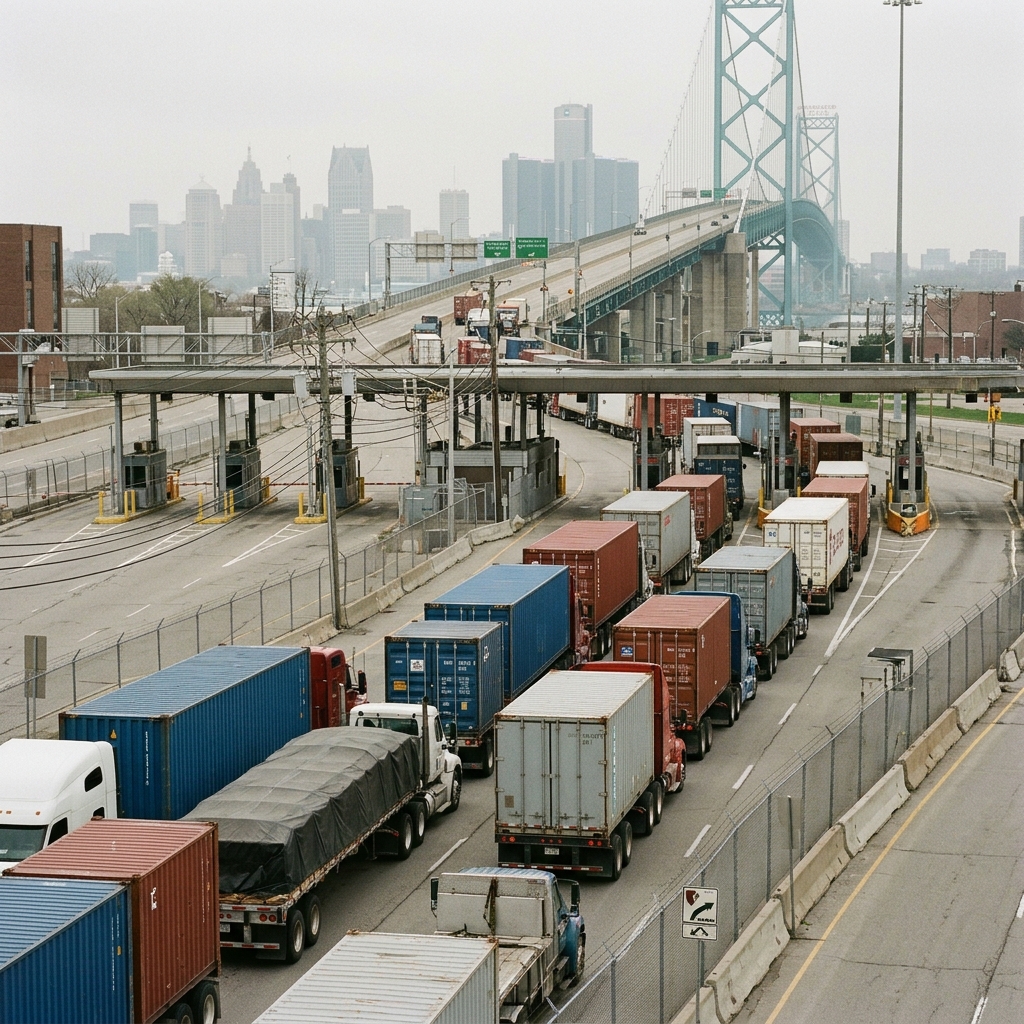
C&W's field data show the pressure is not uniform. Vancouver projects with Asian steel and Pacific Gateway routing face different exposure than Toronto towers tied to US fabricators and the Ambassador Bridge corridor. Calgary industrial work leans on CPKC rail and regional supply, so tariffed US equipment matters more than structural steel. Montreal's multifamily pipeline has heavier mechanical and electrical content, where tariff lines and freight surcharges compound. Timing is the common thread. Owners who locked 2024 pricing are insulated for 6 to 9 months. Projects completing in 2026 are being repriced now.
2. CBP, CBSA and USMCA Rules Rewrite the Construction Procurement Calendar
The tariff bill is set at the border, not in the developer's spreadsheet. CBP classification under the Harmonized Tariff Schedule and CBSA import declarations decide whether a shipment of curtain wall, transformers or steel studs pays duty. USMCA rules of origin can eliminate tariffs on North American content, but contractors must document mill certificates, bill-of-material trails and supplier affidavits. C&W notes that compliance work adds 15 to 30 days to procurement cycles for tariff-exposed packages. On fast-track builds, that delay costs more than the duty itself because crane and labor schedules cannot absorb late equipment.
Duty drawback offers some relief, but it is not automatic. Canadian importers can claim refunds on duties paid for goods later exported, but CRA and CBSA audits require matching entries. Cash can be tied up for 45 to 90 days. US contractors using Canadian prefabricated modules face similar IRS and CBP documentation. C&W estimates working capital needs rise by 3% to 5% on projects with cross-border prefabrication. For a $120 million mixed-use project, that is $3.6 million to $6 million of additional liquidity. That is a real constraint when construction loans price at prime plus 150 to 250 basis points.
Freight corridors amplify the paperwork. The Ambassador Bridge and Blue Water Bridge handle a large share of Ontario-Michigan construction trade. Pacific Gateway ports feed Vancouver projects with Asian steel and equipment. CPKC rail moves structural steel and aggregates into Calgary and Edmonton, but rail car shortages and customs holds can add 7 to 14 days. C&W's brokers report that suppliers now quote delivered-duty-paid prices with 30-day validity, down from 90 days. That shift transfers tariff volatility to owners. Early procurement becomes a balance-sheet decision, not a scheduling preference.
3. Bank of Canada and Fed Rates Turn Tariff Risk Into Financing Cost
Tariffs hit construction budgets twice. The first hit is the invoice for steel, aluminum, lumber and mechanical equipment. The second is financing cost while projects wait for permits, customs clearance and tenant commitments. C&W models a 25 basis point increase in construction loan spreads on tariff-exposed projects. That equals roughly $250,000 of extra interest on a $100 million, 24-month facility. The Bank of Canada's policy rate and the Federal Reserve's terminal rate shape that math. Developers with US dollar debt face a second currency channel when the loonie moves 2% to 4% against the dollar.
C&W's investment sales team sees cap rate pressure. Tariff-driven cost overruns reduce NOI forecasts for 2026 and 2027 deliveries. Buyers are repricing industrial and multifamily assets by 15 to 25 basis points in markets with heavy US content. Toronto and Vancouver already carry high land and permit costs, so a 6% construction increase can wipe out a development margin. Calgary's lower land basis gives more room, but energy-sector tenants are sensitive to steel pipe and equipment tariffs. The result is a wider bid-ask spread and more joint ventures that shift cost risk to contractors.
Tax policy is part of the calculation. CRA capital cost allowance treatment and IRS depreciation schedules affect after-tax returns. Neither offsets a tariff-driven cash outflow in the construction year. C&W advises owners to separate tariff contingency from general contingency, typically 3% to 5% of hard costs, and to disclose it in lender packages. The firm also flags that fixed-price contracts are getting shorter. Contractors will hold pricing for 60 to 90 days, not 180. Owners who wait for rate cuts may pay more for certainty.
4. Developers Rework Pro Formas as Tariff Exposure Splits Canadian Markets
The national average hides the real story. C&W's market-level analysis shows tariff exposure is highest in Toronto and Vancouver, where imported curtain wall, elevators and mechanical systems dominate high-rise budgets. Montreal's multifamily and institutional work carries similar risk through US-made electrical gear. Calgary and Edmonton have more local steel and concrete content, but their industrial projects depend on US compressors, pumps and process equipment. C&W puts the spread between low-exposure and high-exposure markets at 4 to 7 percentage points of total construction cost. That gap is large enough to move a project from feasible to stalled.
Sector matters as much as geography. Data centers have heavy electrical and cooling equipment content, so tariff lines on switchgear, transformers and HVAC units hit harder. Industrial warehousing is less exposed on structure but more exposed on racking, dock equipment and fire protection. Multifamily has lumber, appliances and mechanical systems. Office construction is thin, yet renovation work still needs US-made controls and elevators. C&W says owners are re-sequencing procurement. They buy long-lead equipment before tariffs reset. They also use USMCA origin documentation to protect margins. The strategy works only when suppliers can provide auditable content trails.
The bilateral outlook is not a tariff-only story. USMCA dispute panels will shape whether Canadian steel and aluminum get relief. CBP and CBSA enforcement intensity determines how much paperwork slows the border. The Bank of Canada and Fed can ease financing pressure, but they cannot reverse a 25% duty. C&W concludes that Canadian CRE construction costs will stay elevated through 2026, with 6% to 11% tariff-related escalation embedded in many pro formas. Developers who price that risk early will control the schedule. Those who wait will absorb the cost or cancel the project.