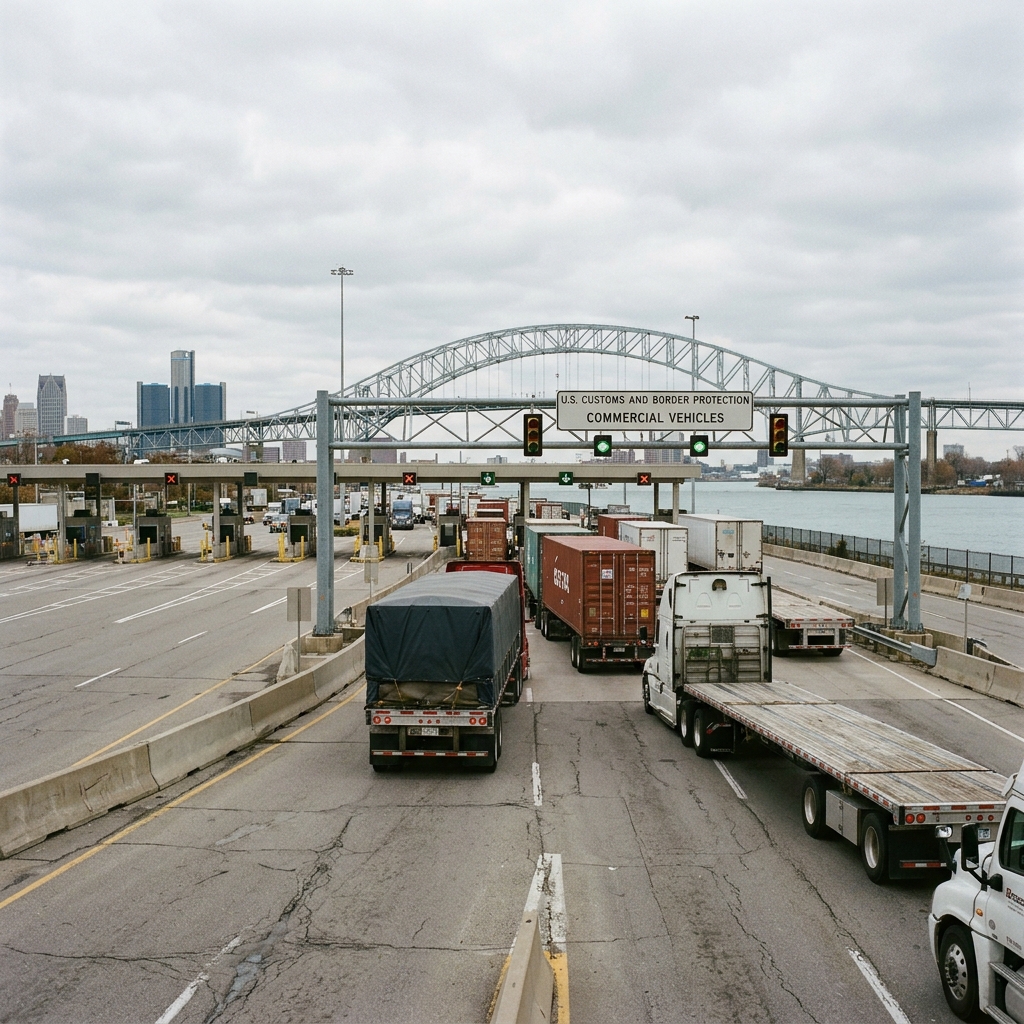
1. Farm Progress Puts a Sharp Question to a Relationship Built on Rail, Road and Refrigerated Freight
Farm Progress did not issue a diplomatic statement. It asked a blunt commercial question: is U.S.-Canada trade irretrievably broken? The answer matters far beyond Ottawa and Washington. Two-way goods and services trade runs above $900 billion a year, and agriculture sits inside the daily flow of feed, fertilizer, livestock, machinery and packaged food. CBP and CBSA officers process that freight at Ambassador Bridge, Blue Water Bridge and dozens of rail crossings. A headline question about rupture is also a question about whether a Kansas feedlot, an Ontario processor and a CPKC train can keep their schedules.
The relationship has absorbed shocks before. Softwood lumber fights, Section 232 steel and aluminum tariffs, dairy quota complaints and meat labeling disputes have all reached USMCA or WTO panels. Each time, negotiators preserved the core bargain because the production systems are too integrated to sever cleanly. Canada buys more U.S. agricultural goods than any market except Mexico and sometimes China, depending on the year. U.S. feeders rely on Canadian barley, canola meal and feeder cattle. Ontario food plants rely on U.S. packaging, ingredients and equipment. The Farm Progress question is pointed because those links are commercial facts, not sentiment.
The physical corridor shows what is at stake. The Ambassador Bridge between Detroit and Windsor carries a large share of U.S.-Canada truck trade, while the Blue Water Bridge at Port Huron and Sarnia handles another dense flow of auto parts, food and chemicals. CPKC and CN rail networks move grain, potash and intermodal containers through gateways such as Chicago, Winnipeg and Vancouver. A customs delay of a few hours can spoil chilled produce, idle a packing line and force a trucker to miss a delivery window. That is why the rupture question is tested daily at booths, scales and rail yards, far from trade hearings.
2. Tariff Retaliation and USMCA Panels Turn Farm Policy Into Customs Risk
Tariffs have moved from background noise to line-item cost. U.S. Section 232 duties on steel and aluminum raised input costs for Canadian machinery, food-can and equipment makers, and Canada answered with targeted surcharges on U.S. products. Agriculture often escaped the heaviest blows, but the exemptions were narrow and political. A Wisconsin ketchup maker, a Kentucky whiskey distiller and a Canadian pork processor all had to reprice contracts. CBP classification rulings and CBSA tariff interpretations started to affect commercial decisions. When a tariff code changes, a shipment can sit at a border warehouse while brokers argue over origin, valuation and the correct duty rate.
USMCA dispute panels now handle many farm trade fights. Canada's dairy tariff-rate quotas have faced repeated challenges, and the compliance record has been uneven enough to keep U.S. dairy exporters and Canadian importers in a cycle of quota allocations and legal review. Grain grading, pesticide tolerances and meat inspection equivalency add more friction. The panels can order changes, but they cannot erase the commercial uncertainty that builds while cases move. For a farmer deciding whether to contract next year's crop or a processor planning capital spending, a pending panel decision is a risk factor that sits beside weather, fuel and interest rates.
Policy risk now lands on customs brokers and compliance officers. U.S. importers must document country of origin for food, machinery and inputs; Canadian exporters must match CBSA requirements and U.S. CBP entry data. A single misclassified shipment can trigger penalties, exams and delayed release. The cost includes legal fees, demurrage, spoilage, overtime and lost retail orders. Farm Progress framed the issue around whether trade is broken, and the customs desk gives a practical answer: the relationship is still functioning, but every shipment carries more paperwork, more contingency and more political risk than it did a decade ago.
3. The Border Is Still a Production Line, Not a Checkpoint
The integrated supply chain is the strongest argument against rupture. Canadian feeder cattle move to U.S. feedlots, U.S. corn and distillers grains move north, and Canadian canola oil and pork move both ways in processed food. Fertilizer, crop chemicals and farm machinery cross the border multiple times before a final sale. CBP and CBSA trusted trader programs such as FAST and C-TPAT are meant to keep low-risk shipments moving, but enrollment and audit costs fall hardest on small and mid-sized firms. A large processor can absorb compliance staff. A family farm or regional feed supplier cannot.
Rail and port gateways add another layer. CPKC's network links Kansas City, Chicago, Winnipeg and Vancouver, and CN moves grain and potash through Prince Rupert and Vancouver. The Pacific Gateway handles Canadian exports to Asia, but U.S. and Canadian farmers compete for the same rail capacity and container slots. A tariff fight or border slowdown can redirect freight, strand empty containers and raise basis at country elevators. The Bank of Canada and Federal Reserve also matter here. A 100 to 150 basis point rate gap can move the Canadian dollar, change the cost of imported machinery and alter the economics of cross-border storage.
The border agencies are not the only regulators in the chain. The CRA and IRS police transfer pricing for agribusiness subsidiaries, and both tax authorities scrutinize management fees, royalty payments and intercompany grain sales. The CFIA and USDA set food safety and labeling rules that can diverge at the plant level. A Canadian processor selling into the United States must meet USDA inspection standards, and a U.S. exporter must satisfy CFIA import requirements. These are not abstract policy questions. They determine whether a load of meat, feed or seed can be sold, held or returned at the border.
4. The Repair Bill Is Measurable in Basis Points, Diesel and Compliance Hours
The relationship is damaged, but it is not dead. U.S.-Canada trade is too large and too regional to replace with other suppliers in the near term. Canada cannot quickly find another buyer for the volume of crude, potash, electricity, lumber and agri-food it sends south. The United States cannot easily replace Canadian feeder cattle, nickel, aluminum and hydro power. That mutual dependence gives negotiators leverage, but it also gives both governments a reason to avoid a full rupture. The practical question is how much friction companies will absorb before they redraw supply chains, build duplicate capacity or shift investment to Mexico or overseas markets.
For investors, the signals show up in working capital and basis. A 100 basis point move in short rates can change the cost of carrying grain, livestock or fertilizer inventory across the border. A 10 percent swing in the Canadian dollar can turn a profitable U.S. sale into a loss for a Canadian processor. Companies with cross-border subsidiaries should expect more CRA and IRS transfer-pricing questions, more CBP audits and more CBSA verification visits. The winners will be firms with trusted trader status, clean origin records and the balance sheet to hold inventory when a border lane slows. The losers will be firms that treat customs as a back-office function.
The 2026 USMCA joint review will be the next formal test. Both governments must decide whether to extend the pact, reopen specific chapters or let disputes accumulate. Agriculture will be central because dairy, poultry, grain and meat groups all have claims and defensive positions. A negotiated repair is still possible. It would require clearer quota rules, faster panel compliance, better customs data sharing and a truce on retaliatory tariffs. A rupture is also possible, but it would be expensive and slow. The Farm Progress question is useful because it forces executives to take that risk into account instead of assuming the border will always stay open.