1. O'Leary Frames the 2027 Trade Horizon While Prediction Markets Weigh The Odds
Venture capitalist Kevin O'Leary has laid out a series of macroeconomic forecasts pointing to 2027 as a turning point for cross-border commerce, federal digital asset rules, and global energy markets. Speaking across syndicated financial broadcasts documented by Yahoo Finance, O'Leary pointed to three major events: a sharp reset in trade terms between Washington and Ottawa, comprehensive federal crypto market legislation in the United States, and military conflict involving Iran. Market participants on Kalshi and Polymarket do not fully buy the entire thesis. Bettors give formal USMCA revisions more than a 65 percent chance before 2027, but they remain openly skeptical about full-scale war in the Persian Gulf.
The 2027 timeline tracks statutory deadlines built directly into North American trade law. Chapter 34 of the United States-Mexico-Canada Agreement requires all three member nations to conduct a formal joint review in July 2026. If any government declines to extend the treaty for another 16 years, the agreement triggers mandatory annual reviews. O'Leary argues Washington holds the upper hand because Canada relies heavily on southbound crude exports and integrated automotive manufacturing lines. Under this view, American trade officials will push Ottawa hard on digital services taxes, dairy supply management quotas, and defense spending targets.
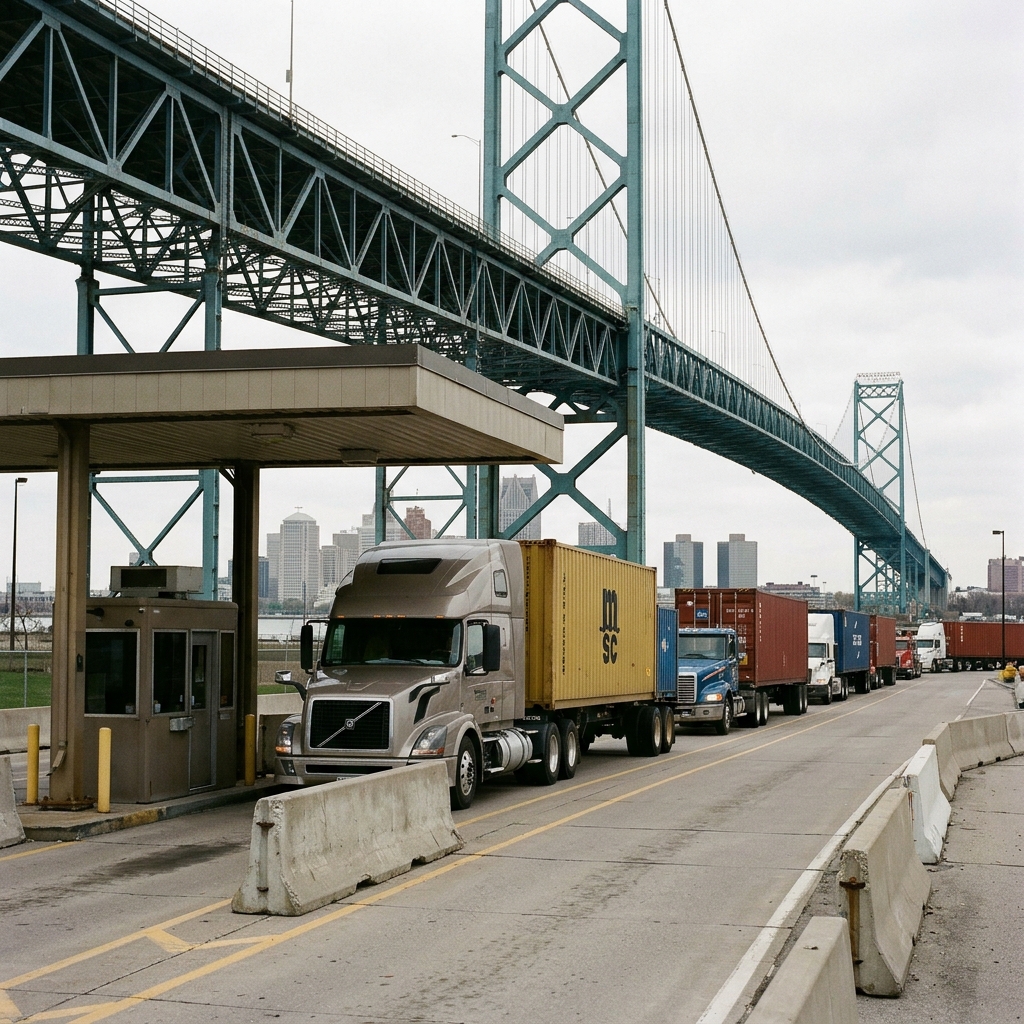
Wagers on prediction platforms capture this friction. Kalshi traders price a 70 percent chance that cross-border tariffs or administrative border measures will hit selected Canadian sectors before the end of 2026. On Polymarket, participants hedge these bets against commodity prices, linking North American freight traffic to raw material costs. Commercial traffic across the Ambassador Bridge between Windsor and Detroit carries roughly 400 million dollars in freight every day. Any serious threat to renegotiate terms immediately alters capital expenditure plans on both sides of the border.
2. The 2026 USMCA Review Sparks Capital Flight Concerns Across Canadian Corridors
Talk of an aggressive renegotiation in 2026 and 2027 has put industrial logistics operators on notice. More than 75 percent of Canadian goods head south into the United States, carried on integrated rail networks run by Canadian Pacific Kansas City and Canadian National. When O'Leary talks about resetting terms, corporate treasurers prepare for border friction. The Blue Water Bridge between Port Huron and Sarnia, along with critical regional rail links, handles steady volumes of raw plastics, structural steel, and finished vehicles. Companies need clear tariff rules before they commit billions to long-term manufacturing plants.
Dispute panels convened under USMCA Chapter 31 highlight long-standing disputes between the Office of the United States Trade Representative and Global Affairs Canada. Disagreements over American dairy access and Canada's digital services tax continue to draw bipartisan criticism on Capitol Hill. Meanwhile, the United States International Trade Commission tracks Canadian rules touching American intellectual property and entertainment distribution. If a future White House chooses bilateral bargaining over a three-way agreement, Canada and Mexico could face separate, split negotiations that undercut existing supply chains.
Corporate leaders in Toronto and Montreal also point to the productivity gap between the two countries. The Bank of Canada has kept its benchmark overnight rate below the Federal Reserve's policy rate. A forced rewrite of trade terms by 2027 could push corporate investment straight into the American Sunbelt. Tax rules overseen by the Canada Revenue Agency and the Internal Revenue Service already favor jurisdictions that offer immediate capital expensing under the United States tax code.
3. Energy Disruption and Middle East Shockwaves Test North American Heavy Crude Realities
O'Leary's second prediction anticipates direct military conflict involving Iran, an outcome that would hit global oil flows and North American refineries immediately. A disruption in the Strait of Hormuz, where roughly 20 million barrels of petroleum transit every day, would drive prompt price spikes for Brent and West Texas Intermediate. Traders on prediction platforms currently place a 22 percent probability on direct American strikes on Iranian territory before mid-2026. The odds move quickly whenever regional clashes flare up near export docks on Kharg Island.
For Canada, an international energy shock cuts both ways. Alberta's oil sands yield heavy sour crude that sells at a regular discount to WTI, known as the Western Canadian Select differential. When world supply drops, refiners along the United States Gulf Coast buy more heavy barrels delivered through pipeline corridors and CPKC rail tank cars. Fresh capacity on the Trans Mountain pipeline to the Pacific Gateway terminal in Burnaby gives Western Canadian producers a direct route to Asian buyers. A supply shock in the Middle East would lift producer revenues in Calgary while raising consumer fuel costs nationwide.
That scenario would complicate monetary policy for the Federal Reserve and the Bank of Canada. Higher pump prices make it harder for central banks to ease borrowing costs, keeping business loan rates elevated across the continent. Canadian households carrying high mortgage balances would see their spending power shrink under costlier fuel. At the same time, provincial and federal treasuries would collect higher royalties from the oil patch. Energy planners at the United States Department of Energy and Natural Resources Canada would quickly refocus on protecting shared regional reserves.
4. Divergent Crypto Oversight and Cross-Border Capital Flows Demand Federal Clarity
The third forecast from O'Leary centers on federal digital asset legislation passing in the United States by 2027. American markets currently deal with divided oversight from the Securities and Exchange Commission and the Commodity Futures Trading Commission. O'Leary argues large institutional funds remain on the sidelines because major custodian banks do not have clear statutory protection. Kalshi bettors give an 81 percent probability to Congress passing a comprehensive crypto market structure bill before the end of 2026.
Canadian regulators took a different path years ago. The Canadian Securities Administrators and the Investment Industry Regulatory Organization of Canada put hard rules in place early. Registered platforms in Canada operate under direct limits on custody, leverage, and margin trading. Canadian retail accounts face statutory limits on buying non-exempt tokens, whereas American firms have operated under rules shaped mainly by court rulings and enforcement actions. If Capitol Hill establishes formal statutory definitions, the Canadian Securities Administrators will face pressure to update their cross-border rules for decentralized protocols and dollar-backed stablecoins.
Cross-border financial institutions need matching rules if they plan to run blockchain rails for corporate treasury settlement. Customs and Border Protection and the Canada Border Services Agency process hundreds of billions in commercial shipments every year, and major banks want tokenized trade finance tools to settle invoices faster. If Washington passes comprehensive legislation while Canada holds to its strict pre-registration agreements, institutional capital will pool in New York and Delaware. O'Leary's 2027 timeline shows how quickly differing rules between Washington and Ottawa could become an operational problem.