1. LeBlanc Tells Advisory Committee Talks Continue While Tariff Exposure Remains Live
Dominic LeBlanc, Canada's finance minister, used a briefing to the Canada-U.S. advisory committee to signal that Ottawa's trade talks with Washington remain active, according to a ConstructConnect report. His message was limited and practical. LeBlanc described continuing contacts with the U.S. Trade Representative and the Commerce Department on tariff exclusions, border processing and the 2026 USMCA joint review. He did not announce a new deal. The committee's business and labour members pressed for clarity on steel, aluminum, autos and softwood lumber. For executives, the briefing is a planning cue: political talks continue, but tariff risk remains part of cross-border cost models.
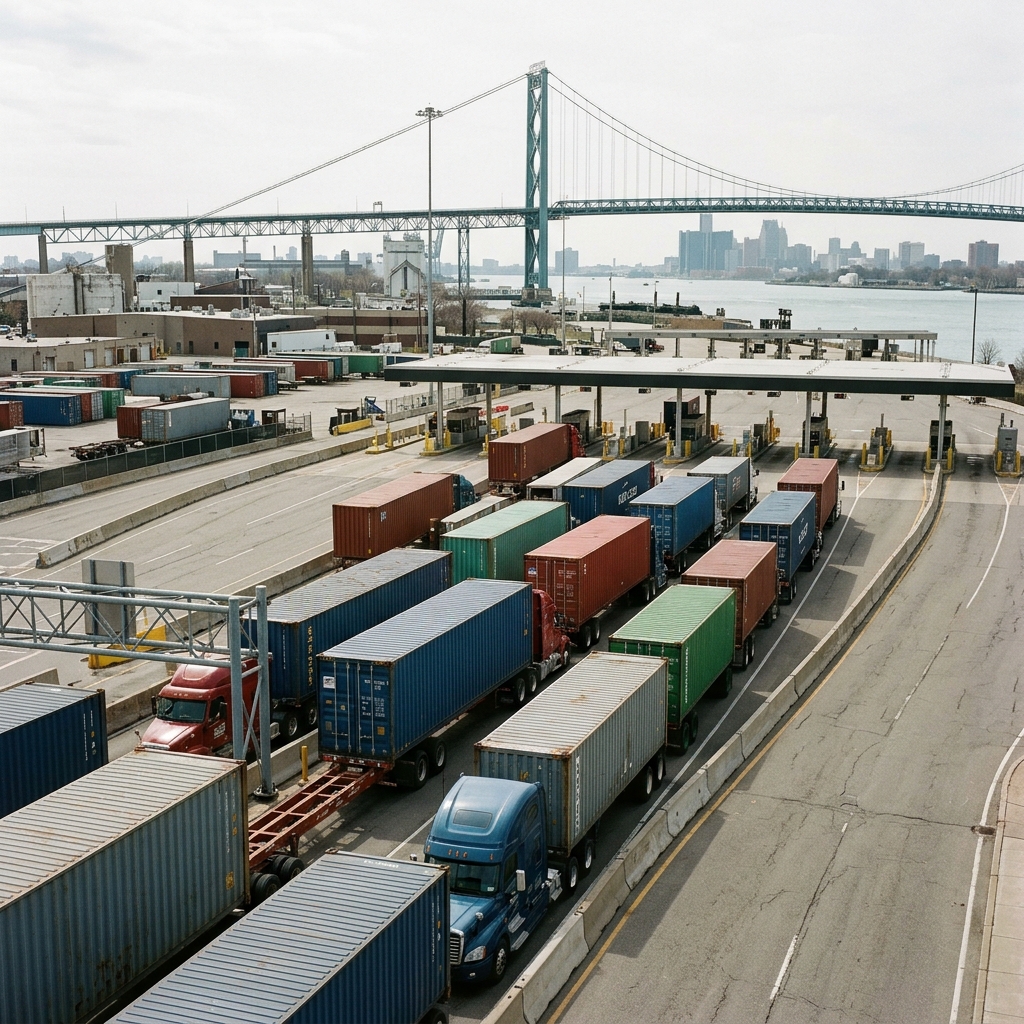
The briefing comes at a difficult time for the cross-border trade corridor. Washington has kept Section 232 tariffs on steel and aluminum in place, and Canadian exporters face added compliance checks at CBP and CBSA ports of entry. Ottawa's counter-tariff list covers billions of dollars of U.S. consumer and industrial goods, with CRA and IRS reporting rules adding paperwork for related-party transactions. LeBlanc's update did not promise relief. It stressed that officials are working through product exclusions and dispute channels. That matters for firms shipping through the Ambassador Bridge, the Blue Water Bridge and CPKC rail yards, where a single classification error can stall a load and raise working capital costs.
The advisory committee's role is to translate political language into commercial reality. Members represent manufacturers, agriculture, transport and financial services. They asked LeBlanc for timelines on tariff relief, a clearer read on Buy American rules and guidance on USMCA rules of origin. The minister's answer, as reported, was that talks are ongoing and that Canada will keep retaliation proportionate. That is not a green light for expansion. It is a signal to keep dual sourcing, bonded warehousing and customs broker capacity in place. The Bank of Canada's rate path and the Federal Reserve's stance also shape hedging costs for importers and exporters.
2. Section 232 Tariffs and Counter-Tariffs Put Working Capital Under Pressure
Tariff costs are now a senior management issue. A 25 per cent Section 232 levy on steel and aluminum raises landed costs for Canadian fabricators and U.S. buyers. Canada's counter-tariffs on selected U.S. goods add a second layer for firms that source components on both sides of the border. CRA and IRS transfer-pricing files must reflect those costs. Inventory carrying charges rise when customs brokers need extra time to prove origin. The Bank of Canada's policy rate, now watched in basis points, affects the cost of holding that inventory. The Federal Reserve's higher-for-longer stance does the same for U.S. importers. Treasury teams should model tariff scenarios by SKU, not by headline.
Autos and softwood lumber remain the most exposed sectors. North American vehicle production depends on parts crossing the border multiple times before final assembly. Each crossing can trigger rules-of-origin checks, and USMCA dispute panels remain the fallback when CBP or CBSA rejects a claim. Softwood lumber faces longstanding U.S. anti-dumping and countervailing duties, and Canadian producers are pressing Ottawa for support. LeBlanc's committee update did not resolve those files. It confirmed that officials are using the advisory channel to identify products where tariff relief is possible. For CFOs, the practical step is to stress-test margins at 10, 25 and 50 per cent tariff rates.
Currency and freight costs compound the tariff effect. The Canadian dollar's moves against the U.S. dollar can erase or amplify a tariff hit within a quarter. Exporters using the Pacific Gateway face ocean freight volatility and rail congestion on CPKC and CN networks. Truckers at the Ambassador Bridge and Blue Water Bridge face inspection delays when CBP or CBSA shifts staff or changes document requirements. The Bank of Canada and Federal Reserve policy divergence adds basis points to cross-currency swaps. Firms that hedge only at quarter-end are exposed. Weekly exposure reviews, with customs brokers and treasury in the same meeting, are now a minimum standard for mid-sized exporters.
3. USMCA Review, Rules of Origin and Border Agencies Set the Compliance Calendar
The 2026 USMCA joint review sets the timetable for both governments. LeBlanc told the advisory committee that Canada is preparing submissions on rules of origin, dispute settlement and regulatory cooperation. The U.S. Trade Representative will run its own consultation, and Congress will weigh in through committee hearings. For companies, the review is not an abstract diplomatic event. It will shape whether tariff preferences survive for autos, agriculture and machinery. CBP and CBSA will enforce whatever text emerges. Legal teams should map every product's tariff shift rule now, because retroactive claims and penalties are easier to avoid than to reverse after an audit.
Border agencies are already tightening documentation. CBP's Centers of Excellence and Expertise review importer filings, and CBSA's trade compliance verifications target origin and valuation errors. Trusted trader programs such as FAST and C-TPAT can reduce delays, but they require clean records. The Ambassador Bridge and Blue Water Bridge are the busiest truck crossings, and a two-hour delay can break a just-in-time delivery window. CPKC's cross-border rail lanes carry grain, autos and intermodal containers. The Pacific Gateway handles Asian transshipments that feed Canadian and U.S. inland markets. Each node has a different risk profile, and a single compliance failure can ripple through the chain.
USMCA dispute panels remain the formal route for challenges, but they are slow. A panel ruling can take months, and companies need interim solutions. LeBlanc's update pointed to sectoral working groups and product exclusions as faster channels. Ottawa is also reviewing procurement rules after U.S. Buy American provisions tightened. Provincial governments, which control infrastructure spending, are watching the talks closely. The Canada-U.S. advisory committee gives them a seat at the table. For investors, the signal is that policy risk is now a line item in project finance models, especially for bridges, ports and rail terminals that depend on bilateral flows.
4. Ottawa Keeps Retaliation in Reserve as Firms Hedge Currency and Freight
LeBlanc's message to the advisory committee was measured. Canada will keep retaliation in reserve and use it only if Washington escalates. That approach avoids a tariff spiral that would hit Canadian consumers and feed inflation. The Bank of Canada is watching goods prices, and the Federal Reserve is watching U.S. import costs. Both central banks know tariffs act like a tax on supply chains. A 25 per cent levy on a component can become a 40 per cent cost increase after freight, brokerage and currency conversion. Ottawa's restraint is not a concession. It reflects a calculation that negotiations can deliver exclusions before the 2026 review.
Executives should prepare for three scenarios. In the first, Washington grants targeted exclusions and Canada suspends counter-tariffs. In the second, tariffs stay in place through the USMCA review. In the third, escalation hits autos or energy. Each scenario has different implications for the Ambassador Bridge, Blue Water Bridge, Pacific Gateway and CPKC rail. A useful hedge is to pre-clear customs documentation, lock freight contracts with delay clauses and hold dual sourcing options. Treasury teams should also monitor the Canada-U.S. two-year yield spread in basis points. A wider spread raises hedging costs and can tighten credit for smaller exporters.
The bilateral outlook is neither collapse nor quick repair. LeBlanc's update shows Ottawa is using the advisory committee to manage expectations and collect intelligence from business. That approach is practical. It also means companies cannot wait for a single announcement. The practical work is in customs files, transfer-pricing memos, freight contracts and currency hedges. The Canada-U.S. corridor carries roughly C$2.5 billion in goods and services daily, and even a small tariff or delay can move margins. The next milestone is the U.S. Trade Representative's consultation calendar. Firms that track it closely will have more room to adjust pricing and sourcing.