1. LeBlanc Floats an Interim Deal Before the CUSMA Review in 2026
Dominic LeBlanc, Canada's finance minister and a central figure in Ottawa's U.S. trade file, used a briefing reported by Diplomacy and Law to describe an interim trade arrangement with Washington as a live option. That matters. The CUSMA joint review is set by treaty, not by political convenience. Article 34.7 requires the three governments to review the agreement in 2026, with a confirmation and extension decision that can run to 2036. An interim deal would sit beside that legal process. It would not replace it. LeBlanc's framing gives Canadian exporters a short runway. The formal review remains the main event.
The tariff file is narrower than the headline suggests. Washington's Section 232 steel and aluminum duties, softwood lumber countervailing and anti-dumping orders, and the recent digital services tax dispute have created separate legal tracks. Each track has its own Federal Register notice, CBP classification ruling and Canadian retaliatory response. LeBlanc's interim package would need to trade relief in one track without giving up ground in another. That is why officials in Ottawa describe the talks in sectoral terms: autos, agriculture, energy and critical minerals. A broad political communique will not move a customs broker's entry summary at 6 a.m. at the Blue Water Bridge.
The politics are equally specific. Canadian steel producers in Hamilton and Sault Ste. Marie want quota relief. Prairie canola and pork exporters want predictable access. Ontario auto assemblers want rules-of-origin certainty before model-year sourcing decisions lock in. LeBlanc can sell an interim deal only if it produces documents that CRA auditors, CBP officers and USMCA panels can apply. A handshake at a press conference is not a legal instrument. The test is whether the text changes tariff schedules, origin verification procedures and dispute timelines before the 2026 review begins.
2. Tariff Risk Runs Through CBP, CBSA and the Two-Year Yield Spread
Markets do not price trade talks in the abstract. They price the cash-flow consequences. A 10 basis point widening in the Canada-U.S. two-year yield spread changes hedging costs for mid-sized exporters that finance receivables in U.S. dollars. The Bank of Canada and the Federal Reserve set the policy backdrop. CBP and CBSA set the daily operating reality through tariff classification, valuation and origin verification. When LeBlanc talks about an interim deal, treasurers listen for whether Section 232 exclusions will be extended, whether remission orders will be published, and whether CRA and IRS transfer-pricing positions will shift.
The regulatory process is where relief can stall. A Canadian exporter can hold a valid USMCA certificate of origin and still face a CBP request for production records under reasonable care. CBSA can apply countervailing duties on the same shipment if the Canadian government's remission order is not aligned with the Canadian International Trade Tribunal's findings. CRA and IRS auditors can challenge intercompany pricing for cross-border parts and services. An interim deal that does not address these administrative mechanisms leaves finance teams with the same working-capital risk. The headline changes. The entry summary does not.
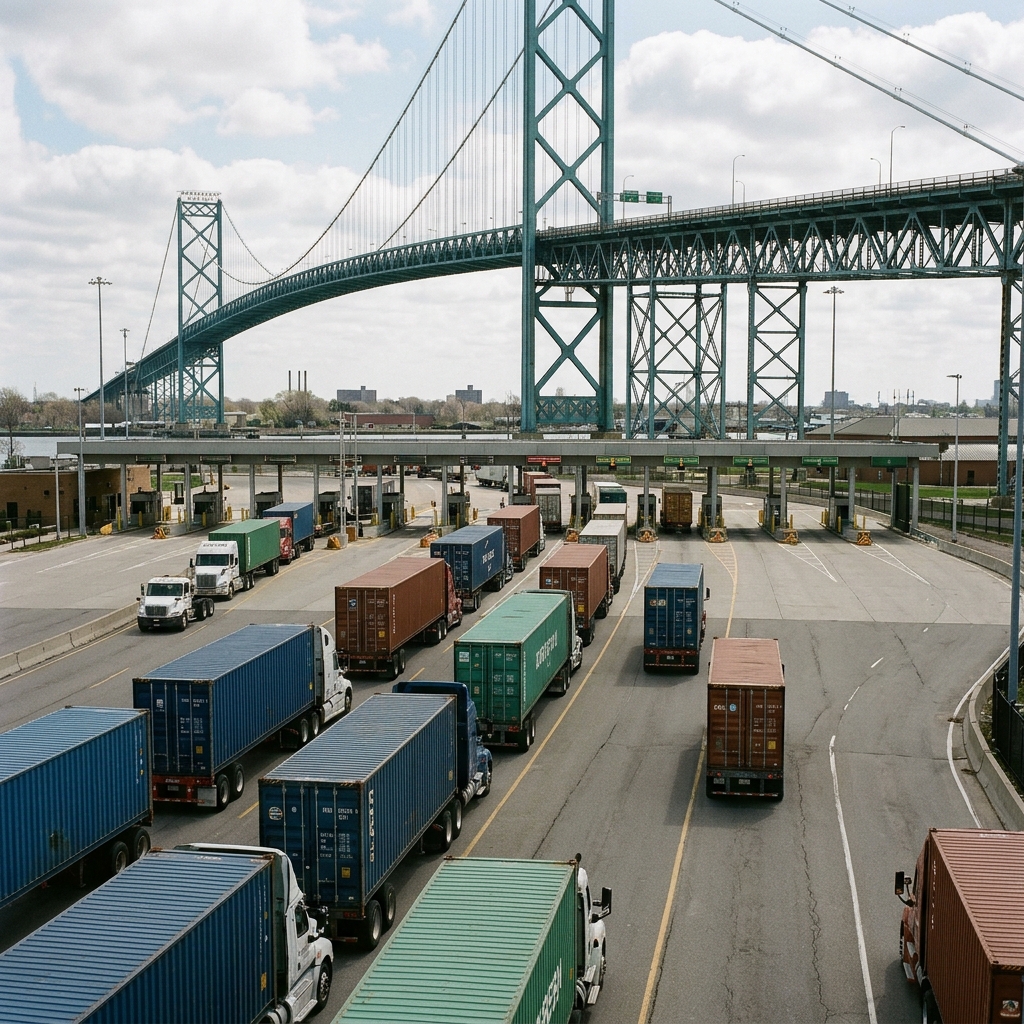
Investors should watch three concrete signals. First, the spread between Government of Canada and U.S. Treasury two-year yields. Second, weekly freight volumes on CPKC's Toronto-Chicago corridor and crossing times at the Ambassador Bridge and Blue Water Bridge. Third, the number of new USMCA Chapter 10 dispute consultations. These indicators are less dramatic than a ministerial press conference, but they show whether an interim deal is changing behavior. A tariff exemption that no customs broker can apply is a political statement. A tariff exemption that clears CBP and CBSA systems is an economic fact.
3. CUSMA Review Hinges on Rules of Origin, Panels and Border Logistics
The CUSMA review is a legal proceeding with a political overlay. The agreement's rules of origin for autos require 75 percent regional value content and labor value content thresholds of 40 to 45 percent. Steel and aluminum purchased by auto producers must be originating in North America. These rules are enforced through CBP audits, CBSA verification and USMCA Chapter 10 binational panel challenges. An interim deal that ignores rules of origin will not survive the first verification cycle. LeBlanc's negotiators need sector-specific annexes that customs agencies can administer without new litigation.
Border logistics are the test. The Ambassador Bridge carries roughly a quarter of Canada-U.S. merchandise trade by value. The Blue Water Bridge handles a large share of auto and chemical shipments between Ontario and Michigan. The Pacific Gateway moves Asian-origin goods through Vancouver and Prince Rupert into U.S. markets under CUSMA transit rules. CPKC's rail network links Kansas City, Toronto and Mexico's industrial corridors. An interim deal that speeds customs clearance at these nodes has real value. A deal that leaves CBP and CBSA operating under old tariff schedules has little operational effect.
The dispute panels matter because they set the cost of noncompliance. USMCA Chapter 10 panels can review anti-dumping and countervailing duty determinations. State-to-state consultations under Chapter 31 can escalate to authorized retaliation. If an interim deal creates a new tariff remission process outside these channels, it risks legal challenge from domestic producers on both sides. Canadian steel and lumber producers have used judicial review and CITT appeals before. U.S. producers have used Court of International Trade filings. LeBlanc's legal team must design an interim package that survives these forums.
4. An Interim Deal Buys Time, Not Immunity From the 2026 Review
The main value of an interim deal is time. Canadian exporters need a window to reprice contracts, adjust supply chains and refinance working capital before the 2026 CUSMA review. U.S. importers need certainty for holiday and back-to-school inventory cycles. A six-month or twelve-month tariff truce can lower the risk premium embedded in freight rates and inventory carrying costs. That premium is visible in the spread between Canadian and U.S. producer prices for steel, aluminum and softwood lumber. LeBlanc can claim a win if the spread narrows. He cannot claim a solution if the review still looms.
The bilateral outlook remains conditional. Canada's bargaining strength is energy, critical minerals and electricity. U.S. bargaining strength is market access, defense procurement and the dollar's role in trade settlement. An interim deal that trades Canadian energy predictability for tariff relief may hold through the review. A deal that asks Canada to reopen supply management or digital services taxation without congressional cover will not. The U.S. Congress must implement any tariff schedule changes that fall outside executive authority. LeBlanc's team needs to read the House Ways and Means and Senate Finance committees as closely as the White House.
For executives and investors, the practical approach is to separate political risk from legal risk. Political risk is a press conference. Legal risk is a CBP penalty notice, a CBSA re-determination or a CRA transfer-pricing adjustment. Companies should test cash flows under a 10 percent tariff scenario, map exposure to Section 232 and softwood lumber orders, and confirm that origin records meet USMCA Chapter 5 requirements. The interim deal may reduce the political noise. It will not remove the 2026 review. Boards that plan for both will be better positioned than those that react only to the headline.