1. Carney Rejects Concessions as Washington Presses Tariff Demands
Prime Minister Mark Carney told The New York Times that Canada will not back down in trade talks with the United States. It was a direct message to Washington as tariff negotiations resume. Carney, a former Bank of Canada and Bank of England governor, cast the position as a defense of Canadian industry and legal process. Ottawa has tied any easing of counter-tariffs to the removal of U.S. Section 232 duties on steel, aluminum and autos. The New York Times report places the talks inside a wider dispute over rules of origin, border fees and USMCA compliance.
The politics in Ottawa are tight. Carney's minority government needs support from provinces that depend on cross-border manufacturing, energy and agriculture. Ontario Premier Doug Ford has pressed for a hard line on auto content rules. Quebec officials want aluminum exemptions. Prairie premiers want energy and potash treated separately from metals. That coalition limits Carney's room to trade away sectoral protections for a broad settlement. It also gives him a public mandate to keep Canada's C$60 billion counter-tariff list in place until U.S. measures are lifted.
Washington's opening position remains broad. U.S. officials have tied tariff relief to stricter North American content rules, tighter customs data sharing and changes to Canada's supply management system. They also cite Canada's digital services tax, which Ottawa rescinded in 2025 to restart talks. Carney's team says the U.S. has not matched that concession with tariff relief. The result is a stalemate with legal, fiscal and border consequences. The New York Times account says Carney will not accept a deal that treats Canadian exporters as junior partners in the U.S. market.
2. Currency, Bond Markets and Tax Agencies Price a Longer Tariff Fight
Financial markets have begun to price in a longer dispute. The Canadian dollar has traded in a narrow band against the U.S. dollar as traders weigh tariff headlines against interest-rate differentials. The Bank of Canada has cut its policy rate by 25 basis points at recent meetings, while the Federal Reserve has held a higher floor. That gap pressures the loonie and raises imported input costs for Canadian manufacturers. Exporters using the Ambassador Bridge and Blue Water Bridge face more expensive dollar-based freight, insurance and customs brokerage charges.
The tax side matters too. The Canada Revenue Agency and the Internal Revenue Service are enforcing withholding rules on cross-border royalties, interest and service payments. A prolonged tariff fight would push more firms to restructure invoices and transfer-pricing arrangements. That raises audit risk on both sides of the border. The CRA has increased review of treaty-based deductions, and the IRS has flagged Canadian subsidiaries in its transfer-pricing campaigns. Finance ministries lose revenue when trade slows, so tax enforcement becomes a less visible front in the dispute.
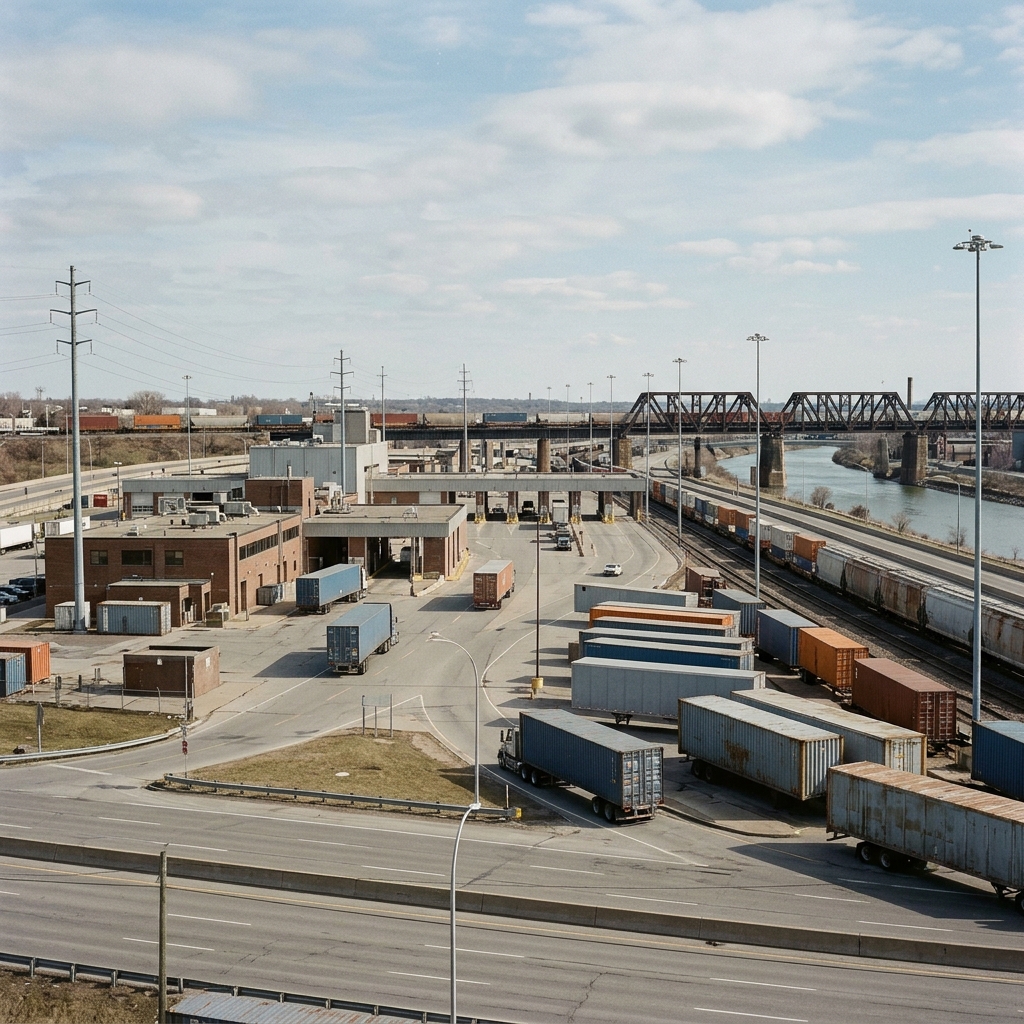
Regulatory costs are stacking up. U.S. Customs and Border Protection and the Canada Border Services Agency have added documentation checks for metals and auto parts. Those checks slow truck processing at Detroit-Windsor and Sarnia-Port Huron. Freight operators report longer dwell times and higher demurrage charges. The Bank of Canada's business outlook surveys show firms passing some costs to customers and delaying capital spending. A 25 basis point move in policy rates cannot offset a 25 percent tariff. Markets know that, and the loonie's muted reaction reflects the limit of monetary policy.
3. USMCA Panels, Rules of Origin and Rail Corridors Carry the Legal Fight
The legal mechanism is USMCA. Canada can challenge U.S. Section 232 tariffs through dispute panels, but those panels move slowly and cannot order Congress to change statute. Canada has already used the state-to-state process on auto rules of origin and softwood lumber. A new panel on steel content would test whether U.S. national-security claims can survive fact-finding. The outcome matters for C$1.3 trillion in annual bilateral trade. It also shapes how companies document North American content for cars, batteries and industrial inputs.
Rules of origin are the practical battleground. A vehicle assembled in Ontario can cross the Ambassador Bridge with a certificate that tracks steel, aluminum and electronic content. If U.S. CBP rejects that paperwork, the vehicle faces a tariff at the port. Canadian officials want CBP to accept digital certificates and advance rulings. U.S. officials want more audit rights. CBSA has piloted a digital manifest for rail shipments on CPKC's network. The pilot reduces manual data entry, but it does not settle the legal standard for regional value content.
Freight corridors show the stakes. The Pacific Gateway handles Asian inputs that feed Canadian plants and U.S. distribution centers. CPKC rail networks move grain, potash and auto parts across the border. The Blue Water Bridge carries a large share of truck traffic between Ontario and Michigan. A tariff dispute that slows one corridor pushes volume to another and raises costs across the chain. Shippers cannot easily reroute steel coils or finished vehicles. The result is a system with less slack and more political risk.
4. Auto, Energy and Agriculture Sectors Face a Costly Waiting Game
The auto sector is the most exposed. U.S. tariffs on vehicles and parts raise costs for Ford, General Motors and Stellantis plants in Ontario. Canadian counter-tariffs on U.S. vehicles would hit dealers and consumers. Carney's team wants a sectoral deal that preserves integrated production. U.S. negotiators want more assembly and battery work inside the United States. The gap is not rhetorical. It affects investment decisions for battery plants in Windsor and Alliston. A delay of even two quarters can move a model program to another jurisdiction.
Energy and agriculture have different exposure. Canada sends crude, natural gas, electricity and potash into U.S. markets through pipelines, rail and transmission lines. U.S. farmers sell corn, soybeans and processed food into Canada. A tariff fight would raise input costs and disrupt livestock supply chains. The CRA and IRS would face more cross-border farm income questions. Prairie elevators and Pacific Gateway terminals would absorb storage costs if grain shipments slow. Carney has kept energy and potash outside the counter-tariff list, a signal that he wants room for a separate deal.
The likely path is a long dispute with no clean settlement. The 2026 USMCA review gives both governments a deadline and a stage. Canada will press for binding dispute panels and tariff relief. The United States will press for content rules, customs data and market access. Business leaders should plan for tariff volatility through 2026. Investors should watch the Bank of Canada's rate path, CBP and CBSA processing times, and USMCA panel rulings. Carney's refusal to back down is a negotiating position, but it is also a signal that Ottawa will litigate and legislate.